How the Right Wall Art Transforms Your Office
Discover how the right wall art transforms your office by enhancing productivity, reflecting your brand, and creating a more inspiring work environment.
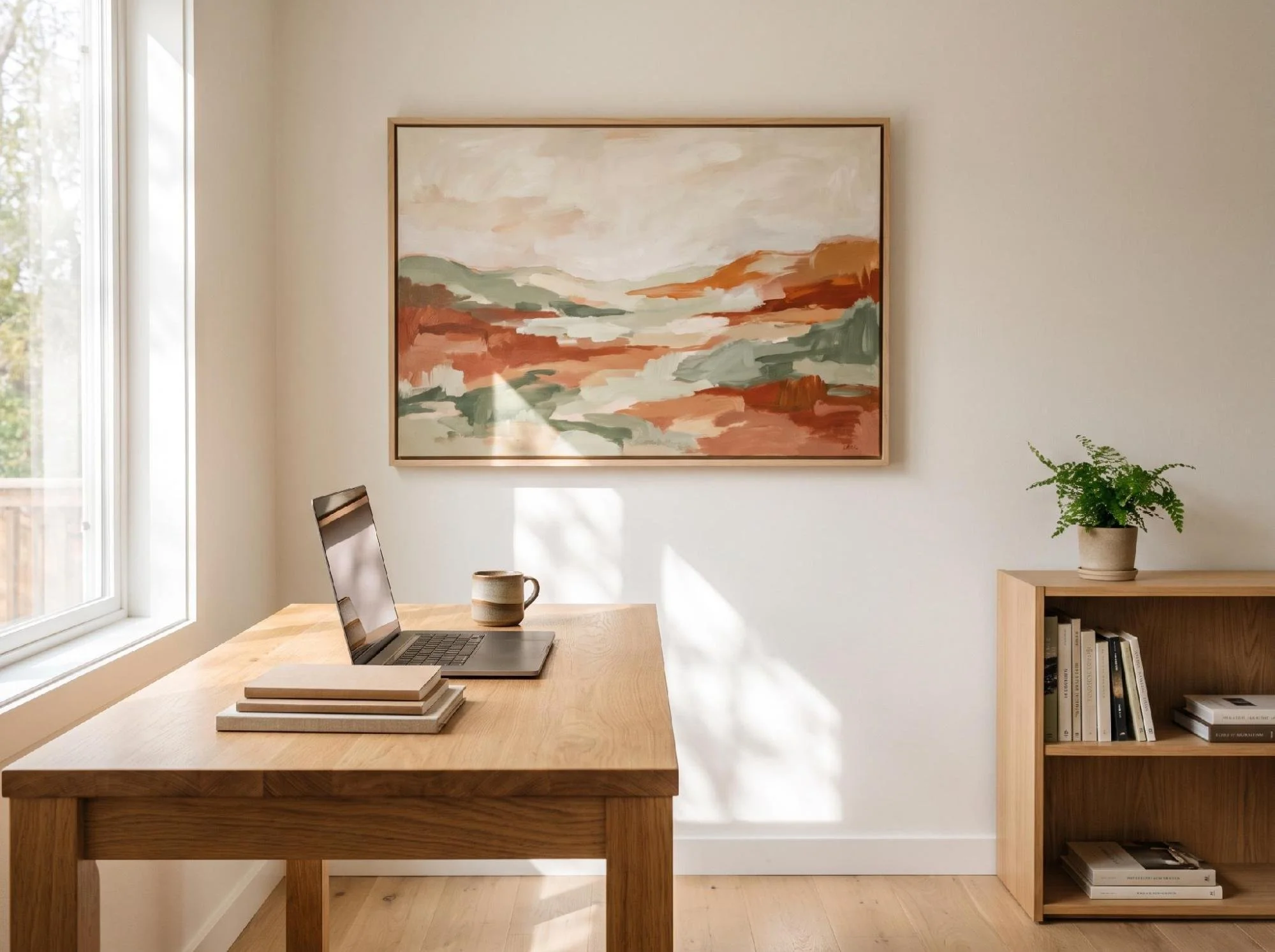
Offices used to be an afterthought. Four walls, a desk, maybe a motivational poster nobody actually looked at. That's changed. With telework now making up close to a quarter of the U.S. workforce, according to the Bureau of Labor Statistics, the walls around us are finally getting real design attention.
It's not just about looking nice on a Zoom call, either. A 2024 Gensler survey found that 83% of employees rank the visual environment as a top factor in whether they stay with a company. Walls matter. What you hang on them matters even more.
This isn't a roundup of forty generic art ideas you'll skim and forget. It's a guide to choosing pieces that actually change how a workspace feels and functions, from the one statement piece that anchors a room to the small, personal touches that make an office feel like yours.
Why a Statement Piece Changes the Whole Room
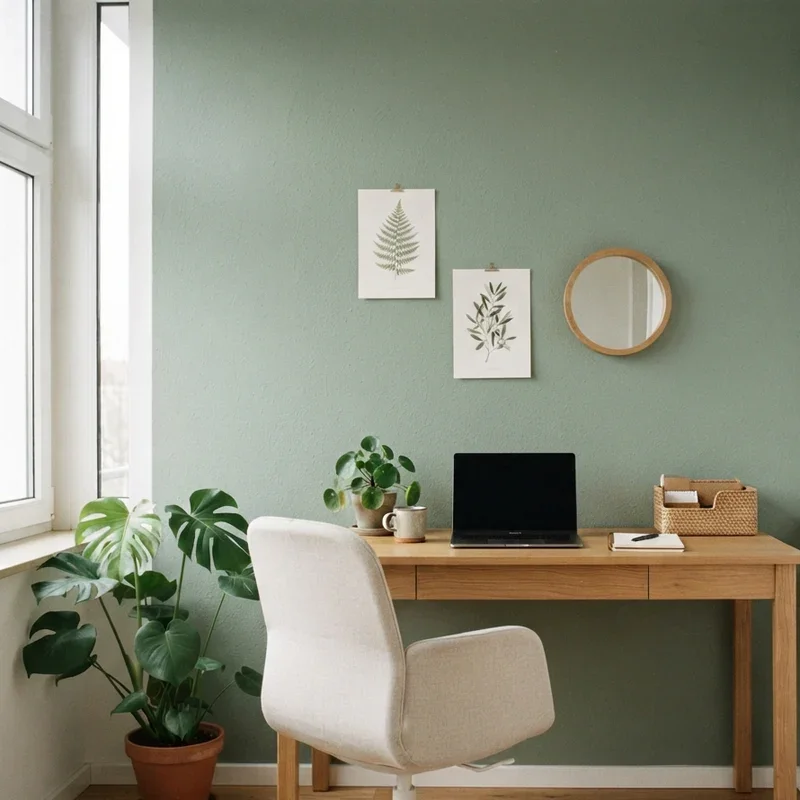
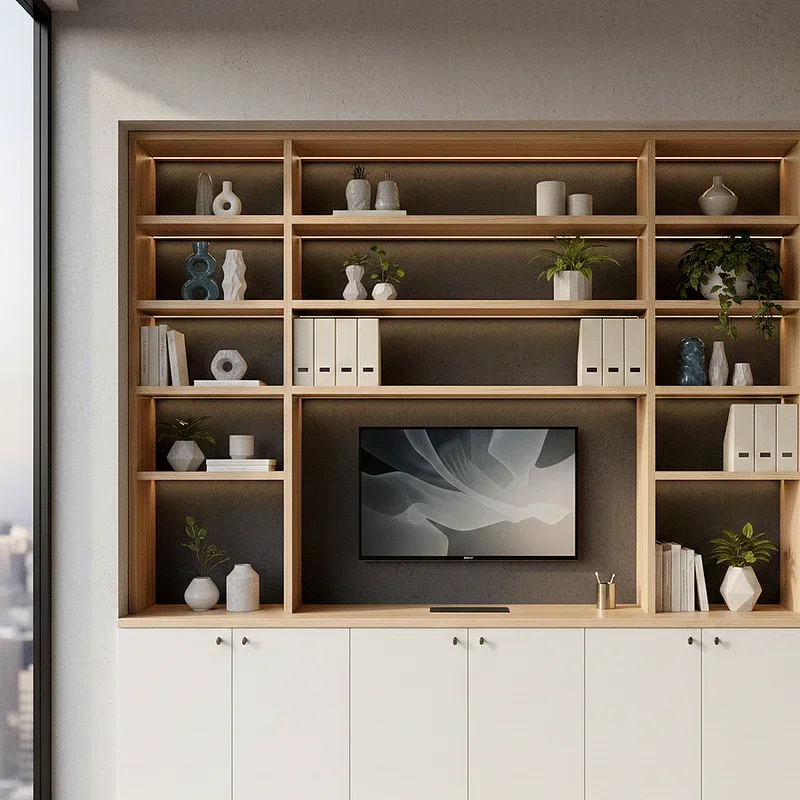
A few years ago, office design leaned hard into sterile minimalism: white walls, black frames, maybe a single succulent. That's fading fast. Heading into 2026, "warm minimalism" is taking over instead, earthy tones, wood frames, and canvas art that feels lived-in rather than showroom-cold.
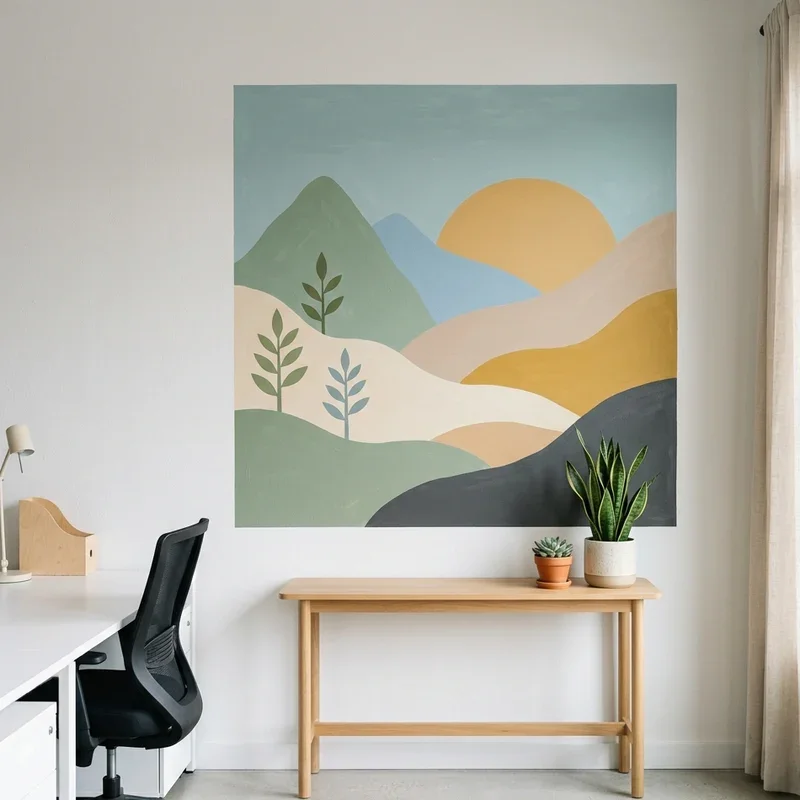
There's a practical sizing lesson buried in this trend, too. One large piece almost always reads better than a cluster of small ones, especially in a tight home office. A single oversized painting gives the eye somewhere to land, rather than bouncing between five mismatched frames. This is where horizontal formats earn their keep. Above a desk or a low credenza, a wide piece fills the awkward strip of wall that a square or vertical print just can't cover.
If you're staring at a blank stretch above your desk and want something that actually fits the space rather than floating awkwardly in the middle, large horizontal art is worth a look. Handmade, ready-to-hang pieces sized for exactly this kind of wall solve a problem that generic mass-market prints usually don't.
The payoff isn't just aesthetic. University of Exeter research found that employees working in "enriched" spaces, ones decorated with art or plants, were 17% more productive than those in bare, purely functional environments. A blank wall isn't neutral. It's a missed opportunity.
Matching Art to the Way You Work
Not every piece belongs in every job. Someone doing deep analytical work benefits from different visual input than someone whose day is built around brainstorming and client calls.
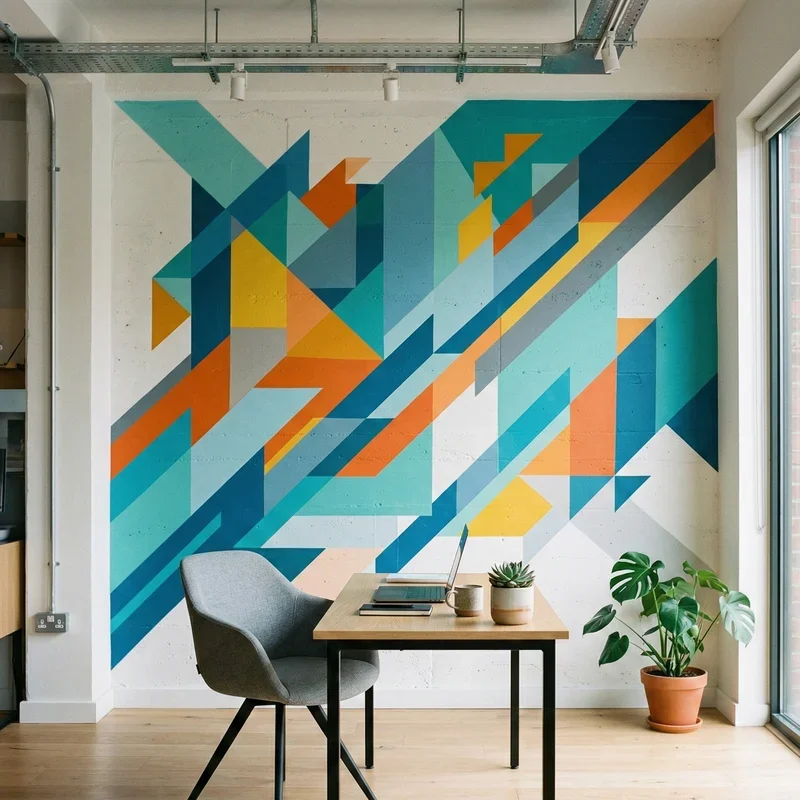
Abstract art tends to work well in shared or high-traffic workspaces because it's cognitively "quiet." It doesn't demand interpretation, so it fades into the background when you need to focus, but still adds warmth. Nature photography and landscape work pull in biophilic design principles, the idea that exposure to natural imagery reduces stress and mental fatigue even when there's no actual window in sight.
Portraits and personal photography are a different category entirely. They work best when the goal is connection rather than calm, think reception areas or a corner of a home office where you want a reminder of people and places outside work. If that's the direction you're leaning, personalizing your walls with photography is worth exploring for ideas on how to do it without cluttering the space.
The point isn't to pick the "correct" style. It's worth noting what kind of mental state your work actually requires and choosing art that supports it rather than working against it. This ties into the broader shift the Global Wellness Institute's 2026 workplace trends report tracks, physical spaces increasingly designed around how people actually feel while they work, not just how the space photographs.
The Productivity Case for Personal, Self-Chosen Art
Here's the stat that should reshape how most people think about office decor: University of Exeter research found the biggest productivity boost, 32%, came not from designer-curated spaces but from employees who chose their own decor. Not a professional's taste. Theirs.
Separate research from Knight and Haslam found something similar: employees who had a say in selecting their own workplace art saw productivity climb by as much as 37%. Curated, "correct" design loses to something a person actually picked out and likes looking at every day.
That's a hard thing to buy off a shelf, though. A print someone else designed, no matter how tasteful, still isn't something you chose from scratch. This is where a genuinely custom piece changes the equation.
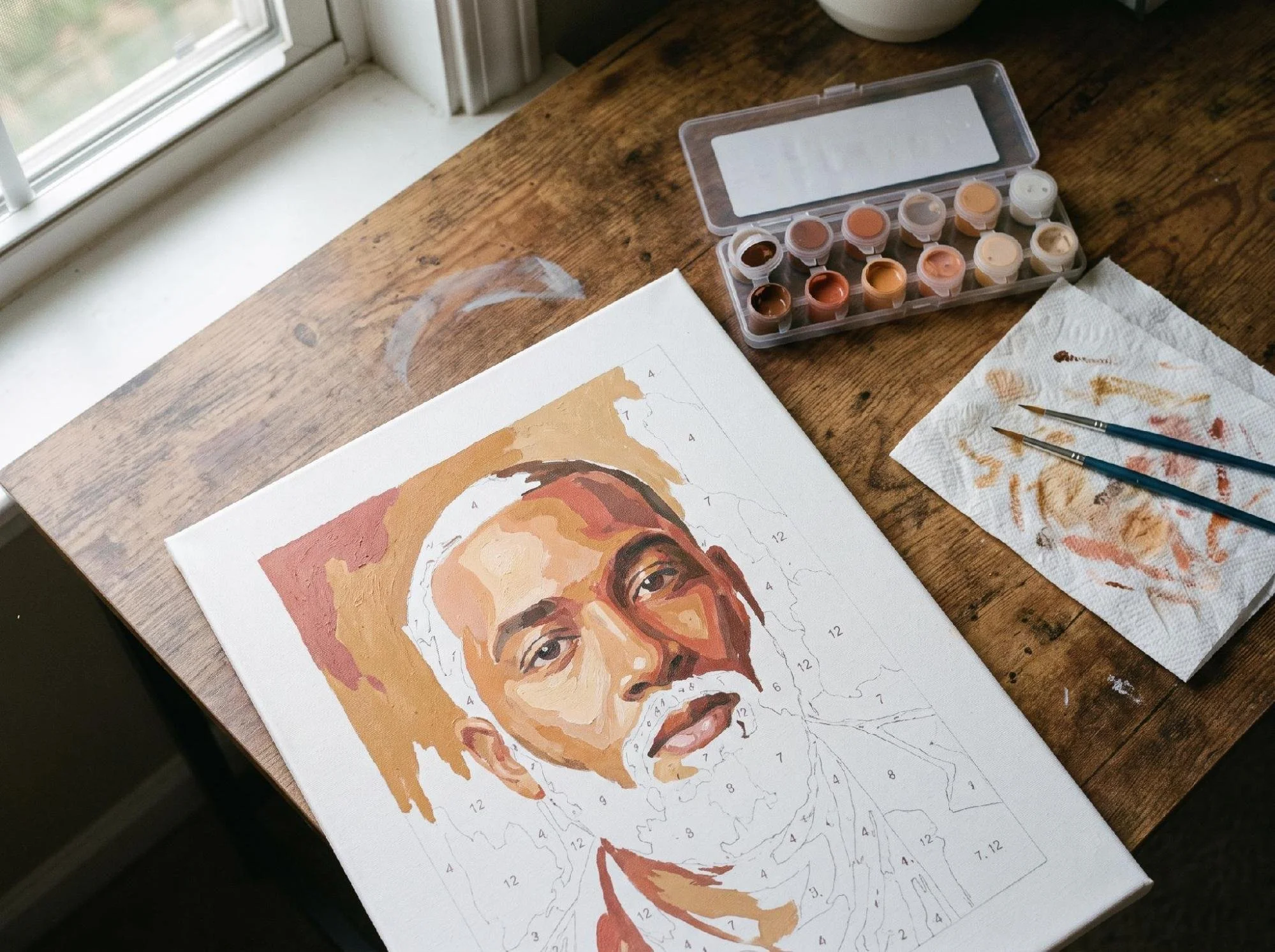
A numbers painting kit turns a favorite photo, a family trip, a pet, a skyline you love, into an actual piece you painted yourself. No art background required, and the process itself is closer to a wind-down ritual than a chore. What you end up with isn't a print. It's something you made, which is exactly the kind of self-selected, personally meaningful decor the research points to.
Styling Tips: Balancing Statement Pieces With Personal Touches
The best office walls don't pick a side between "impressive" and "personal." They do both. One large, confident piece anchors the room, and smaller, more personal items fill in around it without competing for attention.
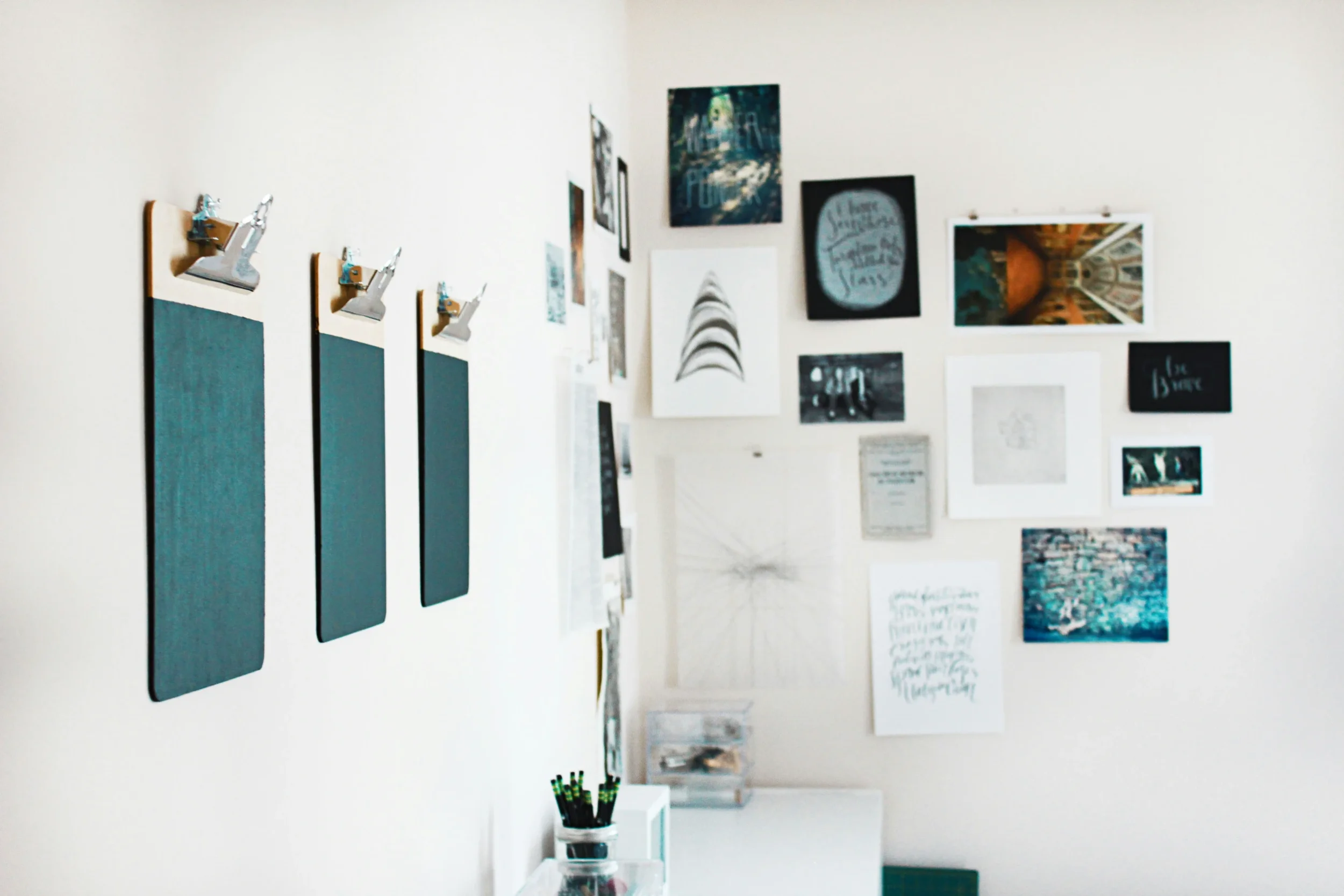
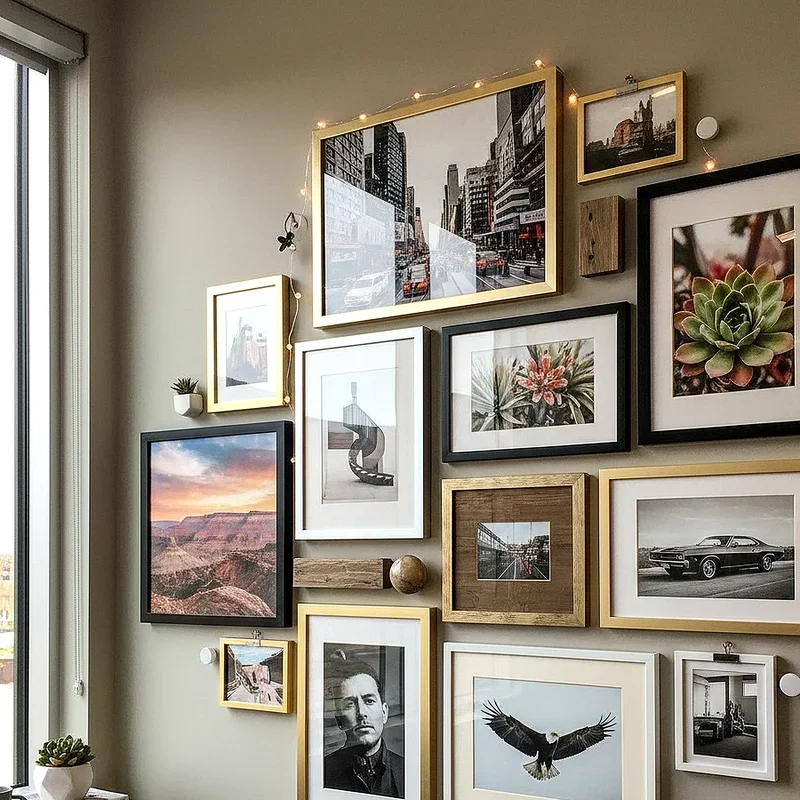
A simple approach: hang the big horizontal piece at eye level above the desk, then build a small gallery cluster nearby, a couple of framed photos, a finished paint-by-numbers canvas, maybe a small print picked up on a trip. Keep the cluster loosely aligned so it reads as intentional rather than accidental.
Color coordination matters more than people expect. If you're leaning into the warm minimalism palette, think sage, terracotta, warm beige, try to pull at least one of those tones from your statement piece into the smaller items around it. It doesn't need to match exactly. It just needs to feel like the same room designed the same day. For more on building that palette from scratch, choosing a calming color palette for your workspace covers the basics well.
Bringing It Together in a Small or Home Office
Space constraints change the math. With roughly 34.6 million Americans teleworking as of August 2025, a huge share of "office wall art" decisions are actually happening in spare bedrooms, converted closets, and kitchen corners, not corporate suites with acres of blank wall.
In a small room, restraint isn't optional; it's the whole strategy. One well-chosen large piece does more for a cramped home office than five smaller ones ever could, because it gives the room a single focal point instead of visual clutter competing with an already tight footprint.
There's also the "Zoom corner" to think about. If your desk doubles as your on-camera setup, whatever's behind you is now part of your professional presentation dozens of times a week. A thoughtfully placed piece of art reads as put-together in a way a bare wall or a hastily propped bookshelf never quite manages, and it plays into the broader engagement picture Gallup's workplace research keeps pointing to: environment shapes how people show up to work, on camera or off.
Conclusion
The data and the room agree on this one: the best office walls combine one confident statement piece with something personally made or chosen. Not two competing philosophies, one cohesive approach.
A large horizontal painting serves as a workspace's anchor. A hand-painted, self-chosen piece gives it its personality. Put them in the same room, and you get something no designer showroom or generic print ever quite manages, a space that actually feels like yours to work in.
Stay up to date with our latest ideas!