Roller Shades vs Blinds: Which Gives You Better Light Control
Compare roller shades and blinds to find which offers better light control, privacy, style, and functionality for every room in your home.

Roller shades and blinds are among the most popular window treatment options, and while they can serve similar general purposes, they offer meaningfully different light control experiences that are worth understanding before choosing between them.
How Roller Shades Control Light
Roller shades typically offer light control through fabric opacity — sheer, light-filtering, or blackout fabric options — combined with the shade's position when raised or lowered. This creates a smooth, gradual transition of light as the shade is adjusted, without the slat-based light patterns that blinds create.
How Blinds Control Light Differently
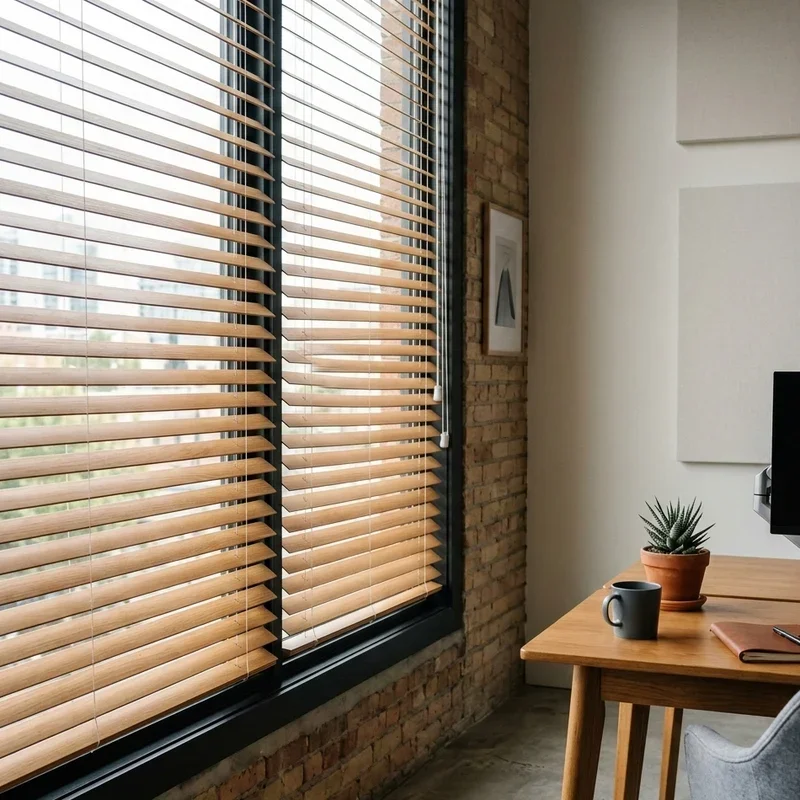
Blinds control light through both height adjustment and slat angle, allowing for more granular control — light can be admitted while still blocking direct sightlines, for instance, by angling slats without fully raising the blind. This dual-axis control gives blinds a flexibility that single-fabric roller shades don't offer in quite the same way.
Comparing Light Gaps and Edge Leakage
Roller shades, when properly fitted, tend to have fewer light gaps around the edges compared to blinds, whose slat mechanism inherently creates small gaps at the sides. For bedrooms or media rooms where more complete light blockage matters, well-fitted blackout roller shades often outperform blinds in this specific regard.
Comparing Diffused Light Quality
Light-filtering roller shades create a soft, even diffusion of natural light throughout a room, which many homeowners find more pleasant for everyday living spaces than the striped light pattern blinds create when slats are partially open. This is a subjective preference, but it's a noticeable difference worth experiencing in person before choosing.
Maintenance and Durability Considerations
Blinds have more individual components (slats, tilt mechanisms, lift cords) that can wear or break over time compared to the simpler mechanism of a roller shade. This generally makes roller shades somewhat lower-maintenance over their lifespan, though quality varies significantly across product lines for both categories.
Getting Hands-On Comparison Before Deciding
Given how much the light control experience differs between the two, homeowners considering roller shades are well served seeing both options in person, ideally in the specific room being outfitted, rather than deciding based on general descriptions alone. Consultants at companies like Shades by Mia Casa can typically bring samples of both categories for a direct side-by-side comparison in the actual space.
Neither option is universally better for light control; the right choice depends on which specific light control experience — gradual diffusion versus adjustable slat angles — better matches a homeowner's actual daily habits and preferences.
Stay up to date with our latest ideas!