How Fiberglass Front Doors Perform in Arizona’s Desert Climate
Learn how fiberglass front doors handle Phoenix heat, sun, dust, and storms, plus what to evaluate before replacing an entry door.

An exterior door has to do more than provide a way into a home. It helps seal the building, contributes to security, influences curb appeal, and separates conditioned indoor space from outdoor weather.
In Arizona, entry doors face particularly demanding conditions. Long periods of direct sunlight, high summer temperatures, dust, dry air, and seasonal storms can place stress on the door slab, frame, finish, seals, and hardware.
That makes material selection especially important. Wood, steel, and fiberglass can all be appropriate in the right setting, but they perform differently when exposed to heat and strong sunlight.
Fiberglass has become a popular option because it can reproduce the appearance of painted or stained wood while offering relatively stable performance and manageable maintenance. Understanding its strengths and limitations helps homeowners determine whether it is the right material for their property.
What Arizona Weather Can Do to an Entry Door
Phoenix-area entry doors may experience large temperature differences between their exterior and interior surfaces. One side can be exposed to direct sun while the other faces an air-conditioned room.
Over time, repeated heating and cooling can affect door materials, finishes, weatherstripping, sealants, and frames.
Other environmental pressures include:
Prolonged ultraviolet exposure
Windblown dust and sand
Dry conditions that can affect some finishes
Monsoon rain and wind
Water collecting near thresholds
Movement around older frames
Heavy daily use
Direct afternoon sun on west-facing entrances
The door material is only one part of the system. Even a high-quality door may perform poorly if the frame is damaged, the threshold is uneven, or the installation leaves gaps around the opening.
Why Fiberglass Is Often Considered for Desert Homes
Fiberglass doors are manufactured rather than cut from a single piece of natural wood. Many models contain a reinforced exterior skin, an insulated core, and internal structural components.
This construction allows manufacturers to produce doors in a wide range of designs. A fiberglass surface can be smooth and painted, or textured to resemble natural wood grain.
The material is frequently considered for hot climates because it does not rust like exposed steel and is less vulnerable than untreated wood to certain moisture- and movement-related problems.
That does not mean every fiberglass door performs identically. The quality of the door slab, core, frame, glass, finish, weatherstripping, and installation all affect the final result.
Thermal Performance Depends on the Entire Door System
The door slab represents only part of the entryway. Air can also move through gaps around the frame, threshold, hardware, glass inserts, and weatherstripping.
A well-fitted exterior door should close evenly and create a consistent seal. Visible daylight around the edges, moving curtains, hot areas near the threshold, or recurring dust inside the entry may indicate air leakage.
When comparing fiberglass front doors, homeowners should look beyond appearance and consider:
The construction of the insulated core
The condition and design of the frame
Weatherstripping quality
Threshold adjustment
The amount of decorative glass
Glass energy-performance ratings
Door orientation
Professional installation
The U-factor indicates how readily a complete door assembly transfers non-solar heat. A lower U-factor generally represents better insulating performance. Doors with substantial glass may also have a solar heat gain coefficient, which indicates how much solar heat passes through the glazed area.
ENERGY STAR evaluates windows and doors according to climate-related U-factor and, when applicable, solar heat gain requirements.
Fiberglass Can Offer Good Dimensional Stability
Natural wood can expand, contract, crack, or change shape as it responds to environmental conditions. Properly manufactured fiberglass is generally more dimensionally stable.
This stability can help the door maintain a consistent fit within its frame. A door that remains properly aligned is easier to seal and operate.
However, the surrounding structure still matters. A fiberglass slab cannot correct:
A shifting or damaged frame
An uneven threshold
Loose hinges
Poor installation
Deteriorated weatherstripping
Water entering around the opening
Movement in the wall or foundation
If an existing door sticks, drags, or fails to latch, the source should be identified before a replacement is ordered. In some cases, the problem is the door itself. In others, the frame or structure requires attention.
Maintenance Is Usually Straightforward but Still Necessary
Fiberglass is often described as low maintenance, but no exterior door is maintenance-free.
Dust and residue should be cleaned from the door, threshold, and weatherstripping. Abrasive cleaning materials should generally be avoided because they can damage the finish.
Homeowners should periodically inspect:
Painted or stained surfaces
The lower edge of the door
Weatherstripping
Caulk around the frame
Glass seals
Hinges and hardware
The threshold
Drainage near the entrance
A damaged finish should be corrected according to the manufacturer’s recommendations. Direct sunlight can gradually affect many coatings, particularly on darker doors that absorb more heat.
The threshold should also remain clear of dirt and debris. Accumulated material can prevent the door from closing correctly and may damage the lower seal.
Fiberglass Offers Considerable Design Flexibility
One reason fiberglass doors are widely used is the range of available designs.
Homeowners can choose from:
Smooth painted surfaces
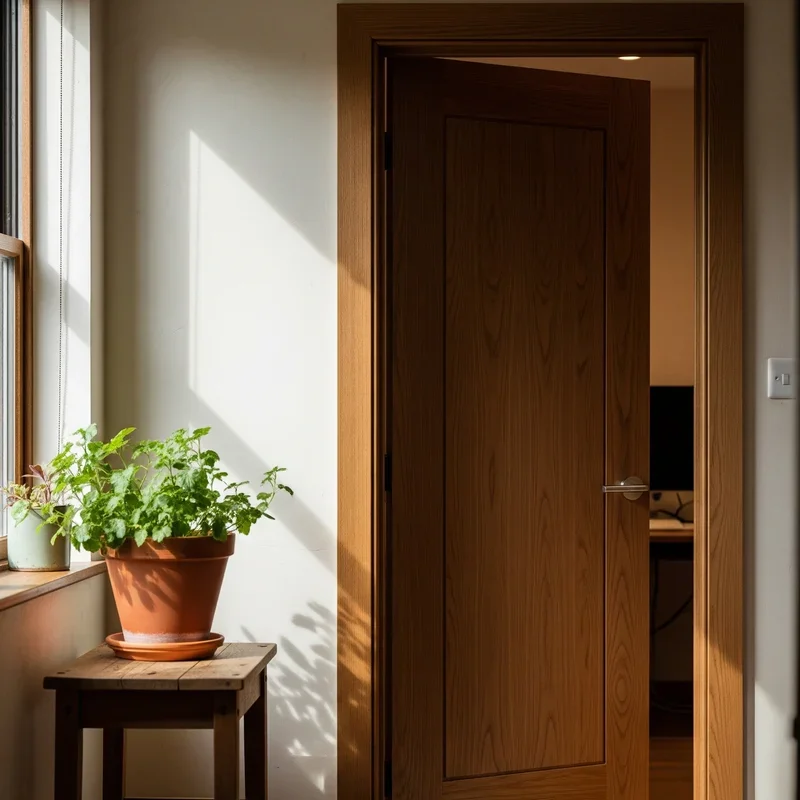
Wood-grain textures
Traditional panel arrangements
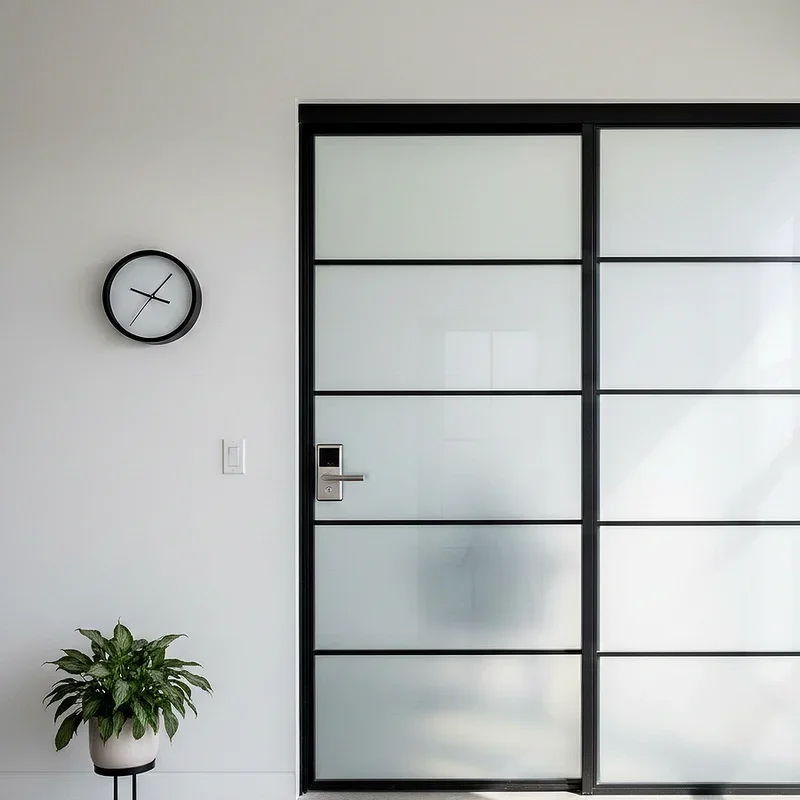
Contemporary minimalist designs
Decorative glass
Clear or privacy glass
Single doors
Double-door configurations
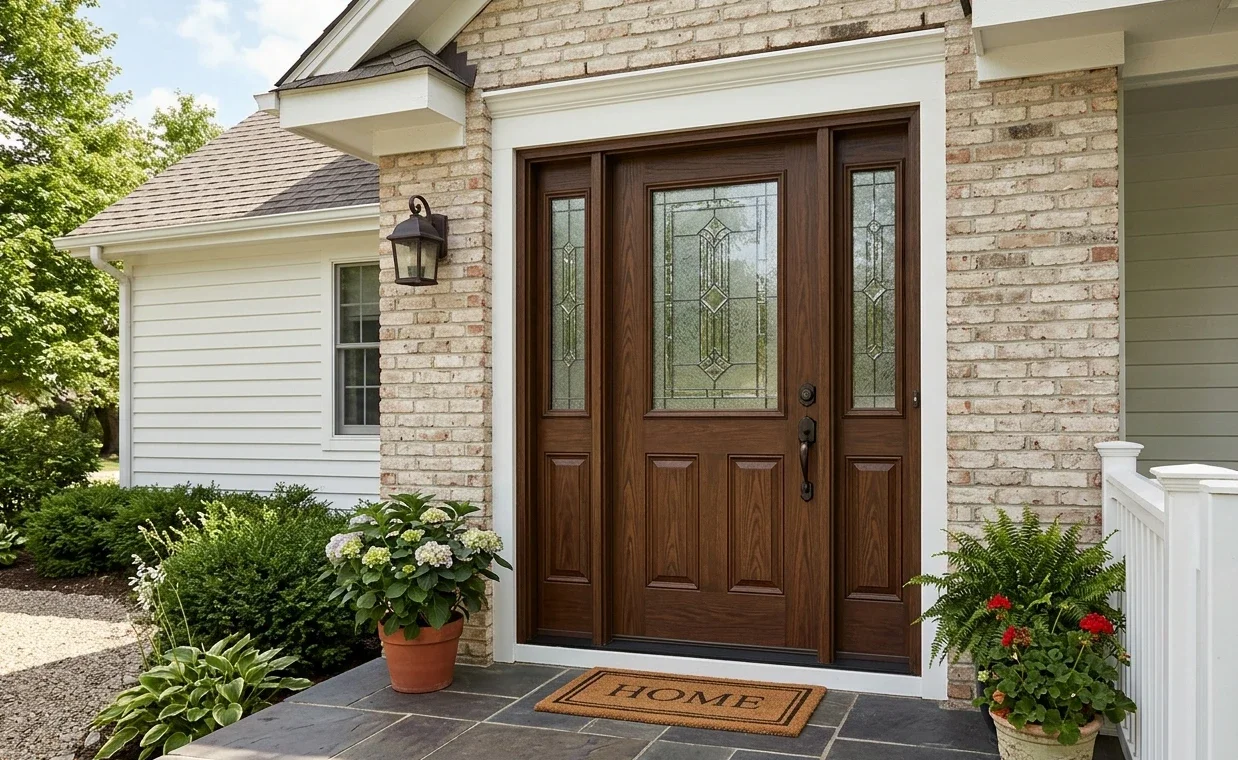
Doors with sidelights
Custom hardware and finishes
This flexibility allows the entrance to complement different architectural styles without requiring the maintenance associated with some natural wood doors.
The amount and placement of glass should be considered carefully in Arizona. Decorative glass can increase daylight and improve the appearance of an entry, but it may also affect privacy and solar heat gain.
The ENERGY STAR and NFRC labels can help homeowners compare energy-performance ratings for doors with glass.
Fiberglass Compared With Wood and Steel
Each major door material has advantages.
Wood Doors
Wood provides a natural appearance and can be customized in many ways. It may be a strong option for sheltered entrances and homeowners prepared to maintain the finish.
Direct sun, dryness, and moisture exposure can make regular inspection and refinishing important. The species, construction, finish, and protection provided by the entryway all influence performance.
Steel Doors
Steel doors can provide strength, security, and good value. Insulated steel doors may also perform well thermally.
However, damage to the protective coating can expose the metal beneath. Dents can also be difficult to repair cleanly, and dark steel surfaces may become very hot in direct sunlight.
Fiberglass Doors
Fiberglass offers a balance of design flexibility, durability, and thermal performance. It can imitate wood without requiring exactly the same maintenance routine.
The best choice depends on the home, budget, entrance orientation, desired appearance, and quality of the specific product.
Signs an Existing Entry Door May Need Replacement
Age alone does not determine when a door should be replaced. Condition and performance are more meaningful.
Possible warning signs include:
Cracks or significant surface damage
A door that no longer fits squarely
Persistent gaps around the edges
Recurring drafts
Damaged or compressed weatherstripping
A threshold that cannot be adjusted properly
Water damage around the frame
Difficulty locking or latching
Loose hinges that no longer hold securely
Excessive heat entering around the opening
A deteriorated frame
Glass seals that appear damaged
Some problems can be corrected through adjustment, weatherstripping, or hardware replacement. More extensive deterioration may make full replacement more practical.
Door Orientation Should Influence the Selection
A north-facing entry and a west-facing entry do not experience the same conditions.
West- and south-facing doors may receive stronger direct sunlight and greater heat exposure. Homes with covered porches, deep overhangs, or shaded entrances may place less stress on the finish.
Before selecting a door, consider:
How many hours of direct sunlight reach the entrance?
Is the door protected by an overhang?
Does rain collect near the threshold?
Is the opening exposed to strong wind?
Does the existing frame remain square?
How much glass is appropriate?
Is privacy important?
What maintenance will the finish require?
These factors can influence the material, color, glass package, hardware, and installation approach.
Professional Installation Is as Important as Material Choice
A replacement door must be measured, aligned, secured, insulated, flashed, and sealed correctly.
Poor installation may produce air leakage even when the door itself has strong performance ratings. An uneven frame can also cause sticking, premature weatherstrip wear, or difficulty operating the lock.
The U.S. Department of Energy notes that exterior doors can contribute significantly to air leakage when they are old, improperly installed, or inadequately sealed. Proper weatherstripping and air sealing are therefore essential parts of the door system.
A professional evaluation should consider both the replacement product and the condition of the surrounding opening.
Choosing the Right Fiberglass Door for a Phoenix Home
Homeowners comparing fiberglass entry doors in Phoenix should ask for more than a sample of the exterior finish.
Useful questions include:
What is inside the door?
How is the frame constructed?
Which glass options are available?
What energy-performance ratings apply?
What finish maintenance is required?
How does direct sun affect the warranty?
Is the threshold adjustable?
What hardware is included?
Does the warranty cover both product and installation?
How will the opening be sealed?
A clear comparison makes it easier to distinguish cosmetic differences from features that affect long-term operation.
A Balanced Option for Arizona Entryways
Fiberglass is not automatically the best material for every home, but it offers qualities that make it well suited to many Arizona properties.
Its stable construction, insulated core options, design flexibility, and resistance to rust can be useful in a climate defined by heat, sun, dust, and seasonal storms.
The final performance still depends on choosing the correct product and installing it properly. Homeowners should evaluate the complete entry system, including the slab, frame, glass, weatherstripping, threshold, and surrounding opening.
AZ Valley Windows installs fiberglass entry doors and other exterior-door options for Phoenix-area homeowners. Its fiberglass-door page includes smooth and wood-look options, doors with sidelights, double doors, and other configurations for different residential entrances.
Stay up to date with our latest ideas!