15 Office Furniture Planning Ideas for a More Functional Workspace
Explore office furniture planning ideas that improve layout, comfort, storage, and visual balance in home offices and professional workspaces.

A good piece of furniture in the wrong position creates the same friction as a bad piece of furniture. The desk that worked perfectly in a previous office can make a new room feel cramped. The shelving that looked practical in a catalogue can block the best light in the room. Most office furniture problems are actually planning problems — and they are considerably cheaper to solve before anything arrives.
1. Desk placement first, everything else after
Where the desk sits determines the sightline, the monitor position, and how much of the room is left to work with. Getting this right before choosing secondary furniture prevents later purchases from creating awkward arrangements that are difficult to undo.
2. Measure what the desk leaves behind, not just where it fits
A desk that fills the wall correctly can still leave too little room for a chair to push back, or block the natural path from the door. The usable space around the desk matters as much as the desk's footprint.
3. Evaluate large furniture combinations in context
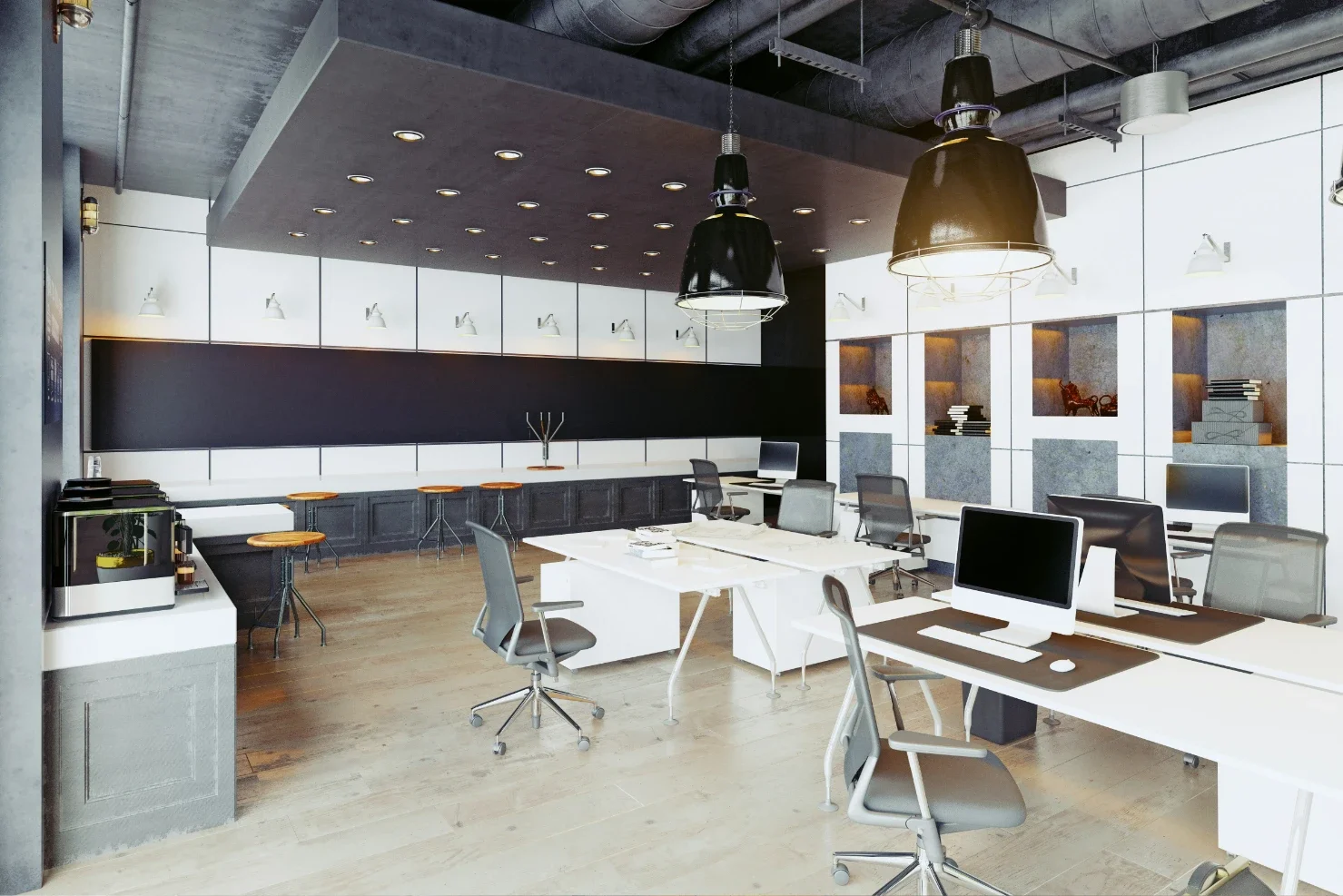
When larger desks, shelving systems, or seating zones need to be assessed as part of a complete workspace, office furniture rendering services can help teams preview scale, finishes, and overall room balance before final decisions are made. Seeing how a credenza and a large desk share a wall — at actual proportions — is more useful than reviewing each piece separately.
4. Clear movement paths before adding more pieces
Pulling a chair back from a desk, walking to a printer, reaching a window — all of these should feel natural without having to navigate around furniture. If the planned layout creates a maze, something needs to change size or position before anything is ordered.
5. Storage belongs near the task it serves
A filing cabinet on the opposite wall from where documents are reviewed gets used less than one within reach of the desk. Supplies near the workspace, reference materials near the reading area. Storage that requires crossing the room tends to go underused, and what cannot be conveniently stored ends up on the desk.
6. Vertical space is the first resource compact offices should use
Wall-mounted shelving, tall cabinets, and floating shelves hold a surprising amount without touching the floor area a small workspace depends on. Particularly relevant in home offices where the desk shares a room with other activities.
7. Seating should reflect the actual use of the space
A private office used mainly for solo work needs one excellent ergonomic chair and little else in the way of seating. An office where people meet regularly needs chairs that work for longer conversations. The mistake is often buying meeting furniture for a space that is used primarily alone, or neglecting guest seating in a space where it would get daily use.
8. Furniture can define zones without walls
A low bookcase between a desk area and a small sofa does spatial work that no paint colour can do. Rugs help too. In open or multifunctional workspaces, how furniture is arranged often determines whether the room feels like one undifferentiated space or like a place with a logical structure.
9. Three finishes are usually enough
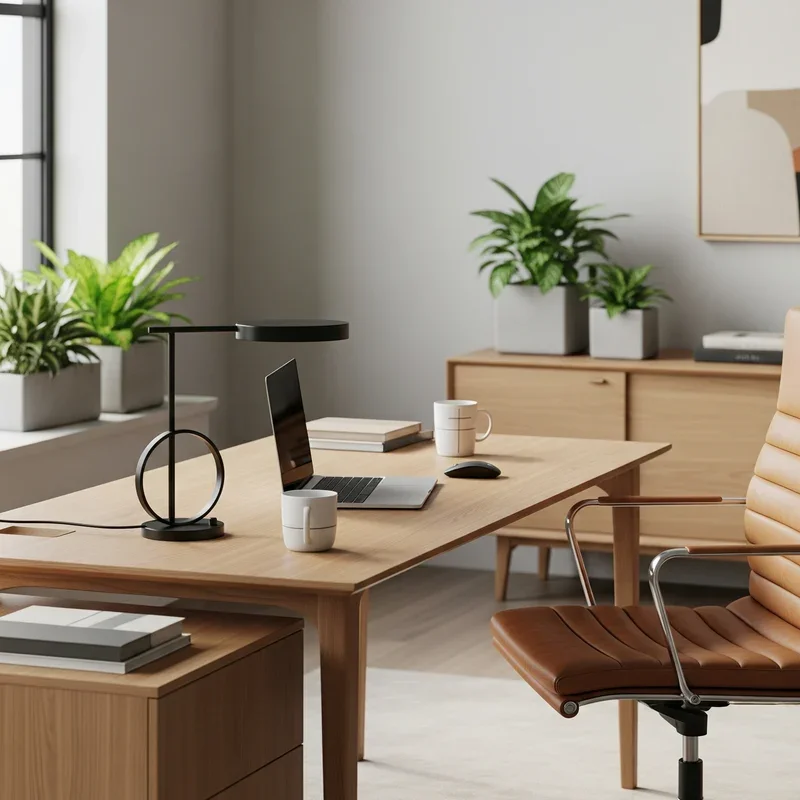
Desk, shelving, and seating do not need to match exactly, but they tend to read better when they share a material direction — a wood tone range, a metal finish family, a consistent upholstery character. The workspace that accumulated furniture in different finishes over years is usually the one that never quite feels pulled together.
10. Heavy pieces on one side make a room feel uneven
A tall dark bookcase or a large storage wall on one side of a room pulls the visual weight in that direction. Balancing it with something on the other side — open shelving, a window, lighter-coloured wall — keeps the room from feeling lopsided. This matters more in smaller offices where there is less space to absorb imbalance.
11. Cable routing deserves attention before installation, not after
Furniture with built-in grommets, internal routing channels, or back-panel access makes cable management considerably more manageable. After the furniture is in place, this becomes a permanent inconvenience to live with.
12. At least one piece that moves
A rolling storage unit, a lightweight chair, a small table on castors — something that can be repositioned easily gives the office flexibility when the work changes or the room needs to serve a different purpose for a day.
13. Window placement affects where comfortable seating goes
Natural light is best when it falls on the work surface without causing glare on a monitor. A reading chair near a window is good. The same chair directly facing the window can be uncomfortable for extended use. Worth checking before deciding on final positions, particularly for home offices where the window positions are fixed.
14. A small office with five good pieces works better than one with eight average ones
Overfurnishing compact spaces creates friction at every turn. Leggy or open-base furniture keeps the floor visible and the room feeling less enclosed. Multipurpose pieces — a desk with integrated storage, a bench that doubles as a shelf — do more with less floor space.
15. Comfort is the test, not the starting assumption
An office should be a place someone can work in comfortably for several hours. Ergonomic support, good light at the right angle, desk height that suits the chair, storage that is actually reachable — these functional requirements should shape every furniture decision from the beginning. How the room looks in a photograph is a much lower-stakes concern than how it feels to sit in at 3pm on a Tuesday.
A workspace that has been planned with function as the main priority tends to stay useful over time. The furniture decisions that feel limiting after the first month are usually the ones made for appearance before the practical questions were settled.
Stay up to date with our latest ideas!