Office Decor Ideas for Work: 15 Practical Ways to Upgrade Your Workspace
Practical office decor ideas for work, from layout and lighting to desk, wall, storage, and budget upgrades you can plan before buying.

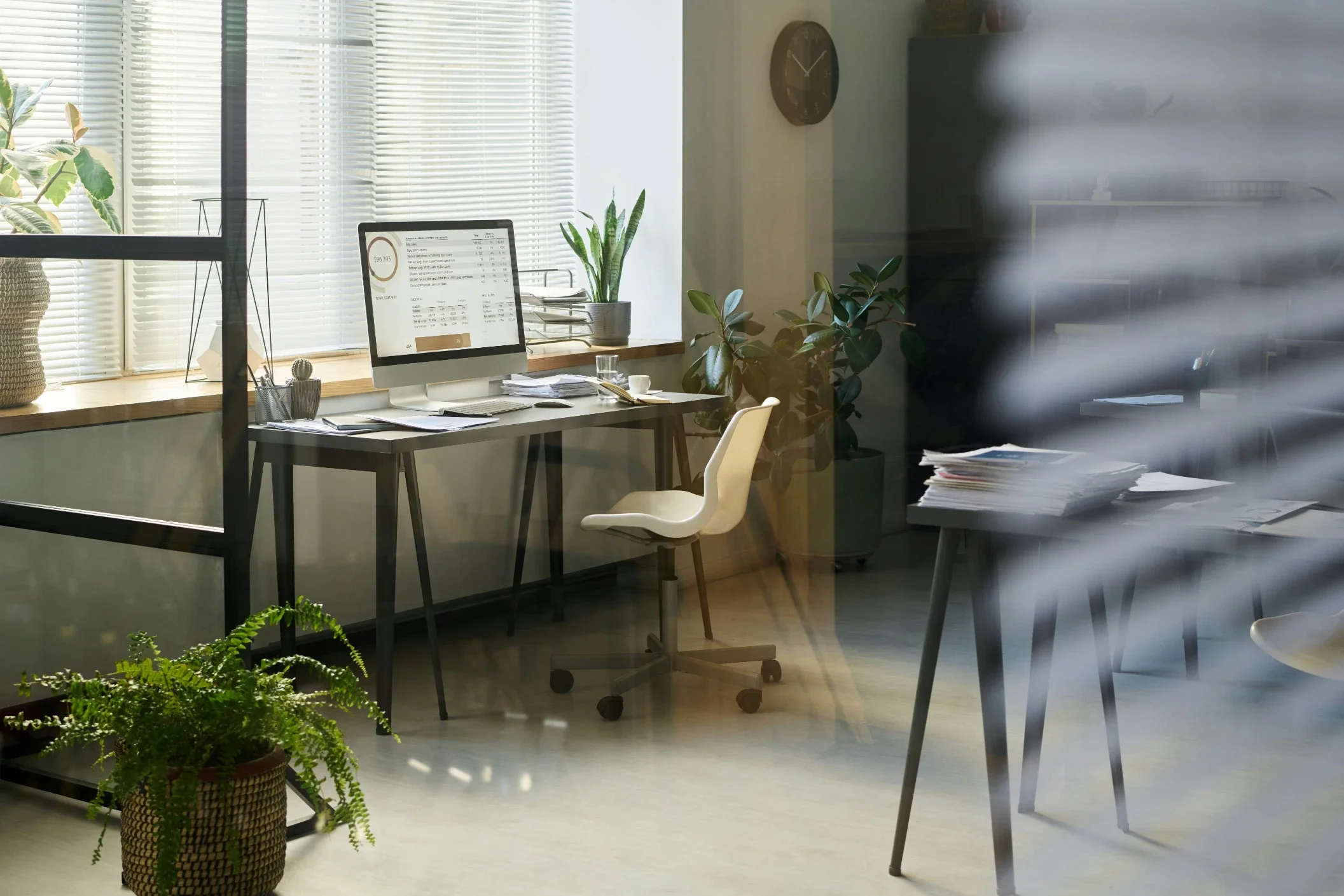
Office decor at work should do more than make a desk look pleasant. It should help you focus, keep daily tools within reach, reduce visual noise, and make the room feel intentional without turning it into a showroom. The best office decor ideas for work usually start with boring questions: Where does the light fall? What do you reach for ten times a day? What has to stay visible, and what can disappear into storage?
That is why it helps to plan the room before buying anything. A lamp, shelf, framed print, rug, or plant can look good on its own and still be wrong for the space. If you want to test several layouts first, an AI office design tool can help you preview wall colors, furniture placement, decor styles, and storage ideas before you spend money or move heavy furniture.
Below is a practical way to decorate a work office, whether you have a private office, a shared workplace, a cubicle, or a small home office used for calls and deep work.
Start with the work, not the decor
Before picking colors or accessories, write down the three tasks the office has to support. Most workspaces fall into one of these patterns:
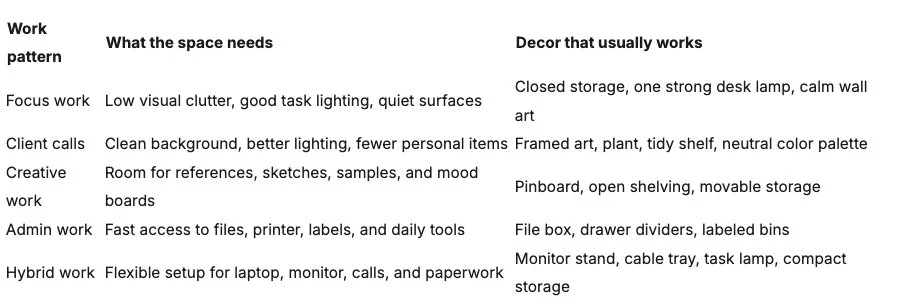
This first step prevents the classic mistake: adding decor to hide a workspace that does not function well. A cluttered desk with a nice candle is still a cluttered desk.
Use a simple color palette

A work office does not need a dramatic redesign. In most rooms, three colors are enough:
One base color for walls, desk, or large furniture
One material color, such as wood, black metal, chrome, or rattan
One accent color for small items, art, or textiles
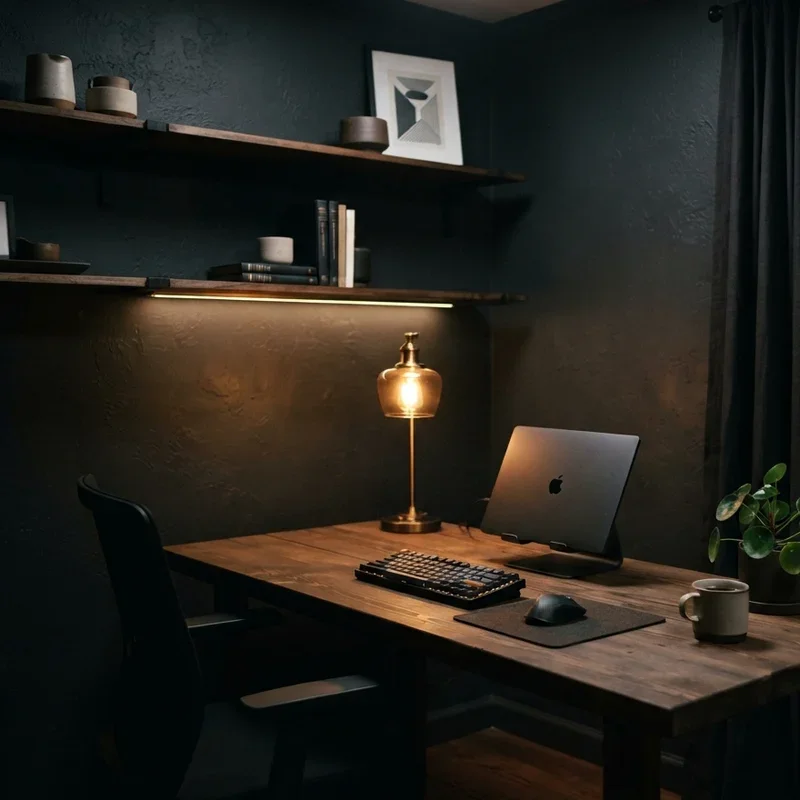
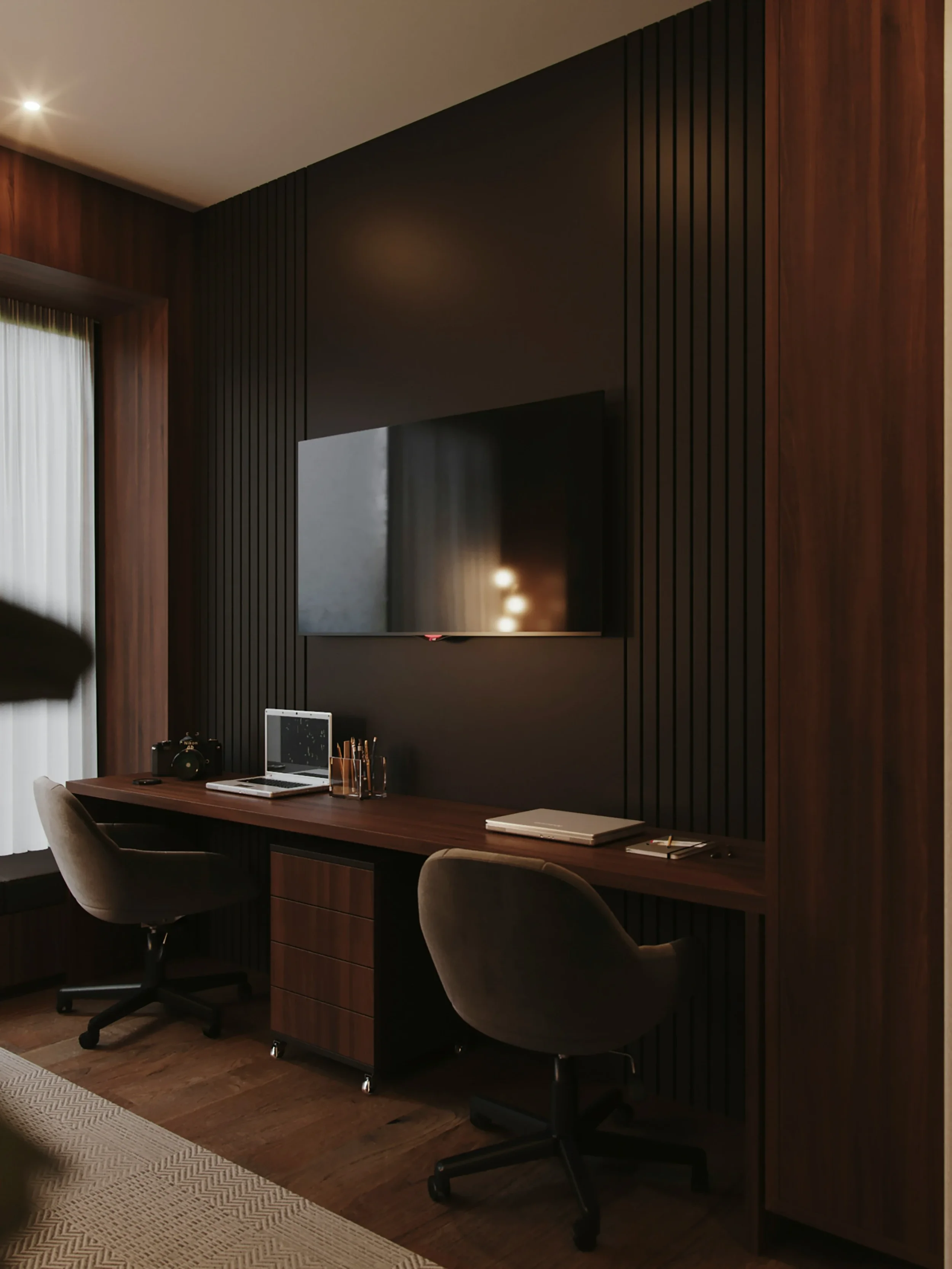
For a professional office, safe base colors include warm white, soft gray, muted green, beige, navy, and charcoal. If the office has little natural light, avoid making every large surface dark. Dark walls can look polished in photos, but in a small or windowless office they often make the room feel flat by mid-afternoon.
A useful test: look at the room during the hour when you work most. Morning light, overhead office lighting, and late afternoon light can make the same color look different.
Fix lighting before buying accessories
Lighting changes more than most decor. A plain desk with good lighting looks better than a stylish desk under harsh ceiling panels.
Use three layers if the room allows it:
Ambient light from the ceiling or a floor lamp
Task light for reading, typing, writing, or sketching
Background light for video calls or late-day work
For desk work, place the task lamp on the opposite side of your writing hand to reduce shadows. If you are right-handed, put the lamp on the left. If you are left-handed, put it on the right. For video calls, avoid sitting with a bright window directly behind you. It makes your face look dark and turns the background into the main subject.
Decorate the wall you actually see
Office wall decor works best when it solves a specific problem. A bare wall behind your monitor can make the desk feel unfinished. A busy gallery wall in front of your face can become distracting.
Try one of these:
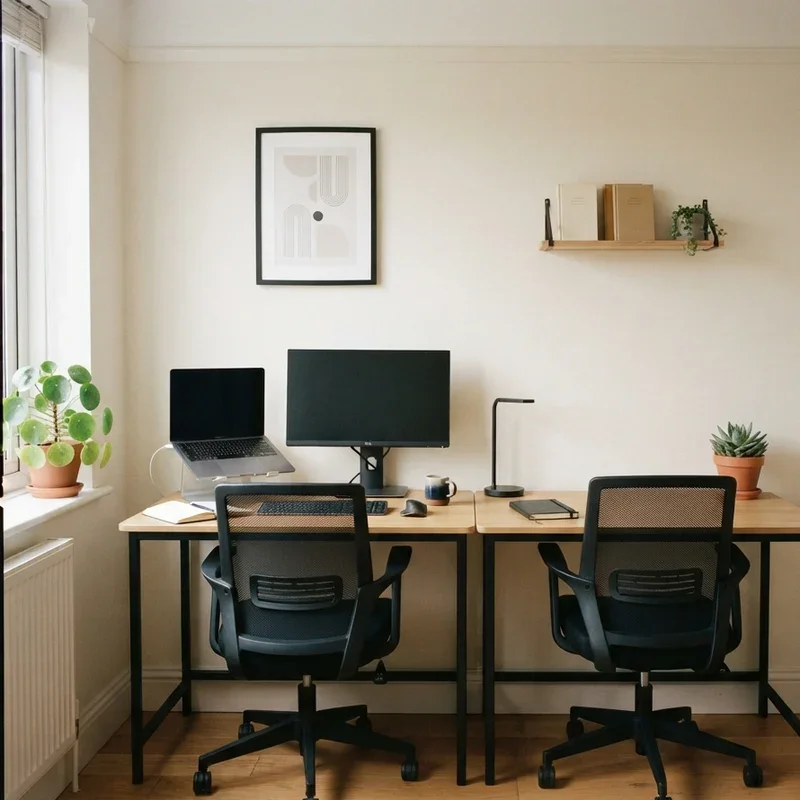
A single large framed print behind the desk
A narrow shelf with two or three objects
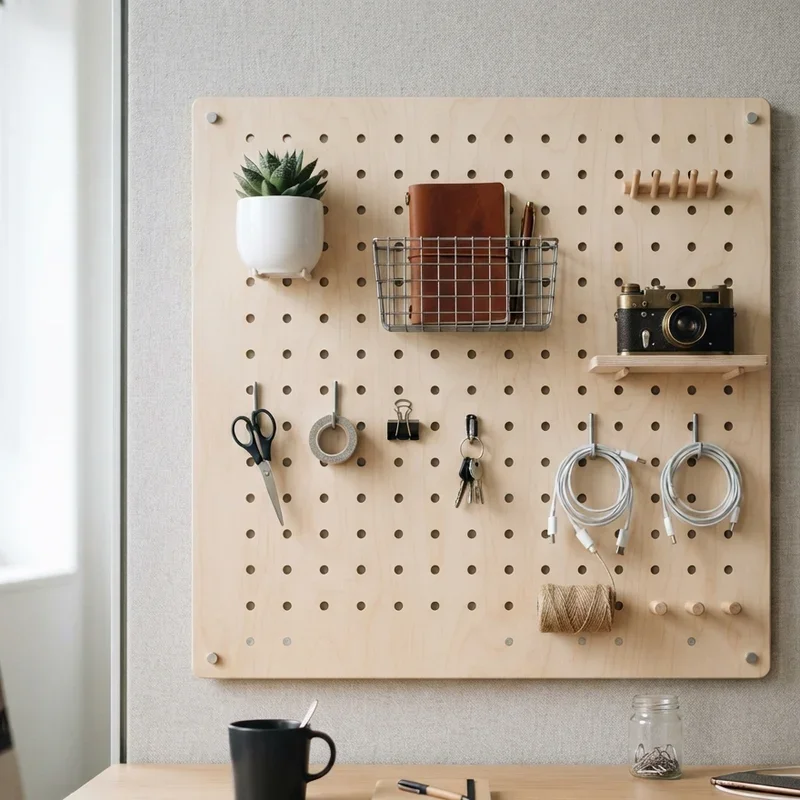
A pinboard for current project notes
A whiteboard if planning is part of your job
Acoustic panels if the room echoes
For rented offices or shared workplace settings, use removable hooks, leaning frames, or a freestanding board instead of drilling. If the wall appears in video calls, keep it calmer than you think you need. A plant, one print, and a clean shelf usually read better on camera than a wall full of small objects.
Make the desk useful first
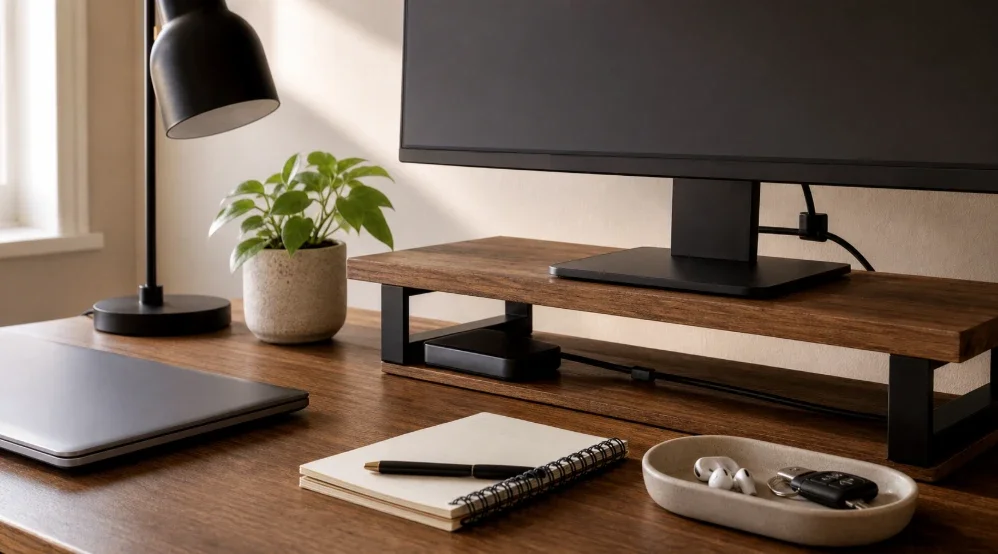
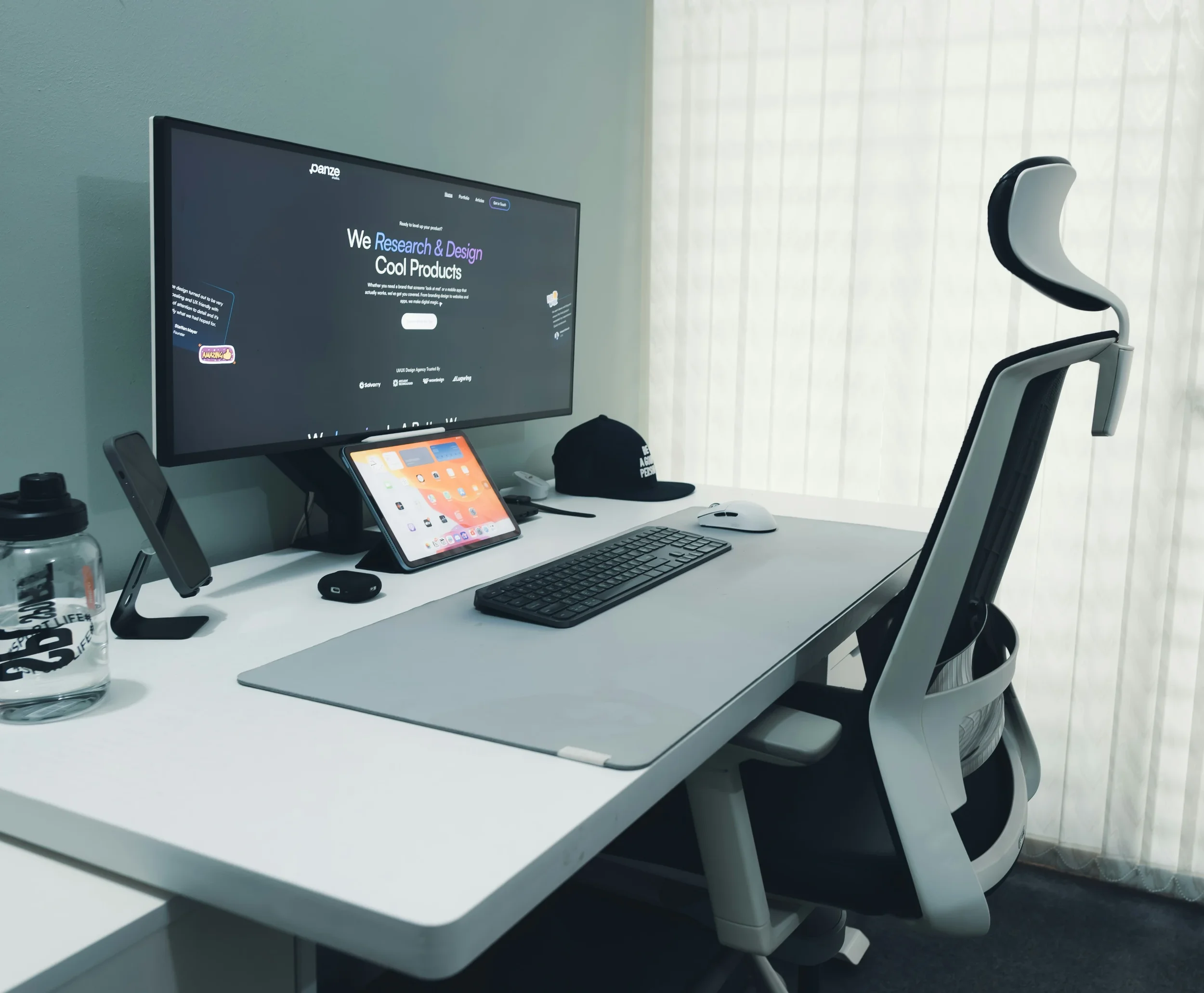
Office desk decor ideas for work should leave space for the work itself. A good rule is to keep at least 60 percent of the desktop clear. That gives you room for a keyboard, notebook, coffee, paperwork, or a second device without constantly moving things around.
Good desk upgrades:
Monitor stand to raise the screen and free storage space underneath
Small tray for keys, badge, earbuds, or lip balm
Cable clips or a cable tray
Pen cup only if you actually use pens daily
One personal item, not five
Small plant if it does not block light or screen space
Skip oversized desk sculptures, tall vases, and anything that makes you reach around it all day. If an object annoys you three times before lunch, it is not decor anymore. It is friction.
Add storage that hides the ugly stuff
Most office clutter is not caused by too much decor. It is caused by visible cables, loose papers, packaging, chargers, snacks, and half-used notebooks.
Closed storage is usually better than open storage in a work office. Open shelves look good only when someone styles them. Closed boxes, drawers, and cabinets do not ask for that kind of maintenance.
Use a simple split:
Item typeBest storageDaily toolsTop drawer, desktop tray, or small caddyWeekly paperworkFile box or labeled folderExtra cables and chargersDrawer pouch or cable boxReference booksOne shelf, grouped verticallySamples or suppliesClosed bin with labelPersonal itemsOne small drawer or basket
If you work in a shared office, label storage discreetly. It saves time and keeps other people from turning your system into a mystery drawer.
Use plants where they can survive
Plants make an office feel less sterile, but only if they match the light and maintenance level. A dying plant on a desk does not improve the room.
For low light, try snake plant, pothos, ZZ plant, or preserved moss. For brighter offices, a small rubber plant, peperomia, or philodendron can work well. If the office has no windows, use a realistic faux plant or skip greenery and bring in natural materials instead: wood, cork, linen, stone, or woven storage.
One larger plant often looks better than five tiny pots scattered around the room. It gives the eye a place to land.
Choose art that matches the job
Art in a work office should support the tone of the space. A lawyer's office, a design studio, a therapist's room, and a software team's shared office should not feel the same.
For client-facing offices, choose art that feels calm and easy to read: abstract prints, architectural photography, landscapes, or line drawings. For creative spaces, mood boards, color studies, or rotating project references may be better. For a private office, personal art is fine, but keep anything too loud away from the video call background.
Size matters. One 24-by-36 inch print often looks more intentional than six small frames floating on a large wall.
Create a better video-call background
For many workers, the office is also a broadcast set. The camera sees the room differently than you do.
Sit in your normal call position and take a screenshot. Look for:
Bright window behind your head
Clutter on shelves
Awkward objects that appear to touch your head
Cables on the floor
Too much blank wall
Tiny art that looks like visual noise
The best background is not necessarily decorative. It is clean, balanced, and not distracting. A shelf, a plant, and one framed piece can be enough.
Small office decor ideas for work

Small offices need stricter choices. Every object has to earn its place.
Use vertical space first. Add wall shelves, tall storage, a pegboard, or a narrow bookcase instead of spreading storage across the floor. Choose a desk with drawers if paperwork is part of your day. If the room is narrow, use a lighter wall color and one mirror or reflective surface to bounce light.
For a small office, these upgrades usually help:
Wall-mounted shelf instead of a second cabinet
Rolling file cart that can move under the desk
Desk lamp with a clamp base
One framed print, not a gallery wall
Slim monitor arm instead of a bulky stand
Soft rug if the room feels cold or echoey
Avoid buying decor in sets. Matching desk accessories can make a small office feel like a catalog page. A few useful pieces in the same material usually look more natural.
Office decor ideas on a budget
If the budget is tight, spend first on changes that affect daily use.
Best low-cost upgrades:
UpgradeWhy it worksBetter bulb or desk lampImproves work comfort immediatelyCable management kitMakes the desk look cleaner fastOne large printFills a wall without needing several piecesDrawer dividersReduces visible clutterSecondhand side tableAdds storage or printer spacePaint sample testingPrevents expensive color mistakesRemovable wallpaper panelAdds texture without full renovation
Do not start with novelty items. They are fun for a week, then they become clutter. Start with light, storage, cable control, and one visual anchor.
Make the office feel professional without making it cold
Professional office decor is not the same as plain decor. A room can look polished and still feel human.
Use fewer, better objects. Replace five small desk items with one tray. Replace a scattered pile of documents with a file box. Replace random wall art with one piece that matches the room's color palette. Add one personal detail if it fits the setting: a framed photo, a book, a small object from travel, or a plant.
Texture helps here. Wood, fabric, cork, matte metal, and woven storage make an office feel less like a temporary workstation.
Plan before you buy
Before buying decor, test the room in this order:
Move the desk to the best light position
Check the video-call background
Remove objects that do not support the work
Choose a three-color palette
Add lighting
Add storage
Add wall decor
Add one or two personal details
This order matters. If you buy art before choosing the desk position, you may decorate the wrong wall. If you buy storage before sorting what you own, you may simply create a neater version of the same clutter.
AI visual planning is useful at this stage because it lets you compare several versions quickly: lighter walls, darker furniture, a plant near the window, a shelf behind the desk, or a different desk orientation. Treat the output as a preview, not a final blueprint. You still need to measure the room, check product dimensions, and think about cables, outlets, and walkways.
Quick checklist before you change the room
Use this checklist before buying anything:
Can you work for two hours without moving decor out of the way?
Is the main work surface at least 60 percent clear?
Is your screen free from glare?
Is the video-call background clean?
Are daily tools reachable from your chair?
Are loose cables hidden or managed?
Does the room have one main visual focus?
Does the decor match the job, not just your Pinterest board?
Can you clean the desk in under five minutes?
Would the room still make sense if one decorative item disappeared?
If the answer is no to several of these, fix function before style.
FAQ
How do I decorate my office at work without overdoing it?
Start with lighting, storage, and one wall or desk focal point. Keep the desktop mostly clear and choose decor that supports your work routine. One framed print, a plant, a better lamp, and a tray for small items can change the room without making it feel crowded.
What are good office decor ideas for a small office at work?
Use vertical storage, a compact desk lamp, one large wall print, and closed storage boxes. Keep the color palette light if the room has little natural light. Avoid several small accessories on the desk because they make a small room feel busy.
How can I decorate office walls at work?
Choose one purpose for the wall. It can hold art, planning tools, acoustic panels, shelves, or a clean video-call background. In rented or shared offices, use removable hooks, leaning frames, or freestanding boards so the decor does not damage the wall.
What should I put on my office desk at work?
Keep only daily-use items on the desk: monitor, keyboard, lamp, notebook, pen, water, and a small tray for loose items. Add one personal or decorative object if it does not block your work area. Store everything else in drawers or boxes.
How do I make my office look professional?
Use a simple color palette, reduce visible clutter, improve lighting, and choose fewer decorative items. Professional offices usually look better with one strong wall feature, clean storage, and a desk that has room to work.
Should I use AI to plan office decor?
AI can help you compare styles, wall colors, furniture placement, and decor ideas before buying. It is especially useful when you are unsure whether a shelf, rug, plant, or darker wall color will work in the room. Still, check measurements and real product sizes before making final decisions.
Final thought
Good office decor is quiet. It does not fight for attention all day. It gives you enough light, enough storage, a cleaner background, and a room that feels like it belongs to the work you actually do. Start there, then decorate.
Stay up to date with our latest ideas!