Prevent Lawn Problems Before They Start: A Prevention-First Guide to Healthy Sod Installation
Learn how to prevent lawn problems before sod installation with tips on soil preparation, drainage, watering, and maintenance for healthy, lasting grass.

At OfficeMoods, we know that creating an inspiring workspace extends beyond your office walls. The view from your window, including a well-maintained lawn, directly impacts your productivity and mental clarity while working from home. A patchy, stressed-out yard outside your home office can be just as distracting as a cluttered desk, and for many remote workers in Southern California, the lawn is the first thing they see every morning before logging on. If you have been eyeing a sod refresh to make your work-from-home environment feel more grounded and calm, the biggest mistake you can make is treating installation as a quick weekend project rather than a process that rewards patience.
Most lawn failures do not happen because of bad luck. They happen because of skipped steps, and those steps almost always occur before the sod ever touches the ground. Homeowners who treat the first two weeks after installation as the most important phase of the entire project tend to end up with lawns that stay green, dense, and resilient for years. Those who rush straight to admiring their new yard often find themselves troubleshooting bare patches and root rot a month later, wondering what went wrong.
Pre-Installation Preparation: Soil Testing, Site Assessment, and Drainage Planning
Before a single roll of sod arrives, the soil underneath deserves real attention. A simple soil test tells you whether your yard's pH and nutrient levels can actually support new turf, and it is far cheaper to amend soil now than to replace dead sod later. Compacted dirt, a common issue in Anaheim's clay-heavy pockets, needs to be loosened with a tiller or core aerator so new roots have somewhere to grow. Drainage planning matters just as much, since low spots that pool water after installation become breeding grounds for fungus and root suffocation within weeks.
Site assessment also means walking your yard and noting sun exposure, irrigation head placement, and any slope that could cause runoff. Homeowners working with a professional supplier like SodLawn often get a grading recommendation before delivery day, which prevents the kind of uneven settling that leads to visible seams and stressed grass later. Debris removal is another step people skip, but leftover roots, rocks, and old grass clippings create air pockets that stop new sod from bonding properly with the soil beneath it. According to this article, soil must be prepared with proper drainage, compacted areas loosened, and debris cleared before installation, since fresh-cut sod has a short shelf life and cannot sit on pallets for more than a few days without being laid down.
Proper Sod Selection and Timing: Choosing Climate-Appropriate Varieties and Installation Windows
Anaheim's warm, dry climate calls for grass varieties bred to tolerate heat stress and limited rainfall, such as tall fescue blends or warm-season hybrids that stay dense without constant watering. Choosing a variety that matches your actual sun exposure, not just the one your neighbor used, prevents thin spots from forming in shaded corners within the first growing season. Timing matters nearly as much as variety selection, since sod installed during peak summer heat faces a much steeper establishment curve than sod laid in cooler spring or fall months.
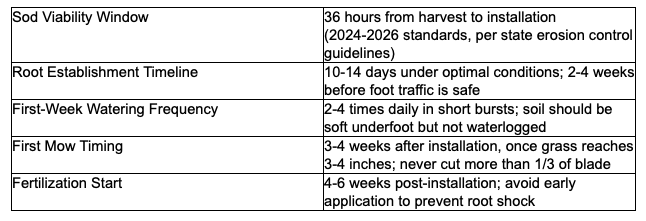
Because fresh-cut sod begins losing moisture and vigor the moment it is harvested, the delivery-to-installation window is one of the most overlooked prevention points in the entire process. Grass that sits rolled on a pallet for too long starts to yellow and mat together before it ever reaches your yard, making it far more vulnerable to disease once installed. Planning your installation date around your supplier's harvest schedule, rather than your own calendar convenience, is a small adjustment that pays off in root strength for months afterward.
Critical First-Week Watering and Root Establishment Protocols
The first seven to fourteen days after installation determine whether your sod's roots actually knit into the soil below or simply sit on top, drying out at the edges. During this window, watering needs to happen in short, frequent bursts rather than one long soak, because the goal is keeping the top inch of soil consistently moist without drowning the new roots. Checking the ground by hand, pressing a finger into the turf to feel for sponginess rather than standing water, is a more reliable gauge than any fixed schedule.
Foot traffic during this stage is one of the fastest ways to undo weeks of careful preparation, since young roots have not yet anchored firmly enough to handle pressure from kids, pets, or even lawn furniture. Most lawns need two to four full weeks before they can tolerate regular use, and pushing that timeline early often creates compacted ruts that take another full season to repair. Patience here is genuinely the cheapest form of lawn insurance available, costing nothing but a little restraint.
Post-Installation Maintenance: Mowing, Fertilization, and Pest Prevention Routines
Once roots have established, mowing becomes the next prevention checkpoint, and timing it correctly protects the grass from unnecessary stress. Waiting until blades reach three to four inches before the first cut, and never removing more than a third of that length at once, keeps the plant's energy reserves intact while it continues building root mass. Cutting too early or too aggressively essentially forces the lawn to repair damage instead of growing stronger, which is exactly the kind of reactive cycle prevention-focused care is meant to avoid.
Fertilization follows a similar logic, since applying nutrients too soon after installation can actually shock fragile new roots rather than help them. Waiting four to six weeks allows the turf to stabilize before introducing fertilizer, at which point a balanced, slow-release product supports steady growth without triggering surge growth that attracts pests. Keeping an eye out early for signs of grubs or chinch bugs, common in Southern California lawns during warmer months, means catching problems while they are still minor rather than after they have spread across the yard. A lawn cared for with this proactive rhythm rarely needs the kind of emergency remediation that frustrated homeowners often search for online, because most of the serious problems were headed off months earlier.
Stay up to date with our latest ideas!