Downlights vs Ceiling Lights: Which Option Makes More Sense in Modern Homes?
Compare downlights and ceiling lights to find the best option for modern homes based on style, functionality, energy efficiency, and space.

Lighting decisions are often treated as a finishing detail, but in reality they shape how a room works long before décor takes over. Two spaces with similar furniture, colors, and layout can feel completely different depending on whether the lighting is recessed into the ceiling or expressed through visible fixtures. That difference becomes especially noticeable in modern homes, where layout, ceiling height, and visual simplicity matter more than ever.
This is why the choice between downlights and ceiling lights is not as small as it may seem. Both can work beautifully. Both can be practical. Both can suit kitchens, bedrooms, hallways, and living areas. But they solve different problems and create different visual results.
In simple terms, downlights tend to make a room feel cleaner and more architectural, while ceiling lights tend to make it feel more complete and decorative. That does not mean one is modern and the other outdated. It means the right answer depends on what the room needs from its lighting.
Understanding that distinction makes it much easier to choose well.
Why the Difference Matters More in Modern Homes
Modern interiors tend to rely on clarity. Lines are cleaner, furniture is often lower and simpler, and rooms are more likely to flow into one another without obvious boundaries. In that kind of environment, lighting becomes part of the architecture.
A bulky or overly decorative fixture can interrupt the visual calm of a room. On the other hand, lighting that is too hidden can make a space feel slightly anonymous or unfinished. This tension is exactly why people hesitate between downlights and ceiling fixtures. They are not just choosing brightness. They are choosing how visible the lighting itself should be.
That choice matters most in rooms where one fixture cannot solve every need. Kitchens need task light. Living rooms need atmosphere. Bedrooms need softness. Hallways need clarity without feeling clinical.
What Downlights Do Best
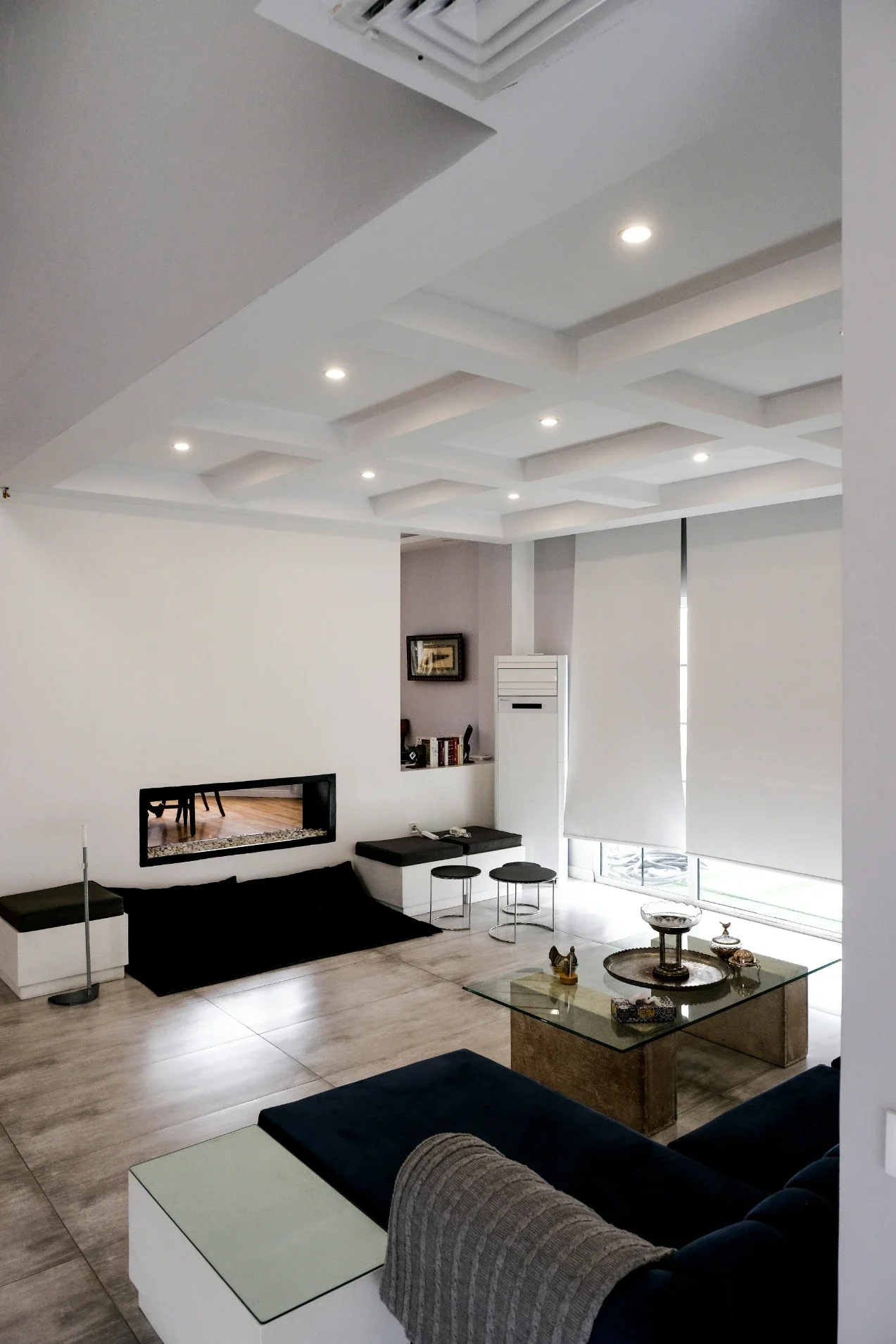
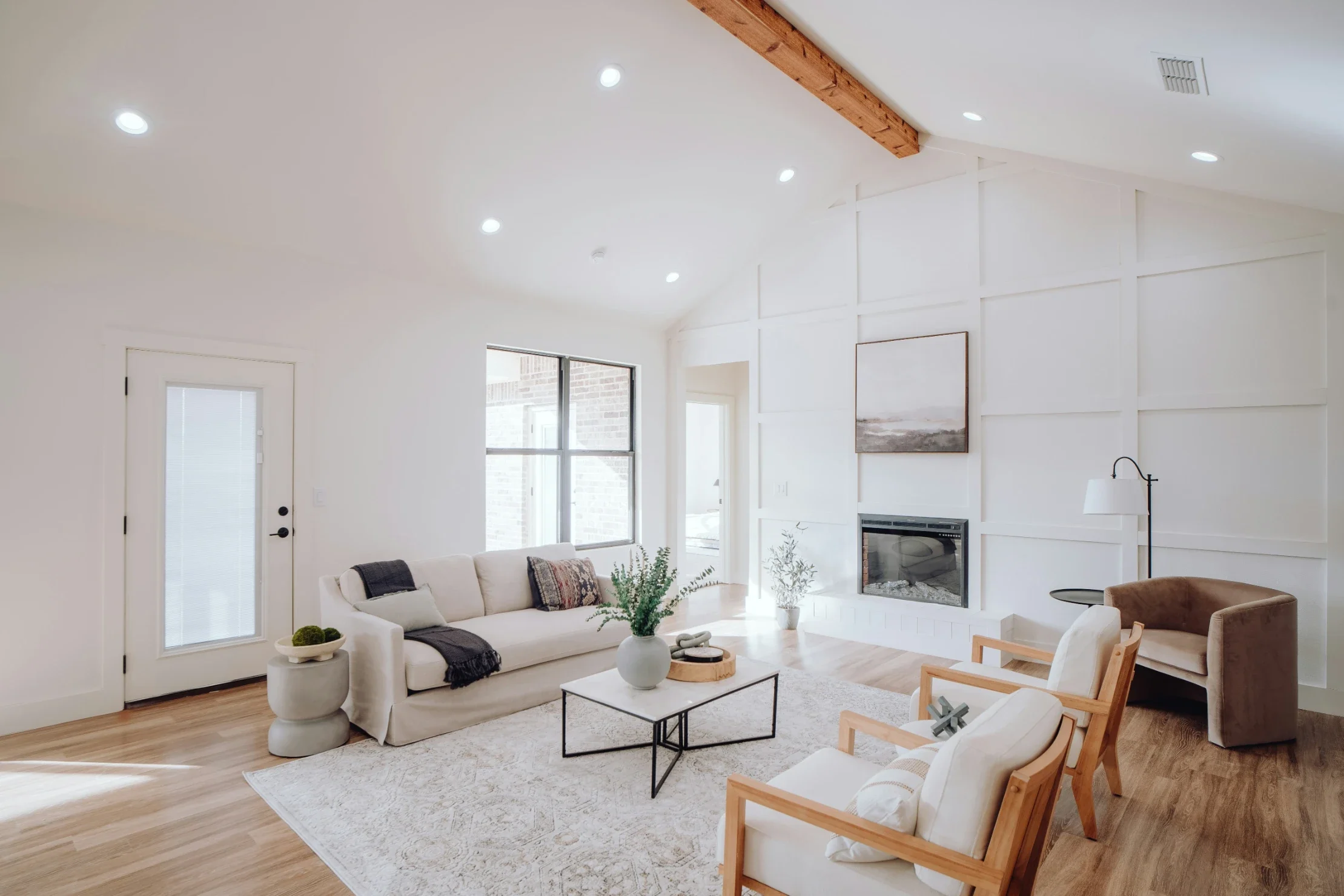
Downlights are recessed or near-recessed fixtures designed to keep the ceiling line visually clean. Their biggest advantage is that they let the room itself do most of the talking.
This makes them especially effective in interiors where the goal is:
minimal visual clutter
a clean ceiling plane
consistent light distribution
a more contemporary or built-in feel
They are also easy to arrange in multiples, which makes them well suited to rooms where even coverage matters.
Where downlights tend to work best
kitchens
hallways
bathrooms
utility rooms
modern open-plan spaces
In kitchens especially, their value is practical. Multiple downlights can be placed to support prep zones, circulation areas, and islands much more evenly than a single central fixture. That is one reason many homeowners exploring modern lighting layouts end up leaning toward recessed LED downlights for kitchens and everyday use.
What Ceiling Lights Do Best
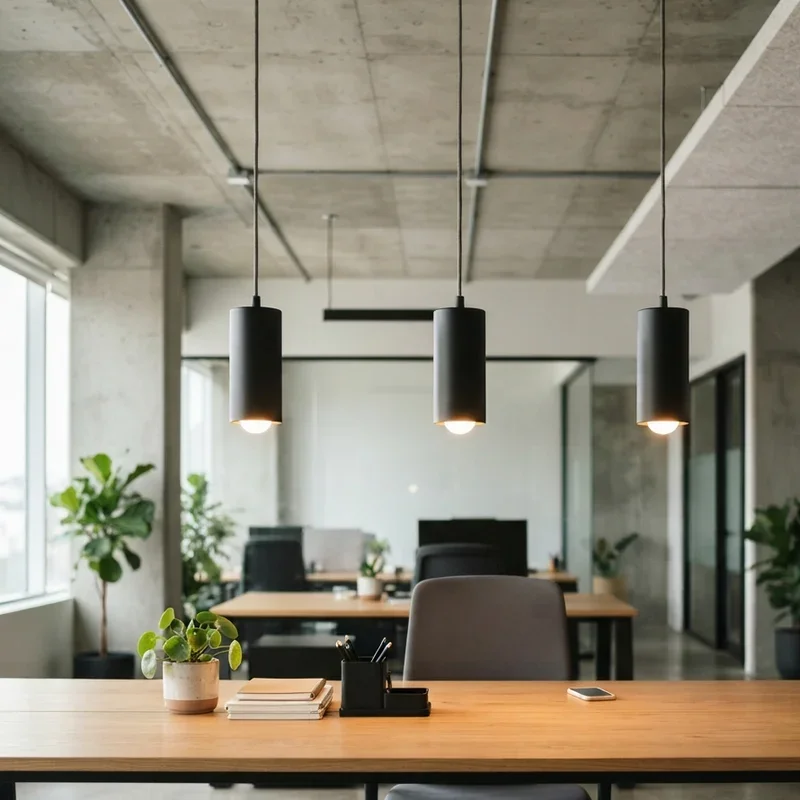
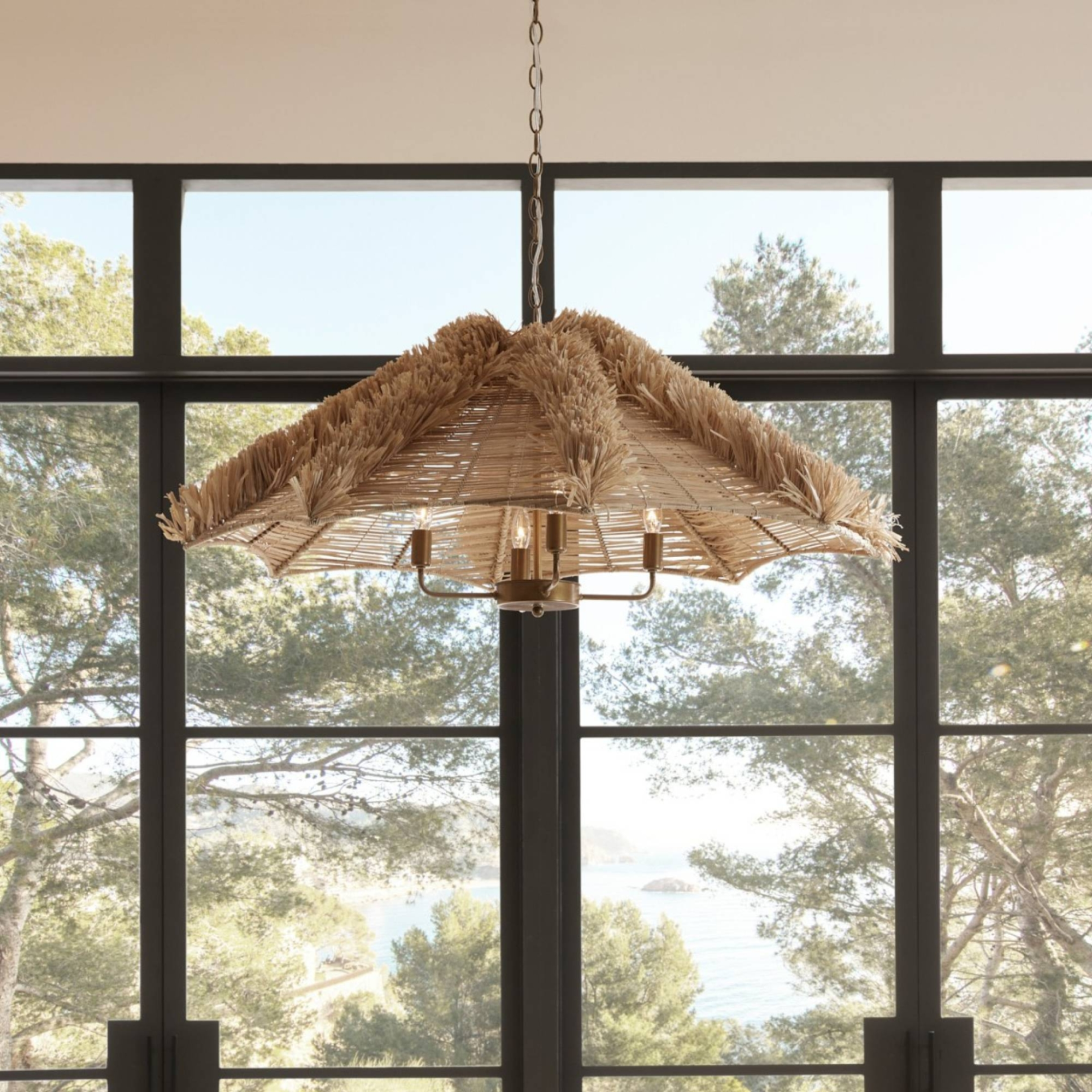
Ceiling lights are more visible by nature. That can mean flush mount fixtures, semi-flush designs, decorative surface-mounted lights, or broader ceiling panels. Unlike downlights, they do not disappear into the room. They become part of how the room is perceived.
That visible presence can be a strength.
A well-chosen ceiling light can:
soften a room visually
create a focal point
add warmth or style
make a space feel more finished
This is particularly useful in rooms where atmosphere matters as much as function.
Where ceiling lights tend to work best
bedrooms
living rooms
dining spaces
entry areas
smaller apartments needing one main fixture
In practical terms, ceiling lights often work better in rooms that do not benefit from highly directional lighting. Bedrooms are a good example. A flush mount fixture can distribute light more gently across the space, while a set of downlights may feel a little too sharp or utilitarian if not handled carefully.
The Visual Difference at a Glance
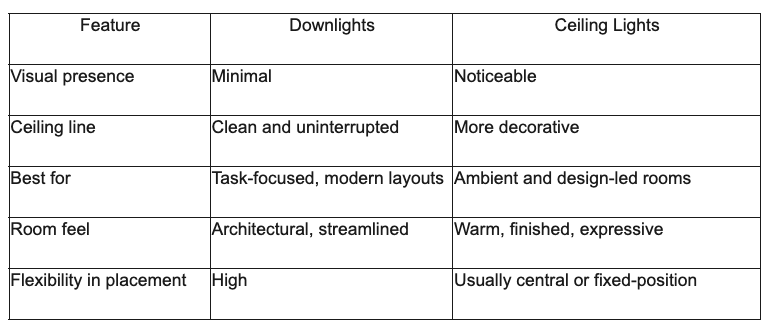
This is where many decisions become easier. If the room needs lighting to disappear, downlights are often the better fit. If the room needs the lighting to contribute to its character, ceiling lights usually make more sense.
Room-by-Room Comparison
Kitchen
Kitchens often benefit from downlights because the work areas need practical coverage. A single central ceiling light rarely handles counters, sink, and circulation zones evenly. That said, a compact kitchen with low ceilings may still work very well with a flush mount ceiling light, especially when the goal is simplicity rather than a fully layered lighting plan.
Bedroom
Bedrooms generally lean toward ceiling lights, especially when comfort matters. Flush mount or semi-flush options often create a softer, more balanced effect. Downlights can still work, but usually as part of a larger scheme rather than as the only light source.
Living Room
This depends on the style of the home. Minimalist living rooms often suit downlights, especially when combined with lamps and accent lighting. More decorative interiors often benefit from a main ceiling fixture that gives the room a visual center.
Hallway
Downlights work well in long hallways because they can be spaced evenly and keep the ceiling visually clean. But a hallway with lower ceilings or more traditional styling may feel better with a single well-chosen flush mount fixture.
Ceiling Height Changes the Answer
One of the simplest ways to narrow the choice is to think about ceiling height.
Lower ceilings usually suit:
flush mount ceiling lights
slim ceiling panels
carefully spaced shallow downlights
Standard to higher ceilings can support:
semi-flush fixtures
layered downlight layouts
combinations of recessed and decorative lighting
If ceiling height is limited, deep or visually heavy fixtures tend to make the room feel more crowded. In these cases, either slim flush lighting or discreet downlights usually works best.
Brightness vs Distribution
People often think of lighting only in terms of brightness, but distribution matters just as much.
A room can technically be bright enough and still feel badly lit if the light is uneven or poorly positioned.
Downlights usually offer:
better distribution across larger spaces
more control over specific zones
easier layering with other lighting types
Ceiling lights usually offer:
stronger central illumination
simpler installation
a softer ambient effect in smaller rooms
This is why downlights often outperform ceiling lights in larger kitchens or open-plan spaces, while ceiling fixtures often feel more natural in bedrooms or compact rooms where one main source is enough.
When a Mixed Approach Works Better
In many modern homes, the smartest answer is neither/or. It is both.
A mixed lighting plan often works best when:
the home is open-plan
rooms serve more than one purpose
some areas need focused light and others need atmosphere
the homeowner wants both clean lines and decorative presence
A common example is a home that uses downlights in the kitchen and hallway, then ceiling lights or softer decorative fixtures in bedrooms and living areas.
That approach keeps the practical advantages of recessed lighting while avoiding the overly clinical feel that can happen when every room is treated the same way.
Common Mistakes People Make
A few problems show up again and again when people choose between these two options.
assuming downlights are always the more modern choice
assuming ceiling lights are only decorative
using only one central fixture in a large functional room
installing too many downlights in a room that needs softness
ignoring ceiling height when selecting visible fixtures
Most of these mistakes come from choosing a lighting type based on trend rather than room purpose.
A Practical Shortcut for Deciding
If you want the simplest possible rule, it is this:
Choose downlights when:
the room needs clean lines
lighting should stay visually quiet
coverage across the whole room matters
the space is task-focused
Choose ceiling lights when:
the room needs a visual anchor
comfort and atmosphere matter more
one central fixture can realistically do the job
the design benefits from a visible feature
The stronger choice is usually the one that matches the room’s role, not the one that looks most fashionable in isolation.
What Usually Makes the Most Sense
Downlights make more sense in modern homes when the goal is clarity, consistency, and low visual interruption. Ceiling lights make more sense when the room benefits from softness, a focal point, or a little more design character. Neither option is universally better. The better option is the one that supports what the room is actually trying to do.
That is why the best lighting plans often feel obvious only after installation. The room simply works better. It feels more coherent, more comfortable, and easier to use. Whether that comes from downlights, ceiling fixtures, or a combination of both depends less on trend and more on proportion, purpose, and restraint.
Stay up to date with our latest ideas!