6 Reasons To Move Your Office Outside
Discover why outdoor workspaces improve employee focus and health. Natural light boosts energy. Fresh air aids teamwork. Learn how to move outside today.
The most significant shift in corporate workspace design since open-plan offices is not another interior reconfiguration. It is the deliberate, systematic movement of real work outside, alongside the infrastructure investment that makes it sustainable.
This outdoor workspace corporate trend is not a pandemic-driven novelty. It is a sustained, evidence-backed shift now appearing in corporate real estate decisions, facilities budgets, and talent strategy conversations. Here are six specific, business-grounded reasons why companies are acting on it.
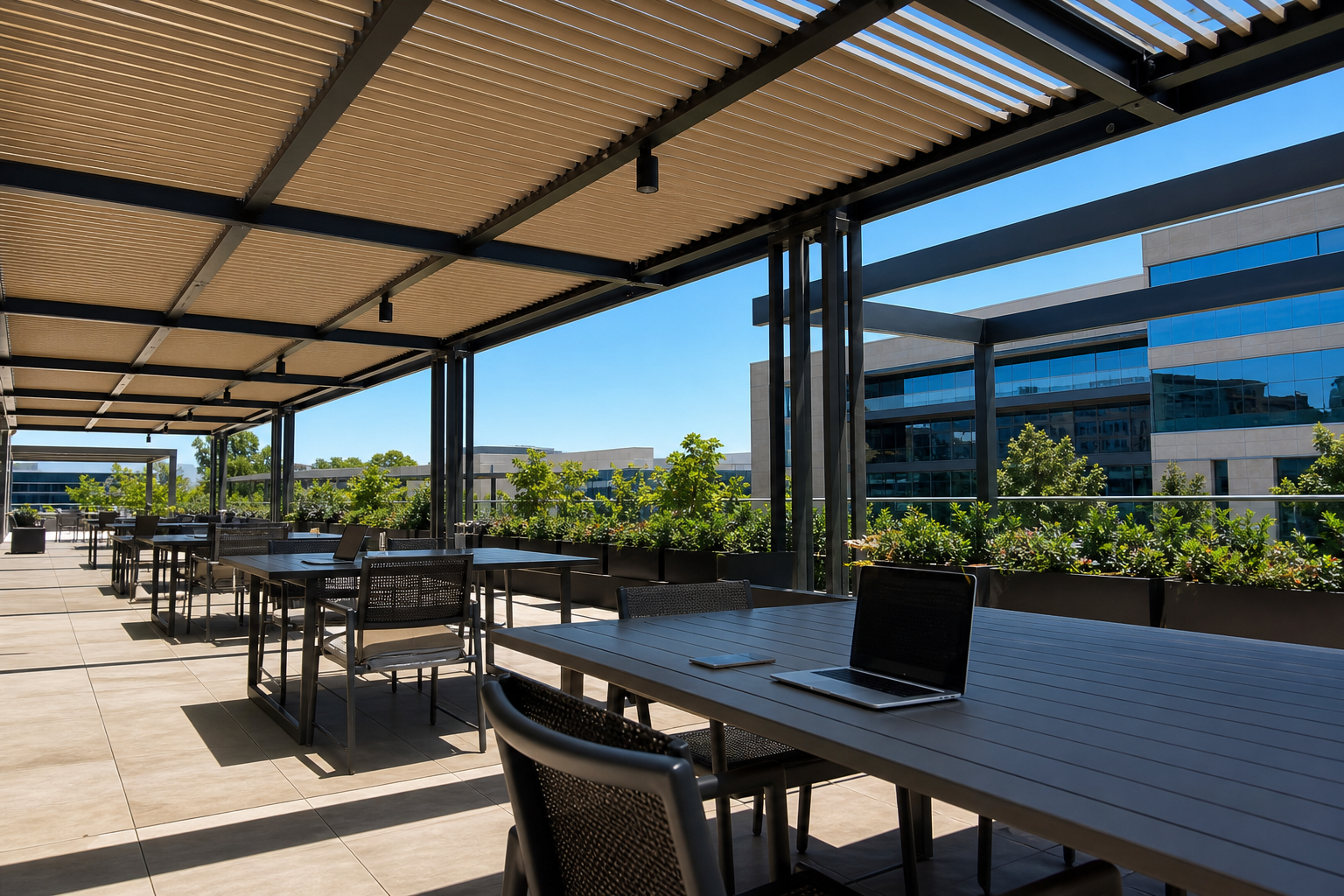
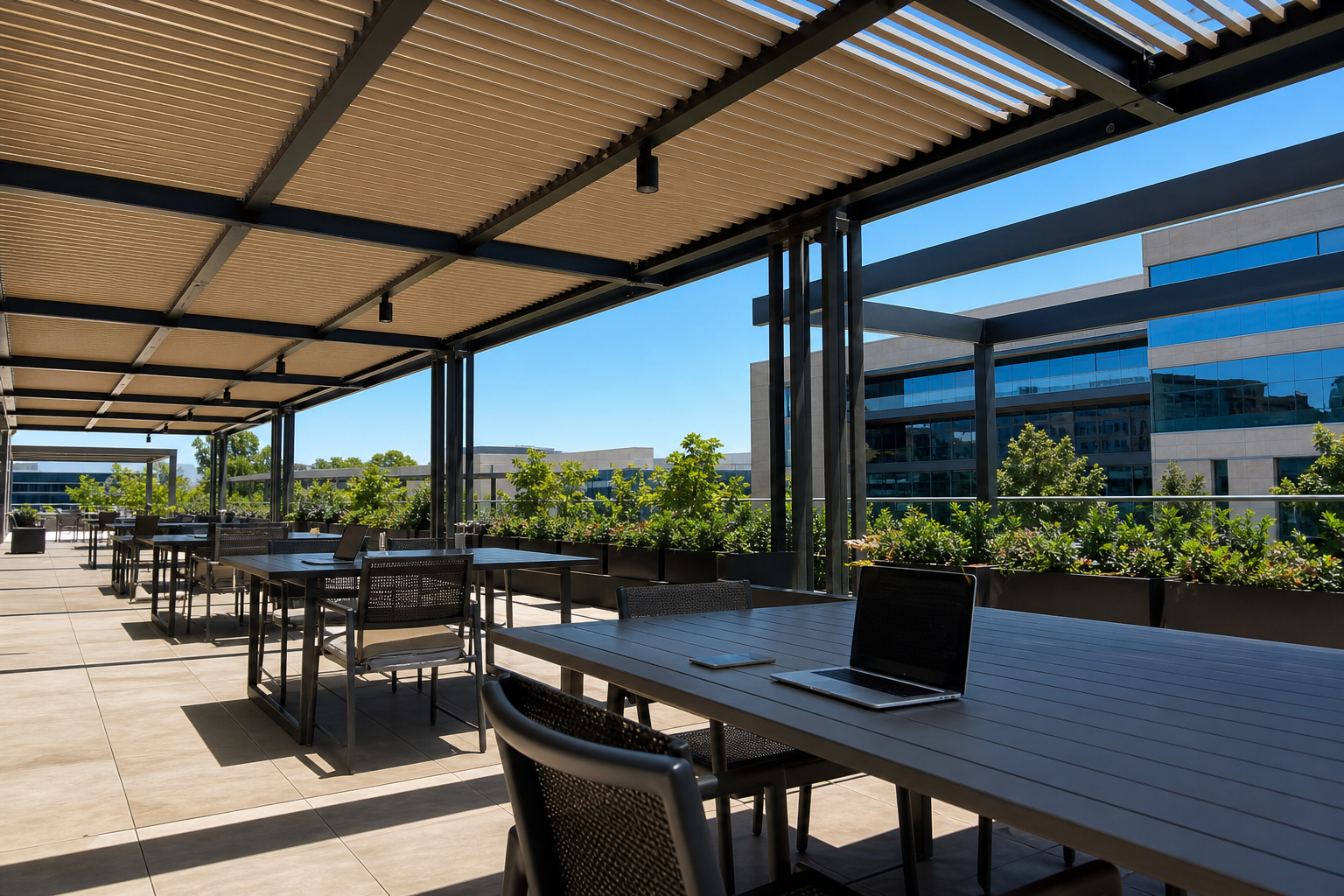
Moving a team outside requires more than scattering temporary chairs across a concrete lawn. Reliable working environments might depend on permanent infrastructure like commercial UV-resistant outdoor shade structures from WillyGoat to block harsh weather and prevent glare on laptop screens. Securing this foundational layer first ensures the space handles daily tasks rather than sitting empty during midday heat.
1. Environments Restore Attention Depleted by Indoor Work
Cognitive science establishes that focused attention acts as a finite daily resource. Sustained indoor cognitive work draws constantly on directed attention. This active focus fatigues with extended use and does not recover automatically when workers switch to a different screen-based task.
Exposure to natural environments engages involuntary attention instead. This passive engagement allows directed attention to replenish measurably before returning to deep work. The output quality of an employee's afternoon shift directly improves when they secure genuine outdoor exposure earlier in the day.
Key Insight: Focused attention is a finite daily resource, not an unlimited one. Outdoor exposure replenishes it not through metaphor, but through involuntary attention, making afternoon work quality a direct result of earlier outdoor time.
2. Natural Light Triggers Better Sleep and Energy
No interior technology fully replicates the biological effects of genuine daylight on circadian regulation and serotonin production.
Researchers found that workers with access to workplace windows sleep an average of 46 minutes more per night during the workweek than workers trapped in windowless environments. Getting outside amplifies this photobiological effect significantly.
Exposure to strong morning light drives physical health outcomes beyond basic wakefulness. Receiving high levels of circadian-effective light early in the day links directly to reduced sleep onset latency and overall increased sleep quality. Even 20 to 30 minutes of outdoor working time generates alertness that carries forward into subsequent indoor hours.
3. Top Candidates Now Expect Modern Office Outdoor Space
Skilled workers evaluate their physical environment long before signing an offer letter. Outdoor workspace availability has moved from a background amenity to an explicit evaluation criterion during interviews. Modern talent looks specifically for year-round usability and dedicated power access rather than a simple picnic table.
The cost of this environmental upgrade compares favorably against rising recruiting expenses and turnover rates. A growing body of candidate survey data links modern office outdoor space directly to competitive positioning. Companies offering structured exterior environments capture attention faster in saturated job markets.
4. Informal Settings Elevate Collaboration Quality
Structured outdoor seating reduces the adversarial framing that standard boardroom tables actively reinforce. Side-by-side or circular open-air arrangements prevent status asymmetry and increase psychological safety during intensive brainstorming. Teams engaged in these settings tackle complex problem-solving without the restrictive formality of an enclosed room.
This organized setup supports document-capable collaboration over hours rather than brief walking chats. Teams using exterior zones for working sessions record distinct improvements in how colleagues share raw ideas. These enhanced interpersonal dynamics compound over the quarter to boost overall departmental output.
5. Open Air Solves the Acoustic Physics Problem
Ambient noise remains the most frequent complaint across workplace design surveys. Traditional open workspaces generate consistent distractions, with average acoustic levels hitting 53.6 decibels during standard operations. Acoustic panels and sound masking systems only manage the symptoms of this structural flaw rather than eliminating the root cause.
Outside environments distribute and diffuse conversational sound naturally without requiring engineered baffles. The acoustic relief is a built-in physical property of the open air rather than an expensive add-on. Moving teams outside circumvents enclosed echo chambers entirely.
Important: All five preceding benefits remain theoretical without a commercial-grade shade structure rated for 98% UV protection and year-round reliability. A residential canopy does not meet this working-asset standard.
6. Success Relies on Foundational Infrastructure
Any exterior workspace initiative fails if limited to a narrow window of perfect weather. These performance advantages exist only theoretically until facilities teams install heavy-duty weather and sun protection. Commercial-grade builds extend the operational calendar significantly across multiple seasons and shifting climates.
The appropriate specification standard requires 98% UV protection and heavy wind resistance ratings. Municipal parks and university campuses demand these specific metrics because their public assets must function consistently without constant seasonal maintenance.
Corporate planners must adopt these same park-grade installation standards to prevent their workplace wellbeing outdoor design from sitting idle during the summer heat.
The Path Forward
Professionally installed exterior settings equipped with permanent shaded coverage now function as baseline corporate assets rather than decorative perks. Firms investing early in durable installations, acoustic relief, and circadian light access hold a clear competitive advantage over companies keeping staff entirely indoors.
You should audit your existing grounds actively to identify where commercial-grade weather protection could bridge the gap. Adding protective canopies and dedicated seating turns underutilized paving into functional real estate for the majority of the working year.
Stay up to date with our latest ideas!