7 Office Styles That Make Work Easy
Explore effective home office styles to boost daily focus. Learn about core furniture pieces. Avoid common mistakes. Find your perfect workspace today.
The home office is the one room in the house where design directly affects how well you perform. The aesthetic you sit inside each day shapes your mood, your focus, and how seriously you treat the work itself.
This office style guide covers seven distinct home office styles, each defined by specific pieces rather than a vague mood board. Every style also comes with one concrete mistake that undermines the entire look.
Your Office Is Doing More Than You Think
Whether you are building from scratch or refining an existing setup, these home office design ideas provide a clear material framework. The clearest place to start features a distinct material language immediately associated with serious creative production.
1. Industrial
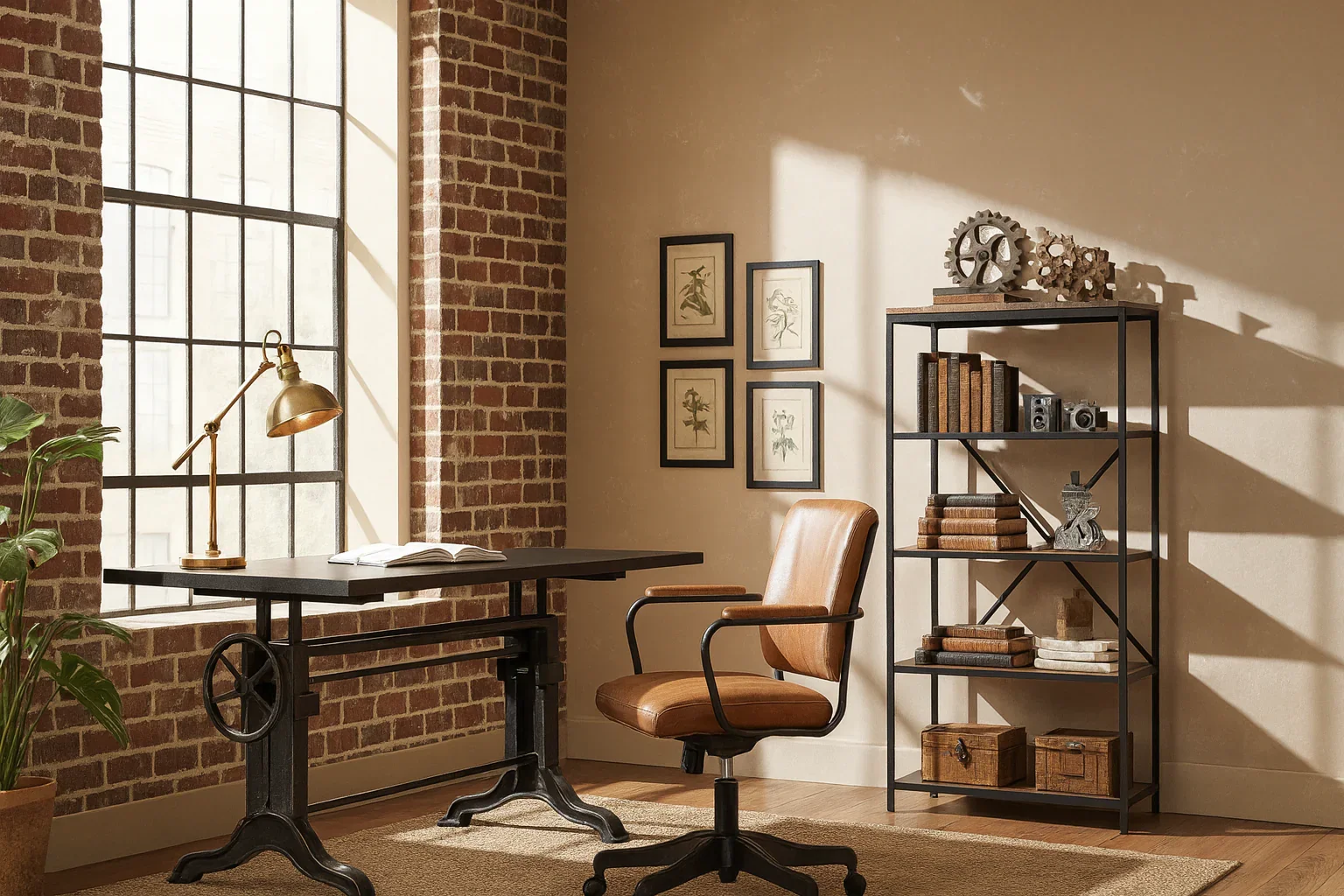
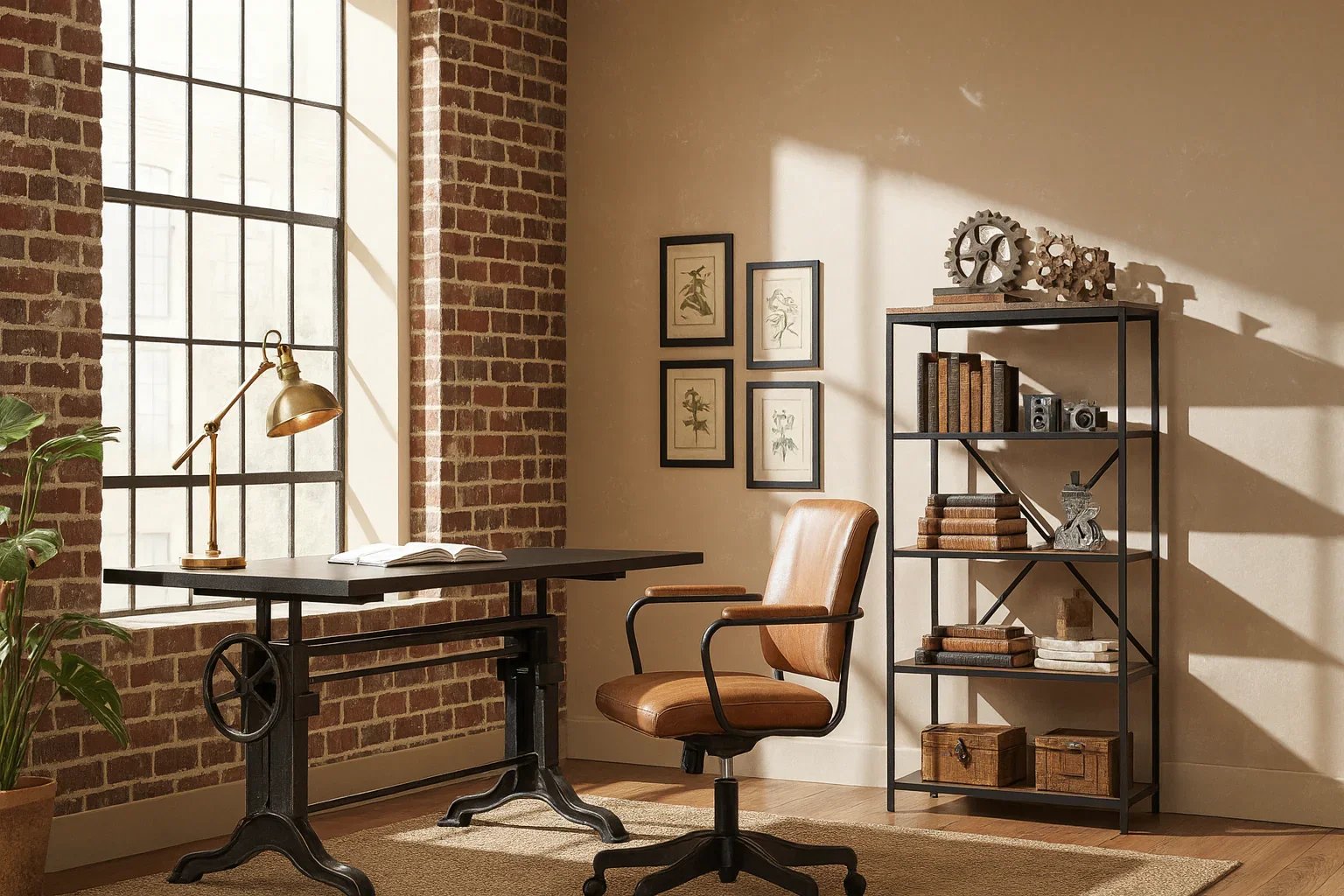
Industrial home office ideas rely on material honesty. Reclaimed timber, raw steel, and exposed hardware handle the visual weight of the room. The authority of this aesthetic comes from surfaces that show exactly what they are made of instead of relying on paint or veneer.
A steel-framed shelving unit with raw wood planks sets a utilitarian foundation. You can add a vintage cage pendant light or an articulated metal task lamp as a secondary layer. The physical mechanism of the light fixture remains completely visible because hiding it defeats the purpose of the style.
The desk ultimately ties the entire room together. A sturdy industrial drafting desk from Knox Deco carries the full material language of the style in a single object.
Reclaimed hardwood surfaces feature grain variations that prove the material came from a real tree, while the steel frame gives the workspace deliberate visual validation. The tilting surface connects the desk directly to its workshop heritage, where craftspeople angled their work surfaces toward the physical task at hand.
Treating the room as purely dark constitutes a major mistake in this aesthetic. Without one warm material like worn leather or visible wood grain, the space turns stark rather than grounded. The natural character in the wood keeps the room from feeling unlivable.
Pro Tip: To prevent an industrial home office from feeling stark, incorporate one warm material worn leather, visible wood grain, or a textured rug to ground the raw steel and concrete.
2. Dark Academia Office Design
Dark academia office design works only when the room feels inhabited by a historically ranging mind. A dark oak or walnut desk with brass hardware anchors the required warmth. Leather-bound books alongside antique globes, hand-drawn maps, or scientific instruments fill the shelves with objects that suggest genuine inquiry rather than a trip to a prop store.
Lighting sets the tone through brass fixtures or antique-finish table lamps with amber shades. This creates a specific historical register that makes the room feel like evening regardless of the actual hour. The fourth piece determines whether the style becomes immersive or stays merely staged.
Mounting a piece of decorative medieval armor from Medieval Collectibles on a dedicated stand carries historical weight that no painting or book stack can replicate. A display helmet or breastplate reads as a found artifact. This single object signals genuine commitment to history and transforms the room into a space meant for deep focus.
Achieving dark tones without any intellectual objects ruins the aesthetic. A dim room with no books, instruments, or historical artifacts just feels empty. The depth of dark academia lives entirely in the curated objects rather than the paint color.
Important: A dim room without books, instruments, or historical artifacts is just a dark room; the depth of the dark academia aesthetic lives entirely in the objects, not the paint color.
3. Minimalist Japanese
Minimalist Japanese home office design uses natural materials at a considered scale. The style demands active editing rather than passive emptying. A low-profile solid wood writing surface forms an uncluttered base for daily tasks.
One well-made task lamp in matte black or raw wood provides light without adding visual noise. A tatami-style floor mat or natural fiber rug grounds the space without competing with the primary desk. Designers typically add a single ceramic vessel or a smooth river stone as the room's solitary decorative gesture.
Removing everything and calling it minimalism creates an immediate problem. A room stripped of all texture feels cold instead of calm. The single organic accent serves as a vital anchoring element that keeps the space from reading as abandoned.
4. Scandinavian
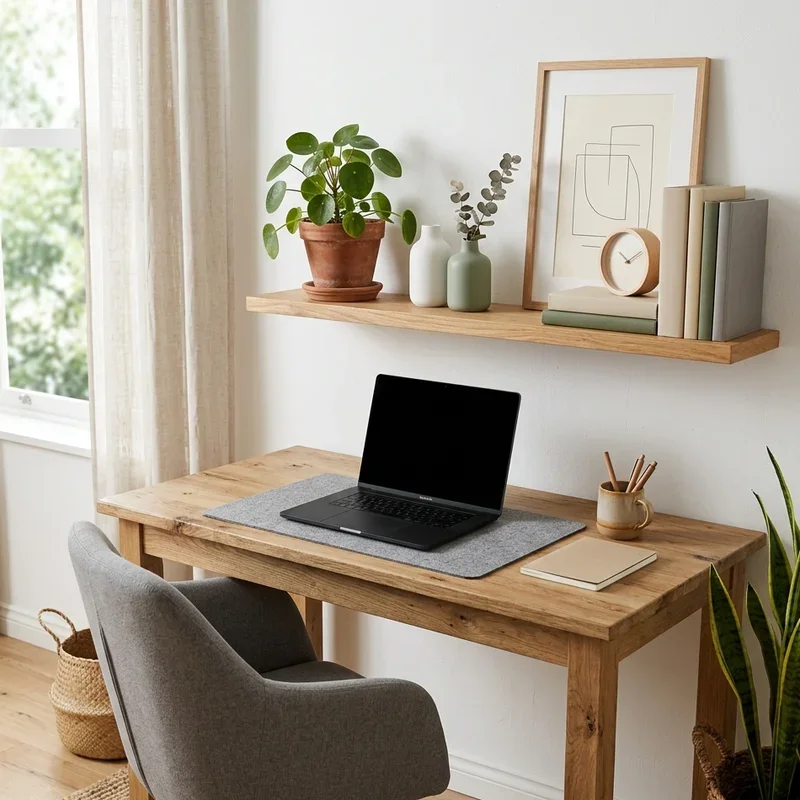
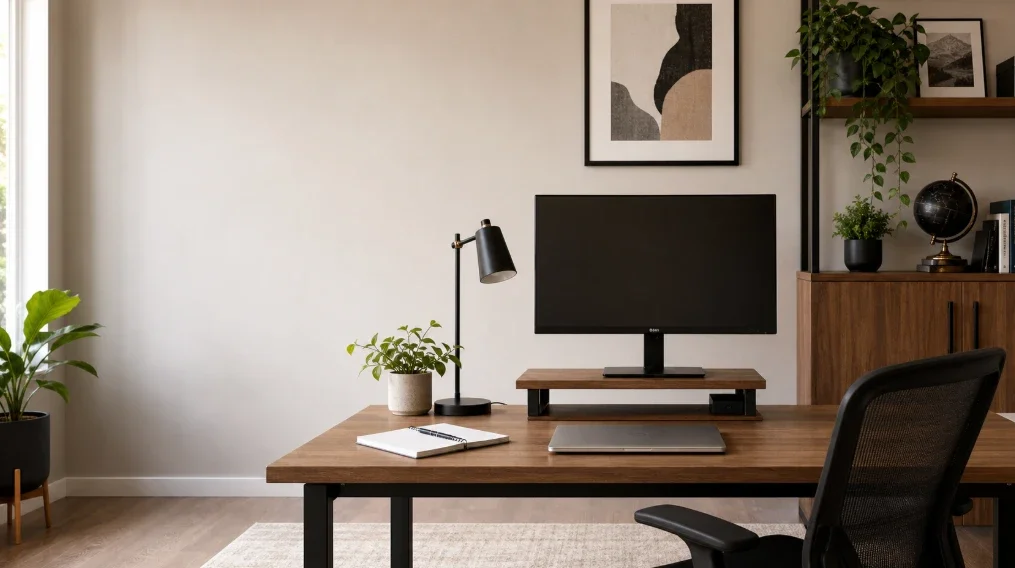
Scandinavian home office design rests on functional simplicity using warm wood tones and neutral walls. You build this aesthetic through quality pieces chosen with deliberate care rather than accumulated slowly over time. A solid birch or oak desk with clean joinery and no ornamentation anchors the work surface.
An ergonomic chair wrapped in natural fabric or light leather prioritizes physical support for long hours. Open wooden shelving holds only properly spaced, purposeful objects like a row of reference books. Draping a wool or sheepskin throw over the chair adds tactile warmth.
Overloading the space with small candles, textiles, or ceramic items ruins the foundational simplicity. The room quickly reads as clustered rather than comfortable.
5. Biophilic
The biophilic home office functions by bringing living organisms indoors. Large indoor plants like a fiddle-leaf fig, a monstera, or pothos trained along a shelf edge create an immediate visual shift. The desk should face or sit directly beside a window, positioning natural daylight as a functional resource.
Heavy stone or solid wood desktop organizers replace plastic synthetic materials at the work surface itself. Linen or cotton window sheers help diffuse direct glare while keeping the room bright throughout the afternoon.
Substituting artificial or plastic plants entirely defeats the purpose of the room. Biophilic design requires the actual presence of living botanical materials.
Important: Substituting artificial plants removes the essential living element of biophilic design; the entire premise depends on the presence of real, living material, not synthetic alternatives.
6. Maximalist Collector
The maximalist collector creates environments based on intentionality rather than blind accumulation. Floor-to-ceiling bookshelves mix spines, framed items, and small sculptures at a high visual density. A dedicated gallery wall combines art prints, hand-drawn maps, and personal photographs arranged with mathematically consistent spacing.
A statement desk featuring distinct patina, worn edges, and visible wood grain anchors the work area with a sense of accumulated time. One large central object often guides the entire composition, giving every surrounding piece a visual horizon to orient around.
Acquiring without careful curation guarantees aesthetic failure. Random accumulation produces chaos rather than a thoughtful collection.
7. Coastal Creative
The coastal creative workspace operates like a well-lit summer studio. A white or driftwood-finished desk positioned in a corner sets a relaxed but highly focused tone. Woven baskets or rattan storage bins handle cables, notebooks, and office supplies.
Linen curtains and light-colored walls maximize natural brightness without producing harsh screen glare. A highly restricted number of natural accents like sea glass or a single piece of driftwood keeps the theme legible. This sparse application prevents the workspace from feeling like a themed souvenir shop.
Going so loose that the space loses all sense of structural focus becomes the most common error. The relaxed informality belongs to the texture and palette, not the physical organization. A cleared work surface and dedicated hidden storage remain strictly non-negotiable.
The Bottom Line
Every effective setup relies on an anchor piece chosen with deliberate intent. A heavy steel and reclaimed wood drafting desk grounds an industrial workspace in practical workshop heritage. Similarly, a mounted display helmet immediately converts a dark, book-lined room into an immersive historical study environment.
Starting with one specific object establishes a material baseline that organizes the rest of the room. Identify the functional requirement, secure a primary anchor piece, and build the surrounding environment to support that specific workflow.
Stay up to date with our latest ideas!