Discover what clients notice about your business first and how strong first impressions can influence trust, credibility, and buying decisions.
First impressions in a commercial space happen faster than most business owners account for. A client, customer, or patient walks through the door and forms an impression before a word has been exchanged, before a product has been shown, before a service has been described. That impression is environmental — the condition of the space, the smell, the visible state of surfaces, the overall sense of whether the people who work here take care of where they work.
That environmental impression doesn't override everything else. A genuinely excellent business can recover from a mediocre first impression through the quality of what it delivers. But it starts from behind, and the recovery requires more effort than a clean, well-maintained space would have required in the first place. For businesses where the first impression happens in a waiting room, a showroom, a reception area, or a retail floor — the condition of the space is doing active work before any human interaction begins.
The inverse is equally true. A space that's consistently well-maintained communicates care and competence in a way that's difficult to articulate but easy to perceive. It signals that the organization pays attention, that standards matter here, that the experience of doing business with this company is likely to reflect the same attention to detail as the space it operates in. These signals aren't consciously processed by most clients — they register as a general sense of confidence or discomfort that shapes every subsequent interaction.
https://badgerluxecleaning.com/services/commercial-cleaning/ is where businesses in the Green Bay area find Badger Luxe Cleaning for commercial cleaning that maintains the standard a professional space requires. Before getting into what that looks like, it helps to understand which aspects of commercial cleanliness have the greatest impact on client perception — because not all of them are equally visible or equally consequential.
What Clients Actually Register — and What It Costs When They Don't Like It
Restrooms are the most reliable indicator of overall facility standards in a commercial space. The logic is simple: a business that maintains its restrooms well is maintaining the area of the facility with the least intrinsic appeal, which signals that the rest of the space is receiving at least the same level of attention. A business with poorly maintained restrooms signals the opposite — that cleaning is happening to the minimum tolerable standard rather than to a consistent professional one. Clients who use a business's restrooms and find them inadequately maintained rarely say anything. They just form an impression that colors how they think about the business going forward.
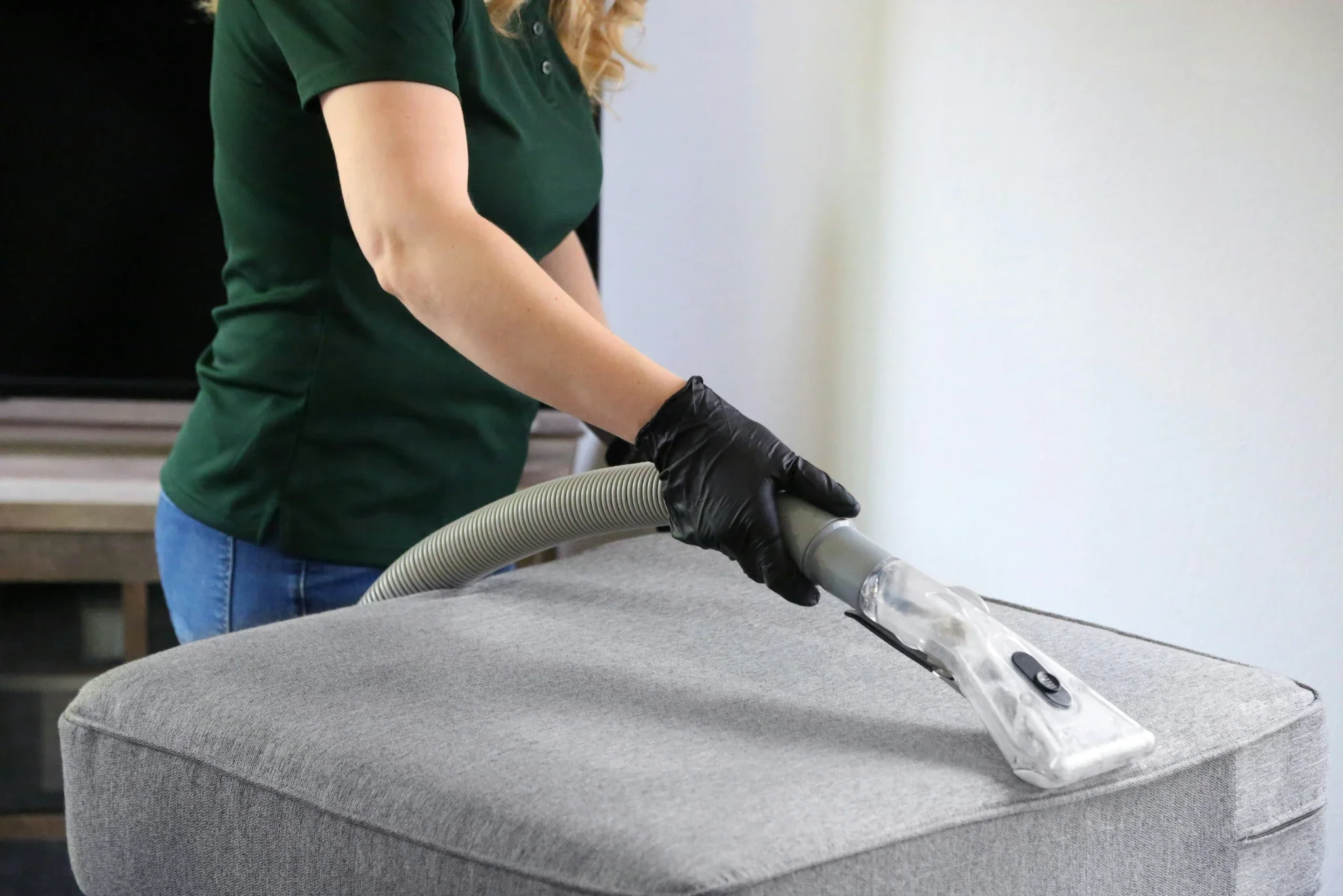
Reception and waiting areas are the second high-impact zone. These are the spaces where clients spend time before any service interaction begins — where the experience of being a client starts before the actual business relationship does. Dust on surfaces, stained upholstery, fingerprints on glass, scuff marks on floors — these are details that a busy business owner stops noticing because they're always present, and that a first-time visitor registers immediately precisely because they're seeing the space for the first time.
High-touch surfaces are the third category that affects client perception — and increasingly, client health decisions. Door handles, reception counters, shared equipment, point-of-sale terminals — surfaces that accumulate bacteria and viral particles through repeated contact throughout the day. In healthcare settings this is a compliance issue with serious consequences. In retail and professional service settings it's an expectation that clients have increasingly developed since 2020 and that affects their comfort level with the space.
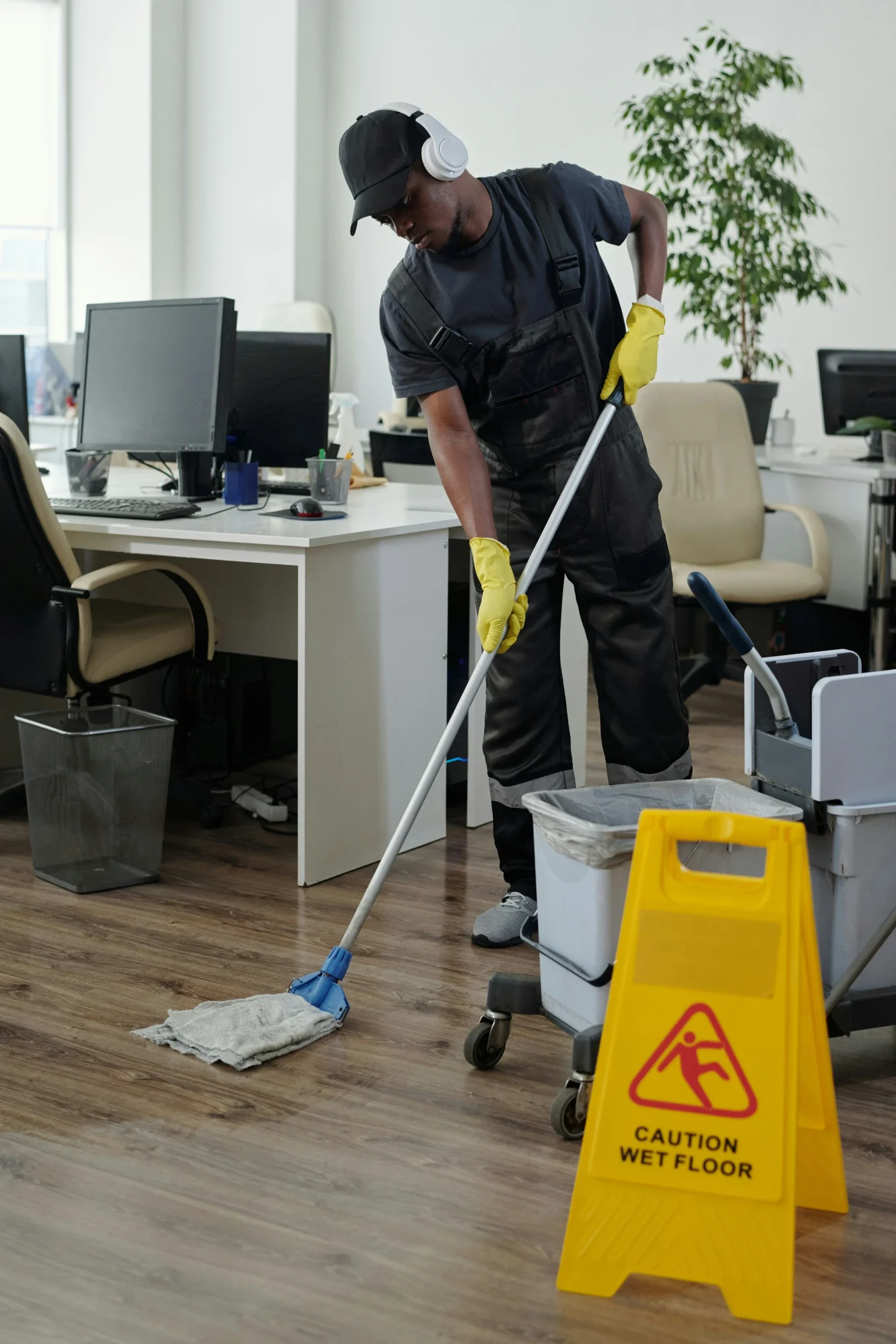
Floor condition is the category that's easiest to neglect and most visible when neglected. Floors accumulate in ways that are gradual and that the people in the space daily stop registering — until a visitor walks in and the first thing they step on tells them something about how the business is run.
What Commercial Cleaning Consistency Produces Over Time
The value of consistent commercial cleaning isn't visible in any single visit — it's visible in the accumulated condition of a space over months and years. Surfaces that are cleaned regularly don't develop the buildup that makes them difficult to restore to an acceptable standard. Floors maintained consistently don't develop the wear patterns that accumulate when cleaning is infrequent. Restrooms serviced on a proper schedule don't require the intensive intervention that neglected restrooms eventually demand.
This compounding effect works in both directions. Consistent cleaning preserves the condition of surfaces, flooring, and fixtures in ways that extend their useful life. Inconsistent cleaning accelerates deterioration — grease that isn't removed regularly becomes harder to remove and eventually damages the surface it's sitting on. Salt residue on hard flooring that isn't addressed properly during Wisconsin winters works into the finish and creates damage that requires refinishing rather than cleaning.
For business owners calculating the cost of commercial cleaning, the relevant comparison isn't just between what the service costs and what in-house cleaning costs. It's between what consistent professional cleaning costs and what the combination of accelerated facility deterioration, client impression management, and eventual intensive remediation costs when cleaning has been treated as a lower priority.
Badger Luxe Cleaning provides commercial cleaning for businesses in the Green Bay area with consistent staffing, defined scope, and accountability for maintaining the standard across every visit. For business owners who want a commercial cleaning arrangement that maintains a professional standard without requiring management oversight to keep it there, the conversation about scope and schedule is where that starts.
Stay up to date with our latest ideas!