How to Create a Productive Garden Without Inviting Pests Closer to Your Home
Learn how to create a productive garden without attracting pests closer to your home, with tips for plant placement, maintenance, barriers, and natural prevention.

A productive backyard garden can supply fresh vegetables, herbs, and fruit for months. For homesteaders, it may also support a larger goal of becoming less dependent on store-bought food. There is a tradeoff, though. The same garden that provides food, water, compost, and shelter for beneficial wildlife can become attractive to rodents and nuisance insects when those resources are poorly managed.
The answer is not to create a sterile yard. Gardens need pollinators, predators, decomposers, and healthy soil life. Instead, thoughtful garden pest prevention means deciding where food and water belong, keeping growing areas tidy, and maintaining a clear boundary between cultivated spaces and the house.
Know Which Visitors Actually Cause Problems
Seeing an insect on a tomato plant does not automatically mean something needs to be sprayed. Gardens contain plenty of helpful visitors. Bees pollinate crops, while lady beetles, lacewings, spiders, and other predators feed on species that can damage plants. A healthy garden should have life in it.
What deserves closer attention is a pattern of damage or activity moving toward buildings. Look for gnawed produce, droppings near stored seed, persistent ant trails, nests around structures, or rodents using sheds and woodpiles for shelter. Gardeners can address many minor problems through better maintenance, but recurring activity around foundations and outbuildings may justify help from a local provider such as Kodiak Pest Control in Lockwood.
Harvest Food Before Something Else Does
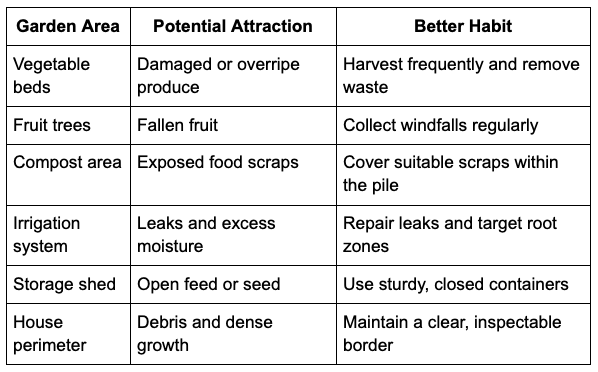
A zucchini left on the plant for an extra day may not matter much. A steady supply of split tomatoes, fallen apples, damaged squash, and overripe berries is different. Produce left to decay supplies both food and moisture to insects, rodents, and other wildlife.
Harvest vegetables and fruit regularly during peak production. Pick up windfalls beneath fruit trees instead of waiting for them to disappear naturally. Remove severely damaged produce from beds, and wash harvest baskets so bits of fruit do not accumulate in them. If crops are stored in a garage, cellar, or shed, inspect them periodically and discard anything that has begun to rot.
Good garden sanitation protects the harvest without requiring aggressive treatment.
Keep Compost Working for You
Compost turns garden waste into useful organic material, which makes it especially valuable on a productive homestead. A poorly managed pile, however, can become an easy feeding area.
Add suitable kitchen scraps to the center of the pile and cover them with leaves, finished compost, or another carbon-rich material. Avoid tossing meat, grease, or similar food waste into an ordinary backyard compost pile. If rodents are common in your area, a sturdy enclosed system may be more practical than an open heap.
Keep the surrounding ground clean too. Food scraps dropped beside the bin are not being composted. They are simply available to whatever finds them first.
Water Plants Without Watering Everything Else
Vegetables need consistent moisture, but more water is not always better. A leaking hose connection, damaged irrigation line, or forgotten container can keep parts of the yard wetter than intended.
Direct irrigation toward plant root zones and check the system while it is operating. That is often the easiest time to spot clogged emitters, broken fittings, and water flowing where it should not. Empty buckets, trays, and other containers that collect water unintentionally.
Mulch can help conserve soil moisture and suppress weeds, but avoid piling excessive material against the house or creating deep, permanently damp layers where you cannot easily inspect the ground.
Store Feed and Seed Like Food
Homesteads often contain more edible material than the vegetable garden itself. Birdseed, grass seed, pet food, livestock feed, bulbs, and harvested crops can all become attractive food sources when left in open bags.
Transfer vulnerable supplies into sturdy containers with secure lids. Sweep spilled feed promptly and rotate older supplies instead of letting forgotten bags accumulate at the back of a shed. Reducing cardboard and clutter also makes storage spaces easier to inspect.
This habit has another benefit. When everything has a designated place, evidence of gnawing, droppings, damaged packaging, or insects becomes much easier to notice early.
Use a Prevention-First Approach
Reaching for a pesticide at the first sign of damage can create new problems without solving the original one. Correct identification matters because curled leaves, holes, discoloration, and poor growth can have many causes.
A better approach is integrated pest management, commonly called IPM. According to the U.S. Environmental Protection Agency, IPM emphasizes prevention and managing the food, water, shelter, and entry conditions that allow pest problems to develop before relying on pesticides. The agency's guidance also emphasizes monitoring and choosing controls based on actual need.
In practice, that might mean hand-removing a small number of pests, using barriers, improving plant health, encouraging natural predators, or changing an irrigation practice. When a treatment is genuinely necessary, choose a targeted option appropriate to the identified problem and follow the product label exactly.
Maintain a Clear Boundary Around the House
The final step is making sure the productive part of the property does not blend directly into the living space. Dense vegetation against siding makes inspection difficult. Firewood stacked beside a wall creates shelter. Gaps around pipes and damaged screens can turn outdoor activity into an indoor problem.
Trim plants enough to maintain access around the structure. Clear unnecessary debris, keep trash containers closed, inspect door sweeps and screens, and look for obvious openings around utility penetrations. Store firewood in a sensible location away from the exterior wall when space allows.
A productive garden and a well-protected home can easily coexist. The key is regular attention rather than trying to eliminate every living thing in the yard. Harvest food promptly, manage compost carefully, control where water goes, protect stored supplies, and leave beneficial garden life alone when it is doing useful work. Those habits create a garden that produces more for your household without unintentionally offering food and shelter to pests closer to home.
Stay up to date with our latest ideas!