Small Signs, Bigger Problems: What Your Home May Be Telling You About Moisture Damage
Learn how peeling paint, swollen wood, musty odors, condensation, stains, and other small warning signs can reveal hidden moisture problems around your home.

A patch of peeling paint is easy to dismiss. So is a slightly swollen baseboard or a window that seems to collect more condensation than the others. In an older or frequently repaired home, small imperfections can start to feel like part of the scenery.
Some of those details deserve a closer look. Hidden moisture damage rarely announces itself with a dramatic leak. It often starts with subtle changes in wood, paint, flooring, or even the activity you notice around a particular part of the house. Catching those clues early gives you a better chance to fix the cause and preserve materials that are still worth saving.
Look Beyond Peeling Paint
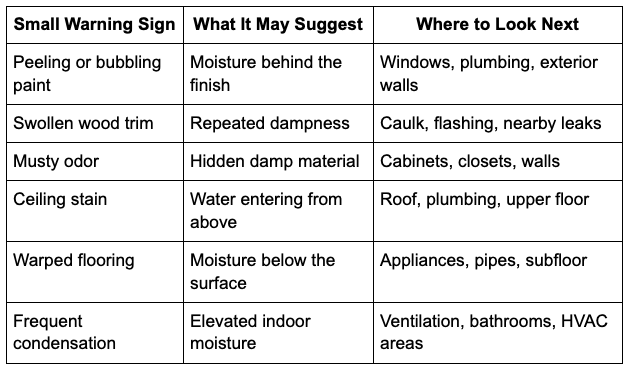
Paint is often where a moisture problem becomes visible first. Bubbling, flaking, staining, or a finish that repeatedly fails in the same spot may mean the surface underneath is getting damp.
Instead of immediately sanding and repainting, look at what is nearby. A stain beneath a bathroom could point toward plumbing. Damage around a window may deserve a closer look at the caulk, flashing, or exterior trim. Marks near the ceiling can send you toward the roof or an upstairs fixture.
Repainting without investigating the source can make a room look better for a while, but it does not explain why the finish failed. A repair-first approach starts underneath the cosmetic problem.
Pay Attention to Changes Around Wood Trim
Window frames, door trim, baseboards, and cabinets can reveal moisture problems in ways that painted walls do not. Wood may swell, soften, discolor, or stop fitting as neatly as it once did. Caulk can also separate as surrounding materials move.
Occasionally, another clue is insect activity around damp or damaged wood. For example, homeowners researching acrobat ants in the house Birmingham may discover that these ants can nest in moisture-damaged wood, foam insulation, and cavities previously used by other insects. Their presence does not prove that a home has serious structural damage, but repeated activity around the same trim, wall, or roofline gives homeowners another reason to inspect the area carefully.
That distinction matters. The goal is to find the condition allowing a problem to continue rather than focusing only on what is visible today.
Do Not Ignore a Musty Room
Sometimes your nose notices a problem before your eyes do. A persistent musty smell in a closet, cabinet, basement, laundry room, or little-used bedroom deserves investigation, especially if the odor returns after cleaning.
Start with accessible areas. Look beneath sinks, behind stored items, around plumbing connections, and along walls shared with bathrooms or kitchens. Move furniture far enough to inspect the wall behind it when practical.
Avoid tearing open walls simply because a room smells different. Hidden moisture can be difficult to investigate safely. The first job is to look for reasonable sources such as leaks, condensation, or previous water intrusion and determine whether professional assessment is warranted.
Condensation Is Useful Information
A little condensation under certain conditions is not automatically evidence of major damage. Repeated condensation, however, can tell you something about indoor moisture and ventilation.
The U.S. Environmental Protection Agency updated its residential moisture guidance in February 2026 and recommends keeping indoor relative humidity below 60 percent when possible, ideally between 30 and 50 percent. The agency also advises drying wet or damp materials within 24 to 48 hours after a leak or spill because quick drying can help prevent mold growth.
That gives homeowners two useful numbers to remember. If condensation repeatedly appears on windows, walls, or pipes, look for the moisture source instead of simply wiping the surface and forgetting about it.
Follow Ceiling and Floor Clues Carefully
Water does not always become visible directly beneath its source. It can move along pipes, framing, or other building materials before producing a stain somewhere else.
A ceiling mark that slowly expands should therefore be treated as a clue rather than a precise map. The same applies to flooring. Warped boards, loose tiles, staining near appliances, or baseboards pulling away from the wall can justify a closer inspection.
Take photographs when you first notice a suspicious area. A dated photo makes it much easier to tell whether a stain has actually grown or a floor has changed over several weeks.
Step Outside When the Indoor Source Is Not Obvious
Some home moisture problems begin outdoors. Gutters that overflow can send water where it was never intended to go. Damaged exterior caulk may allow water around windows, while poor drainage can leave it collecting near the foundation.
Walk around the house after a rain when it is safe to do so. Look at downspouts, gutters from ground level, exterior trim, window edges, and areas where water collects. You may notice a drainage pattern that is nearly invisible on a dry afternoon.
Plants and irrigation deserve attention as well. Sprinklers repeatedly hitting siding or wood trim can create unnecessary moisture exposure. Correcting the water path may be more valuable than replacing the affected finish again.
Repair the Cause Before Replacing the Material
For anyone who prefers repairing, restoring, and reusing what a home already has, moisture damage creates an important decision. Not every stained or weathered material automatically belongs in a dumpster.
First stop the source of water and allow the area to dry appropriately. Then assess what can safely be cleaned, repaired, refinished, or reused. Sound wood may sometimes be worth preserving, while badly deteriorated or contaminated porous material may require replacement. The right choice depends on the material and extent of damage.
What rarely makes sense is hiding an active moisture problem beneath new paint, caulk, flooring, or decorative finishes. That spends money and materials without solving the reason the damage appeared.
Make Moisture Checks Part of Normal Home Care
You do not need to inspect every inch of the house each weekend. A seasonal walk-through is enough to make small changes easier to notice.
Check beneath sinks, around windows, near bathroom fixtures, along exterior trim, and around appliances that use water. Look at gutters and drainage outdoors. Compare questionable areas with older photos if you have them.
A sustainable home is not only one filled with reclaimed furniture and clever upcycled projects. It is also a home where useful materials are maintained instead of unnecessarily replaced. Paying attention to the early signs of moisture damage can help you fix the real problem, protect what is still sound, and save your creative energy for projects you actually wanted to do.
Stay up to date with our latest ideas!