How to Budget for an Employee Recognition Program
Learn how to budget for an employee recognition program with practical tips to maximize engagement, control costs, and reward your team effectively.

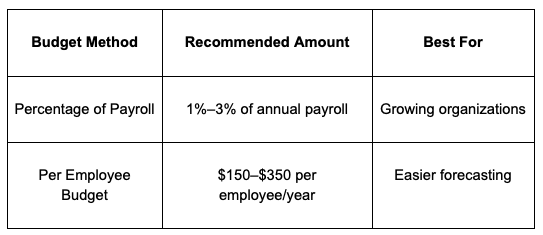
An effective employee recognition program typically costs 1%–3% of total payroll or around $150–$350 per employee annually, depending on company size, recognition goals, and reward structure.
However, successful recognition programs are not built by simply increasing spending. The key is creating a balanced budget that supports frequent appreciation, meaningful rewards, technology, and long-term employee engagement.
A well-planned employee recognition budget should cover:
Peer-to-peer recognition
Manager spot awards
Milestone celebrations
Recognition software
Administrative and compliance costs
The goal is to make recognition consistent, personalized, and sustainable.
How Much Should You Budget for an Employee Recognition Program?
The ideal budget depends on your workforce size, company goals, and recognition approach. Most organizations use one of two methods:
The Percentage of Payroll Approach
Many HR teams use payroll percentage because it scales naturally as the organization grows.
Formula:
Annual Payroll × Recognition Budget Percentage = Annual Recognition Budget
Example:
Total payroll: $10 million
Recognition allocation: 1%
Annual budget: $100,000
This approach gives companies a predictable framework while ensuring recognition investment grows alongside employee numbers.
The Per Employee Approach
A fixed per-person budget is easier for companies that prefer simple forecasting.
Example:
500 employees
$200 recognition budget per employee
Total annual budget: $100,000
This method helps HR teams estimate costs for rewards, recognition platforms, and employee appreciation initiatives.
What Should an Employee Recognition Program Budget Include?
A successful budget balances everyday appreciation with larger recognition moments. The best employee recognition software can help maintain this balance by enabling frequent peer recognition, manager rewards, and milestone celebrations throughout the year. Spending everything on annual awards or company events can reduce the impact of recognition over time.
A practical allocation model looks like this:
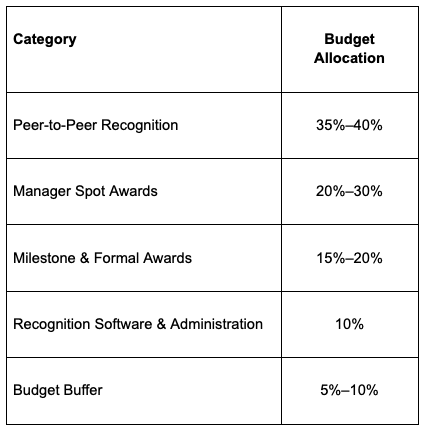
1. Peer-to-Peer Recognition: 35%–40%
Peer recognition allows employees to appreciate colleagues for everyday contributions.
Common expenses include:
Digital recognition cards
Small-value rewards
Recognition points
Team appreciation initiatives
Examples:
A teammate recognizing someone for helping complete a critical project
Employees sending digital appreciation messages through workplace platforms
Monthly peer-nominated awards
This category often receives the largest allocation because frequent recognition helps build a culture of appreciation rather than relying only on annual celebrations.
2. Manager Spot Awards: 20%–30%
Managers need flexibility to recognize employees immediately when exceptional work happens.
A spot recognition program budget can support:
Gift cards
Team lunches
Experience-based rewards
Additional paid time off
Personalized gifts
For example, organizations may provide managers with a monthly recognition allowance that allows them to reward employees without lengthy approval processes.
Immediate recognition works best when it is connected to a specific achievement, behavior, or company value.
3. Milestone and Formal Awards: 15%–20%
Structured awards recognize significant contributions and long-term commitment.
Typical expenses include:
Work anniversary rewards
Employee of the Month programs
Leadership awards
Innovation awards
Service milestone gifts
These programs help reinforce company values and improve employee retention by showing employees that their contributions are recognized over time.
4. Recognition Software and Administration: Around 10%
Technology plays an important role in scaling recognition, especially for remote, hybrid, and global teams.
A digital recognition platform budget may include:
Monthly software subscriptions
User licensing fees
HR system integrations
Reporting and analytics
Program management costs
Recognition software helps HR teams track:
Participation rates
Reward distribution
Employee engagement trends
Department-level recognition activity
How to Calculate Your Employee Recognition Budget
Use this simple four-step process to create a realistic employee recognition program cost estimate.
Step 1: Calculate Total Annual Payroll
Add all employee salaries and wages.
Formula:
Total Annual Payroll = Sum of Employee Salaries
Step 2: Apply Your Recognition Budget Percentage
Choose your investment level based on company goals.
Example:
$5,000,000 payroll × 1% = $50,000 recognition budget
Companies starting a new program may begin with a smaller percentage and increase investment based on participation and results.
Step 3: Calculate Cost Per Employee
Determine your annual investment per employee.
Formula:
Total Recognition Budget ÷ Number of Employees = Cost Per Employee
Example:
$50,000 ÷ 250 employees = $200 per employee annually
Step 4: Add a Growth Buffer
Reserve an additional 5%–10% of your budget for unexpected recognition opportunities.
This covers:
New employees joining mid-year
Special achievements
Company-wide celebrations
Additional reward demand
Hidden Costs to Include in Your Recognition Budget
Many organizations underestimate costs beyond rewards themselves.
A complete employee recognition budget should consider:
Taxes on Rewards
Some rewards, including gift cards and cash-equivalent benefits, may be treated as taxable income.
Companies may need to budget for:
Payroll taxes
Reward gross-ups
Compliance requirements
For taxable rewards, organizations may need to allocate an additional 25%–30% depending on tax treatment.
Recognition Platform Fees
Software costs may include:
Setup fees
Monthly subscription charges
Per-user pricing
Integration costs
Before selecting a platform, evaluate whether pricing is based on:
Active users
Total employees
Reward redemption
Monthly usage
Shipping and Fulfillment Costs
Physical rewards can create additional expenses, especially for distributed teams.
Consider:
Gift delivery costs
International shipping
Customs fees
Packaging expenses
Best Practices for Managing an Employee Recognition Budget
Prioritize Frequent Recognition Over Large Events
Recognition has the strongest impact when employees receive appreciation close to the achievement.
Instead of spending most of the budget on one annual event:
Encourage monthly recognition
Empower managers with reward budgets
Enable peer appreciation throughout the year
Personalize Recognition Options
Not every employee prefers public recognition.
Offer different choices:
Private manager appreciation
Public team recognition
Monetary rewards
Learning opportunities
Experiences
Personalization makes recognition more meaningful.
Track Recognition Spending and Engagement
A recognition budget should be measured, not just spent.
Monitor:
Monthly spending
Participation rates
Most active departments
Reward redemption trends
Employee feedback
Tracking helps HR teams identify whether the program is creating genuine engagement.
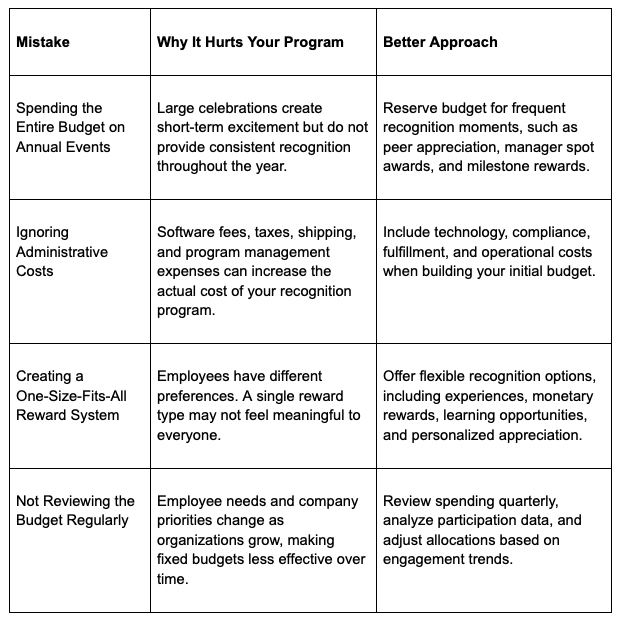
Common Employee Recognition Budget Mistakes
Before building your recognition budget, understand the common mistakes that can reduce its impact. Avoiding these pitfalls helps create a sustainable and effective program.
Final Thoughts: Build a Recognition Budget That Scales
A successful employee recognition program budget is not determined by how much a company spends; it is determined by how effectively resources are allocated.
Start with a clear benchmark:
Allocate 1%–3% of payroll or $150–$350 per employee
Balance daily recognition with milestone rewards
Include technology and hidden costs
Review spending based on employee engagement data
When recognition becomes a consistent part of workplace culture, the investment supports stronger engagement, better retention, and a more connected workforce.
FAQs on Employee Recognition Program Budgeting
1. How can companies measure the ROI of an employee recognition program?
Companies can measure ROI by tracking employee retention, engagement scores, participation rates, productivity metrics, and employee feedback after launching the program.
2. Should HR or managers control the recognition budget?
HR should manage the overall program strategy, while managers should have access to allocated funds for timely team-level recognition.
3. When should companies increase their recognition program budget?
Companies should review and adjust the budget annually or after major changes such as workforce growth, lower engagement, or increased program participation.
Stay up to date with our latest ideas!