7 Simple Upgrades To Instantly Shift Room Mood
Learn how practical living room upgrades instantly shift your home's atmosphere. Add deep seating. Layer warm lighting. Read our complete article today.
The best living room upgrades that make a difference share one thing: they change how the room feels to be in, not just how it looks in a photo. Most decorating advice optimizes for appearance with a new paint colour, a cushion rearrangement, or an accent wall that photographs well but changes nothing else.
Designers have long argued that the environment shapes how people think, feel, and perform. That principle does not stop at the office door. The living room is where most people recover, reconnect, and decompress.
Designing it around experience rather than aesthetics separates a room worth spending time in from one you pass through. Here are seven specific living room improvements worth making, focused entirely on how a room feels to inhabit.
1. Invest in Seating Built for Genuine Relaxation
The single most common living room problem rarely involves the paint color scheme or the overhead lighting fixture. The core issue stems from foundational seating that looks completely appropriate but remains too stiff to decompress in.
Adding deep furniture changes the entire interactive nature of the immediate space, meaning people naturally want to stay rather than cycle through quickly and keep household conversations going far beyond the ten-minute mark.
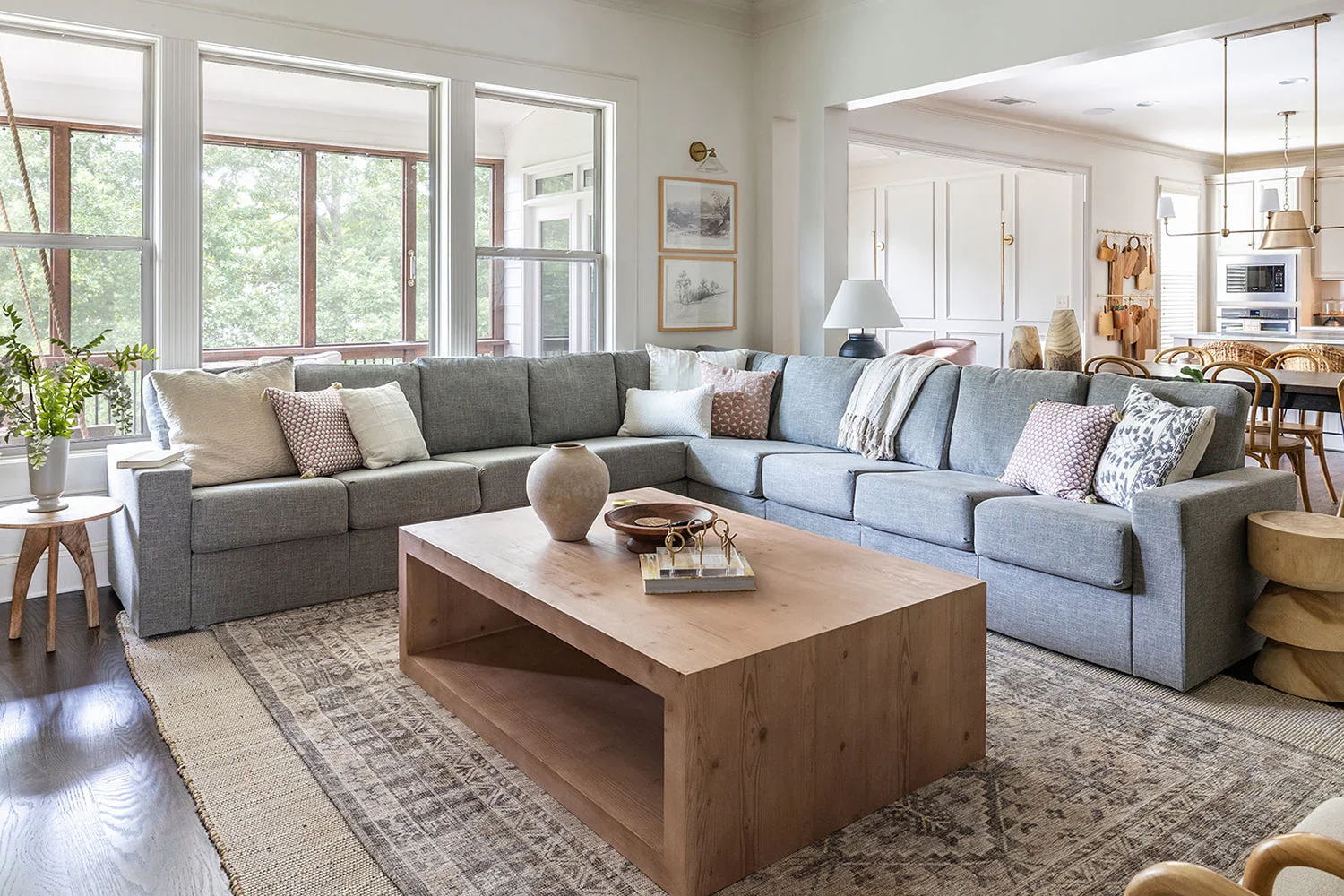
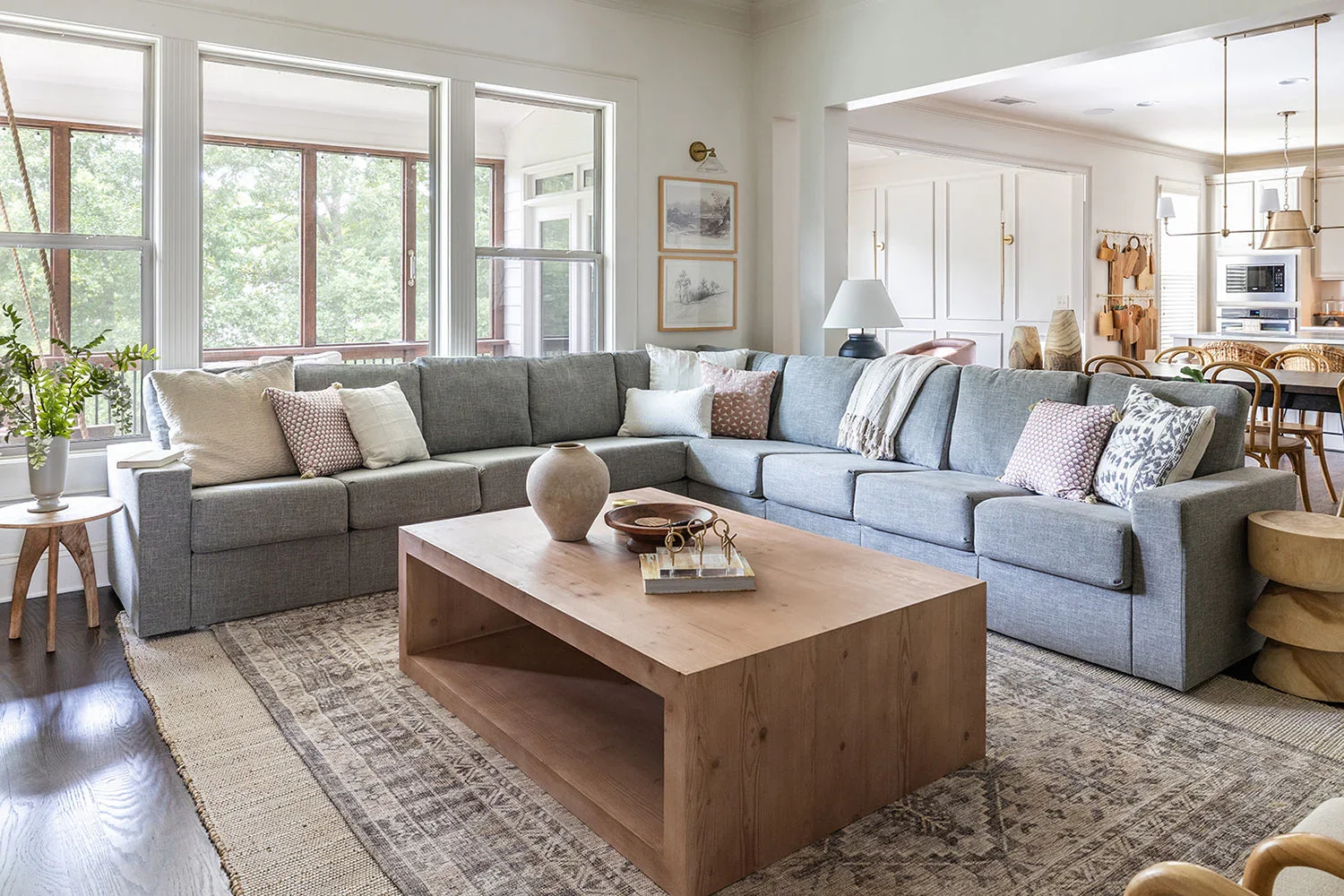
A comfy deep-seat modular sectional from Home Reserve acts as a prime example of seating designed around daily habits. The depth provides a structured place to sink into, while the removable covers go straight into the washing machine. This washable feature heavily diminishes the lingering anxiety of maintaining flawless fabric, so parents and guests can finally unwind because nobody has to treat the sofa like a fragile historical artifact.
The modular footprint also allows the furniture layout to adapt as spatial needs inevitably evolve over the coming years. Shallow lounge chairs naturally fail to provide this necessary level of practical flexibility. Choosing large sectionals ensures the household receives a durable resting zone without sacrificing their visual footprint.
2. Replace Overhead Lighting With Warm Layered Lamps
Standard ceiling fixtures mimic rigid workspace environments with flat daylight bulbs that completely ignore the surrounding time of day. Swapping that harsh illumination out for multiple warm-toned lamps serves as one of the most effective cozy living room ideas available.
Placing warm-white bulbs at 2700K or lower directly fosters a relaxed twilight mood during late-night hours.
Adding a tall floor lamp and a heavy ceramic table lamp creates contrasting layered pools of localized light. Setting these specific fixtures on automated wall timers allows the shift from active day mode to evening mode to happen without a second thought. The layout immediately registers as a protected place to decompress before heading to bed.
Quote: Overhead lighting signals function; lamps signal rest. A ceiling fixture tells the room it's a workspace, bright, even, and indifferent to the time of day.
3. Add a Large Rug to Anchor Furniture
A heavily downsized rug placed strictly under a coffee table floats entirely unmoored across the middle of the bare hardwood. This widespread styling mistake actively leaves the surrounding sofas feeling utterly disconnected from one another. The straightforward correction requires selecting a much broader woven boundary so every front sofa leg rests firmly on the fabric.
Anchoring the arrangement directly introduces valuable physical warmth under bare feet on cold winter mornings. Heavy materials like thick wool or tightly spun jute add necessary textural weight to the floor plan. These thick natural fibers consistently outperform lighter synthetic variations that look identical on a screen but flatten out entirely under constant foot traffic.
4. Introduce Contrasting Textures Alongside Visual Color
Many shared home areas look heavily decorated but remain completely flat to the touch regardless of the colorful patterns involved. Solving this mismatch requires gathering distinct textile materials instead of stacking up additional matching canvas pillows. Utilizing three entirely clashing fabrics across the layout quickly alters the resting tactile experience.
A plush velvet cushion beside a chunky knitted woolen throw adds unique surface variations that a camera lens cannot properly capture. Dense velvet traps body heat, pliable handmade knots yield to the pressing hand, and raw window linen adds a gritty natural grain.
Mixing these textiles ensures the sitting zone feels naturally worn rather than hastily staged for an immediate real estate listing.
Pro Tip: Aim for three contrasting textures: velvet, knit, linen. Each brings a distinct touch-experience that the eye alone can't replicate, making a room feel inhabited rather than staged.
5. Choose One Heavy Plant Over Scattered Clusters
Clustering neglected small plants simply generates dense tabletop clutter across narrow windowsills already holding other minor belongings. Trading that chaotic group for an isolated large-scale monstera or tall snake plant powerfully shades an empty room corner. Positioning immense greenery directly supports psychological well-being without contributing a massive layer of ongoing visual chaos.
Clinical studies show that viewing interior plants creates a positively relaxed physiology for occupants reading or talking nearby. Adopting this focused landscaping tactic radically simplifies household watering routines over the week. A single thriving tree heavily outpaces five dying accent pots in measured foliage impact and weekend maintenance chores.
6. Remove Three Objects Before Adding Anything New
Stacking excess decorative furniture along standard pathways causes constant navigational friction that exhausts residents crossing the floor. Objects retained strictly out of blind habit choke out necessary walking clearances entirely. Start actively hunting down three specific physical obstacles to permanently discard before buying new display decorations.
Removing the redundant wooden side table blocking the main entrance pathway restores crucial shoulder clearance. Meanwhile, clearing decorative kitchen trinkets from the central display shelf hands back essential vertical storage room for books. Finally, you can abandon unplugged antique floor lamps to reclaim structural corner square footage sideways at absolutely zero monetary expense.
7. Create Active Daily Habits Using the Space
Slouching onto the couch to scroll heavily through electronic applications transforms the room into a dull background zone. Engaging with the floorspace deliberately sets up an active wind-down environment.
Enforce a strict ten-minute window stripped of glowing screens right before pouring dinner drinks. Turn on a quiet jazz playlist over a dedicated speaker before settling down to break the silent room tension. Carrying a prepared drink in from the kitchen counter halts the urge to immediately circle back out to the refrigerator.
Key Insight: The most overlooked living room upgrade is behavioral. Purposeful rituals like a screen-free ten minutes or a wind-down playlist convert a passive space into a genuinely restorative one.
The Bottom Line
These purposeful environmental shifts operate together as an intensive grid meant to heighten daily home recovery. Lowered light bulbs mute the harsh twilight brightness, while thick wool rugs alongside deep-seat sectionals block out surrounding floor drafts. Buying practical washable furniture covers erases the underlying fear of ruining upholstery when hosting unpredictable toddlers or indoor pets.
Anchoring empty plaster corners with broad monstera leaves introduces organic living material without cluttering vital flat surfaces. Clearing forgotten side tables secures an unbroken walking path perfectly matched for reading a hardcover book in peace.
Stay up to date with our latest ideas!