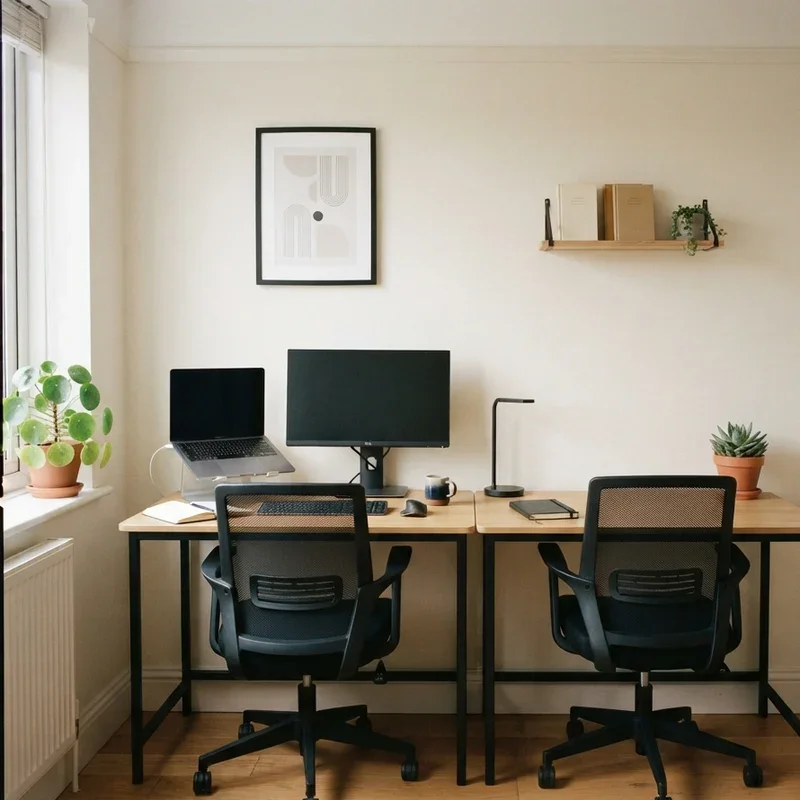
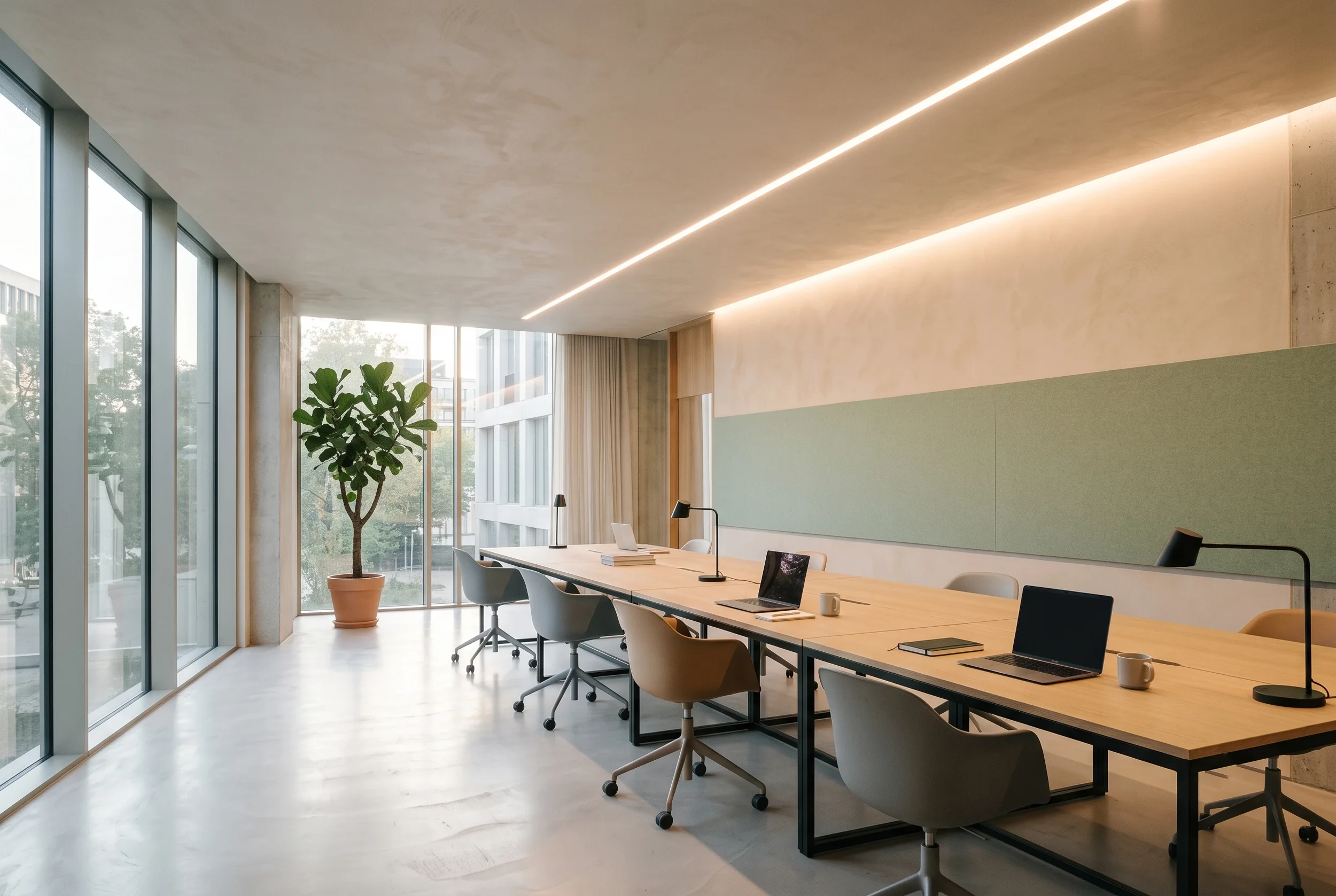
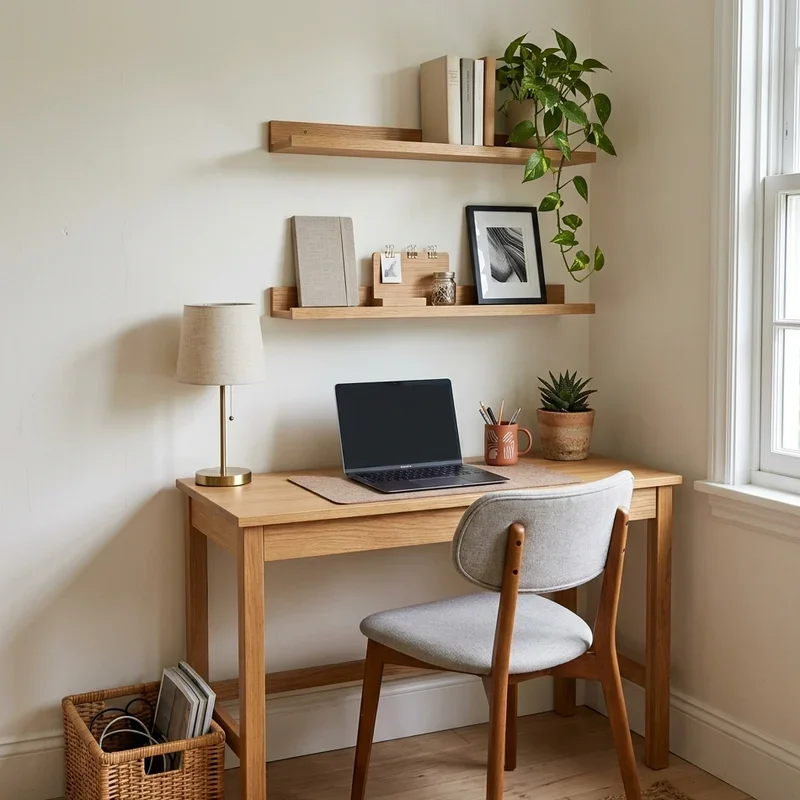
Discover 15 DIY office desk ideas for stylish workspaces that build custom, budget-friendly desks matching your exact style and space needs.
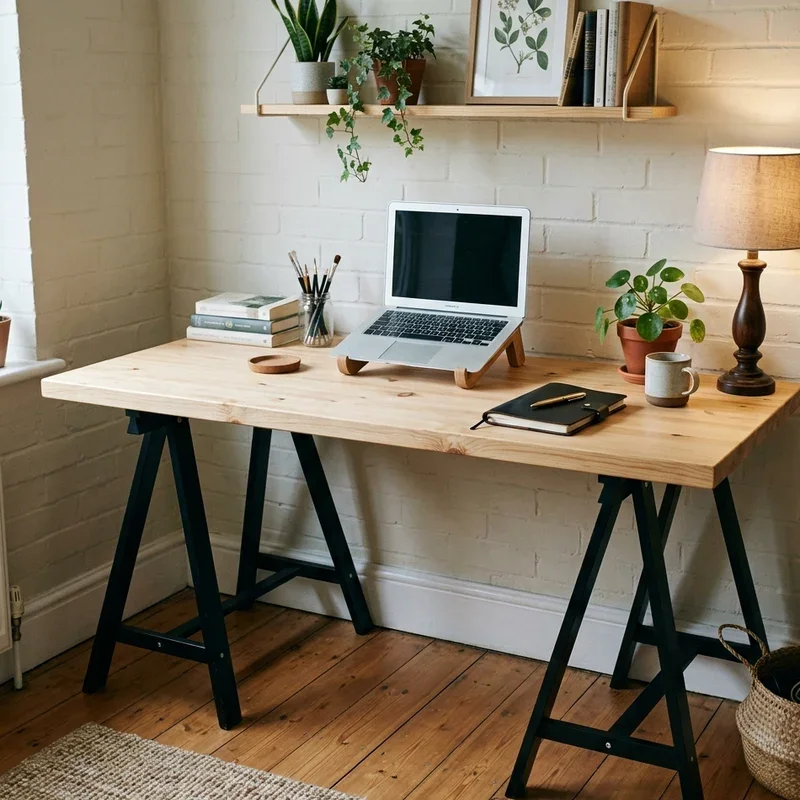
A DIY office desk puts you in complete control of dimensions, materials, style, and budget, building the exact workspace your home office needs rather than settling for the closest-fit, never-quite-right, compromise-on-everything mass-produced option that furniture stores offer in the three sizes and two finishes they decided represent everyone's taste despite the obvious reality that no two home offices share identical layouts, storage needs, or aesthetic visions for the space where productive work happens daily. Have you ever measured a desk online, waited for delivery, assembled the wobbly result, and immediately wished you had simply built exactly what you wanted from the beginning? DIY desks eliminate that regret permanently. Think of building your own desk like tailoring a suit versus buying off the rack. Let's explore fifteen ideas.
1. Hairpin Leg Butcher Block Desk
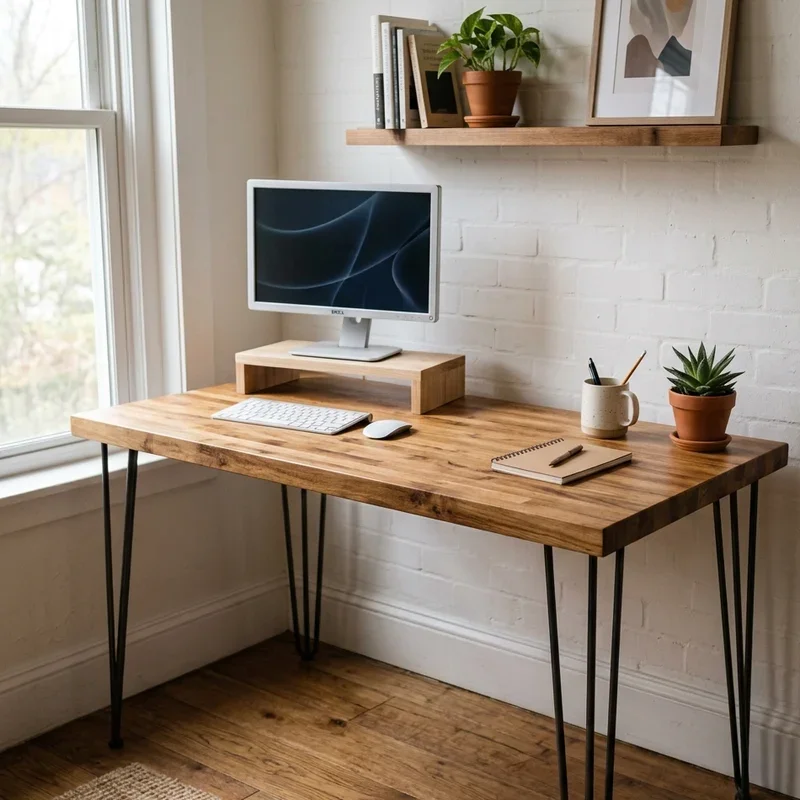
A hairpin leg butcher block desk combines a thick, warm, food-grade hardwood surface with sleek, mid-century-inspired metal legs, creating the minimalist, designer-looking workspace that furniture showrooms price at several hundred dollars but your DIY version builds for under a hundred through the simple, two-component, attach-four-legs-to-one-board construction process requiring nothing beyond a screwdriver, twenty minutes, and the satisfying knowledge that you built something genuinely beautiful entirely by yourself. Buy a pre-made butcher block countertop section from a home improvement store, then screw four hairpin legs into the underside corners, since the pre-finished surface eliminates sanding, staining, and finishing labor that raw lumber demands through its unfinished, rough, need-hours-of-prep-work starting condition. Choose twenty-eight-inch legs for standard desk height. Sand and oil the top. Think of hairpin desks like designer furniture at hardware prices. Your workspace builds in minutes.
2. Floating Wall-Mounted Desk
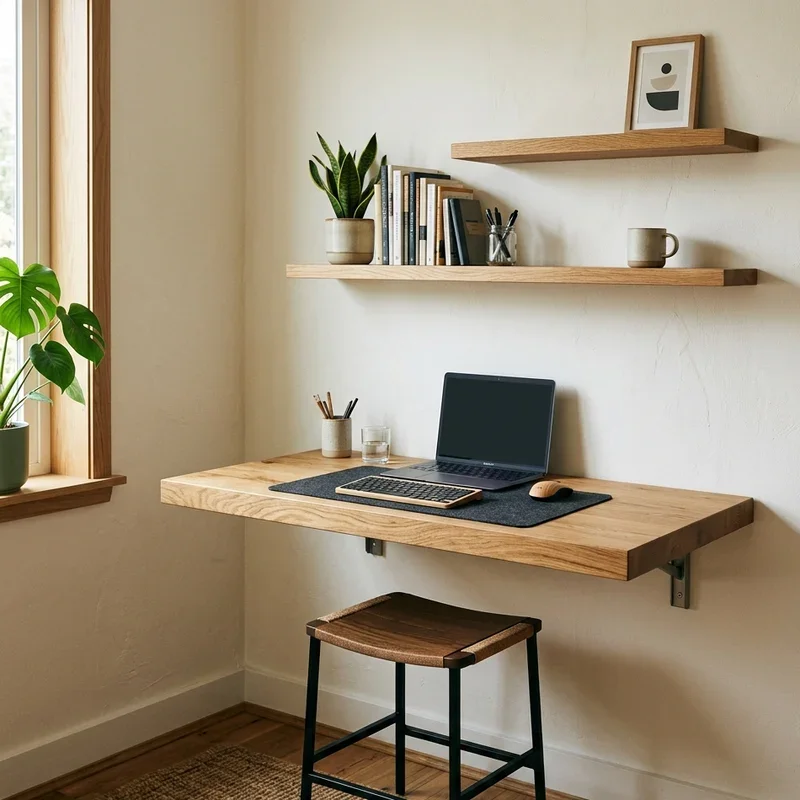
A floating wall-mounted desk eliminates legs entirely, cantilevering a work surface directly from the wall for the space-saving, floor-clearing, visually weightless workspace that freestanding desks cannot deliver through their four-legged, floor-occupying, visually heavy construction consuming the ground-level real estate that small home offices desperately need for chair movement, walking paths, and the general spatial breathing room that leg-free, wall-supported floating designs preserve through their elevated, nothing-touching-the-floor, clean-beneath-the-surface installation above the open floor space below. Mount a sturdy wooden shelf on heavy-duty concealed brackets anchored into wall studs, since the hidden hardware creates the floating illusion while the stud-mounted fasteners support the weight of a computer, monitor, and daily work supplies. Choose a depth of eighteen to twenty-four inches. Add a small shelf above. Think of floating desks like shelves promoted to workspace duty. Your office floor stays clear.
3. Sawhorse Trestle Desk
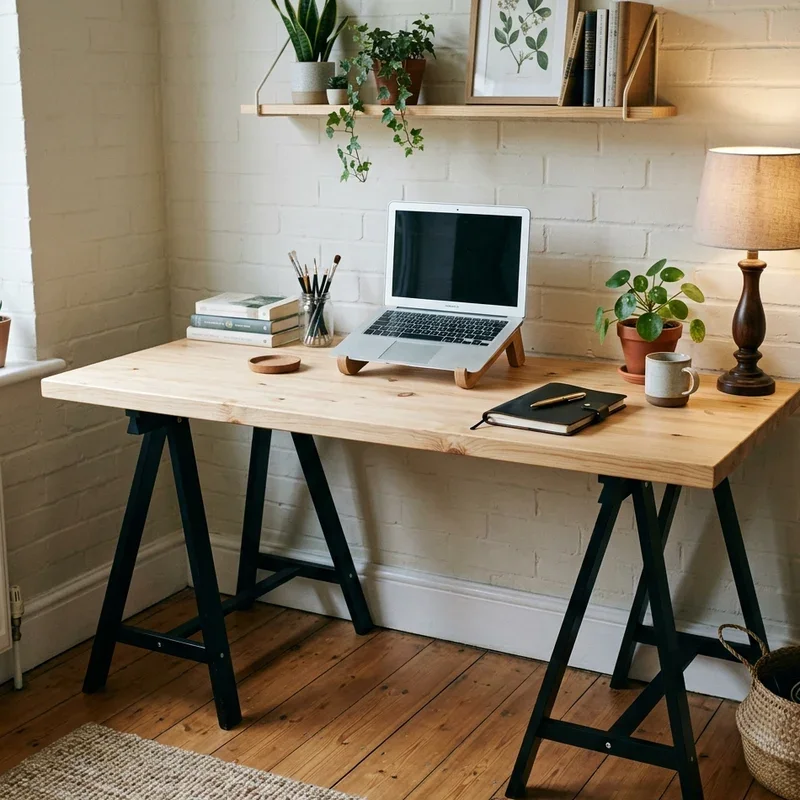
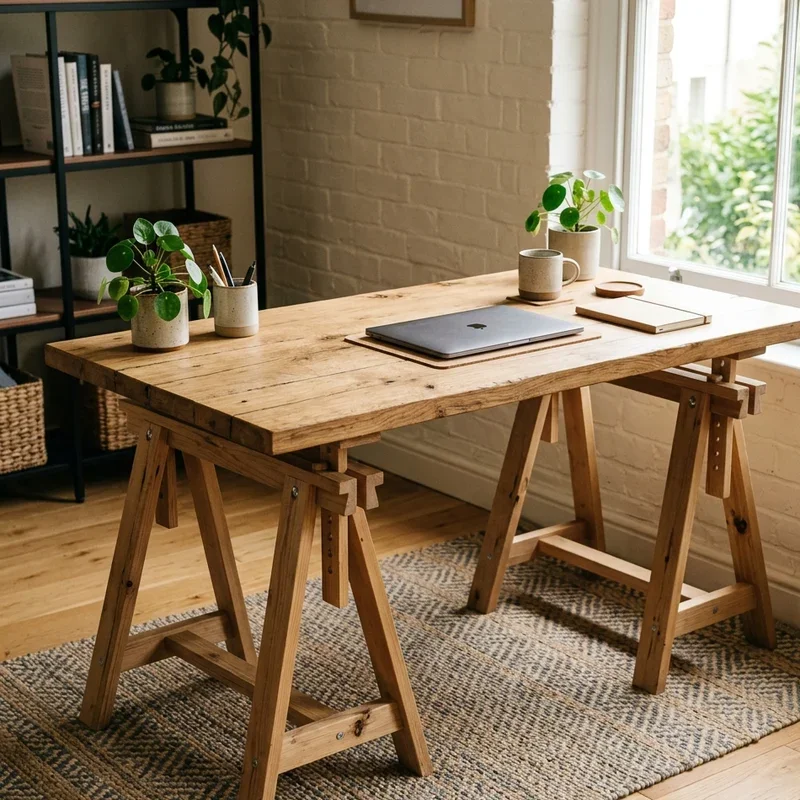
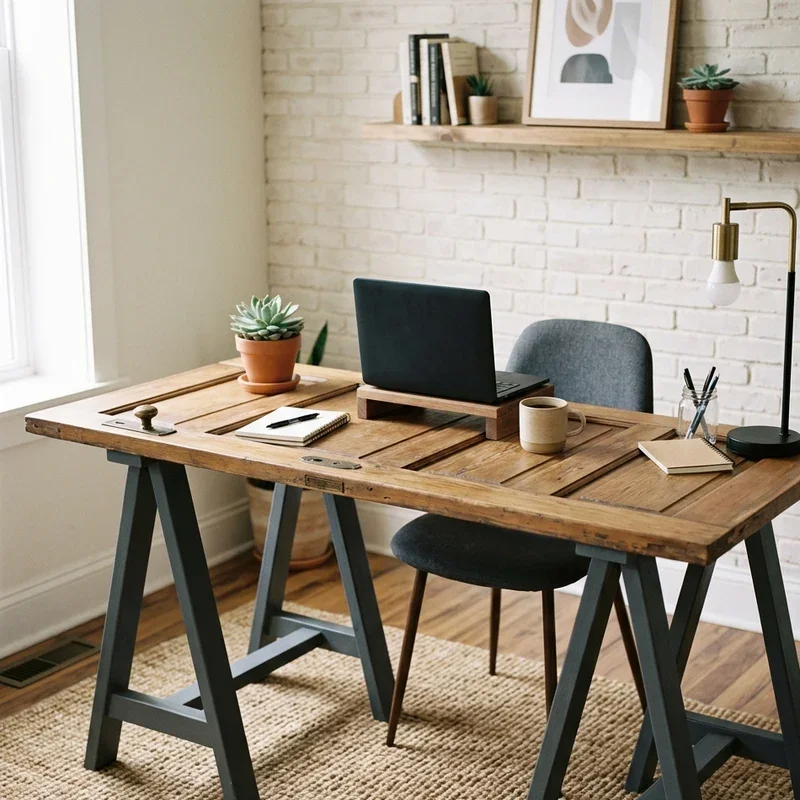
A sawhorse trestle desk positions a flat surface across two A-frame supports, building the quick, affordable, surprisingly stylish workspace that construction sites inspired through their practical, no-nonsense, get-the-job-done approach to creating instant flat surfaces anywhere two sawhorses and a board come together for the kind of functional, utilitarian, honest-about-its-origins work surface that modern home offices reinterpret through upgraded materials, clean finishes, and the intentional, design-conscious positioning that transforms humble construction logic into genuine furniture-quality workspace. Buy or build two matching sawhorses, then lay a finished wood plank, door, or countertop section across the tops, since the gravity-held connection requires zero fasteners while the removable, disassemble-in-seconds format allows easy relocation and storage. Choose matching finishes. Add cross-bracing. Think of sawhorse desks like construction logic elevated to furniture. Your workspace assembles instantly.
4. Pipe and Wood Industrial Desk
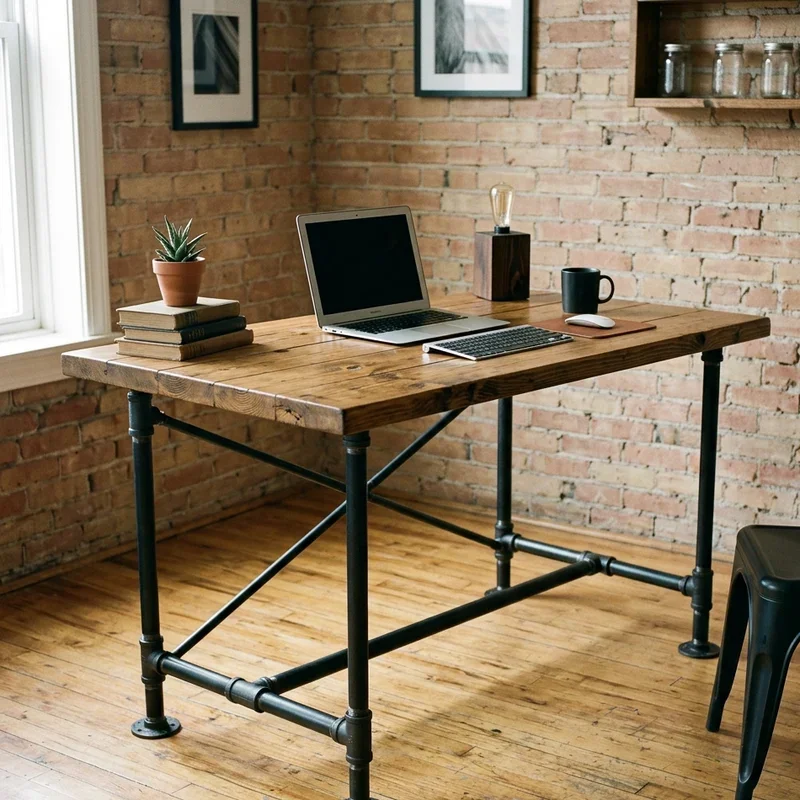
A pipe and wood industrial desk builds its frame from iron plumbing fittings connected to a reclaimed wood top, creating the raw, urban, factory-inspired workspace that polished, refined, conventionally finished furniture cannot deliver through its smooth, manufactured, personality-sanitized presentation lacking the visible threaded fittings, heavy iron flanges, and deliberately unpolished metalwork that industrial design celebrates proudly through its honest, construction-exposed, nothing-hidden aesthetic philosophy applied to the desk where you work daily. Assemble the desk frame using standard iron pipe fittings and flanges from the plumbing aisle, then attach a thick reclaimed wood or butcher block top, since the warm wood and cold metal contrast defines the industrial aesthetic at its most authentic. Choose dark iron finishes. Add pipe shelving above. Think of pipe desks like factory equipment repurposed for office work. Your workspace builds with plumbing supplies.
5. Repurposed Door Desk Top
A repurposed door desk positions a salvaged, full-sized interior door horizontally across a base structure, creating the oversized, panel-style work surface that standard desk dimensions restrict through their narrow, barely-fits-a-keyboard, where-do-I-put-my-coffee limited width while a door's generous, shoulder-width-plus-elbow-room proportions provide the expansive, spread-your-papers, dual-monitor-accommodating workspace that productive, multi-tasking home offices genuinely need for comfortable, uncramped, everything-fits daily work sessions. Source a solid-core interior door from a salvage yard or building supply store, since the sturdy, flat, pre-finished panel provides instant desktop material requiring minimal preparation beyond light sanding and a protective topcoat. Mount on file cabinets, sawhorses, or custom-built legs. Fill the doorknob hole with wood filler. Think of door desks like architectural recycling. Your workspace spreads generously.
6. Corner L-Shaped DIY Desk
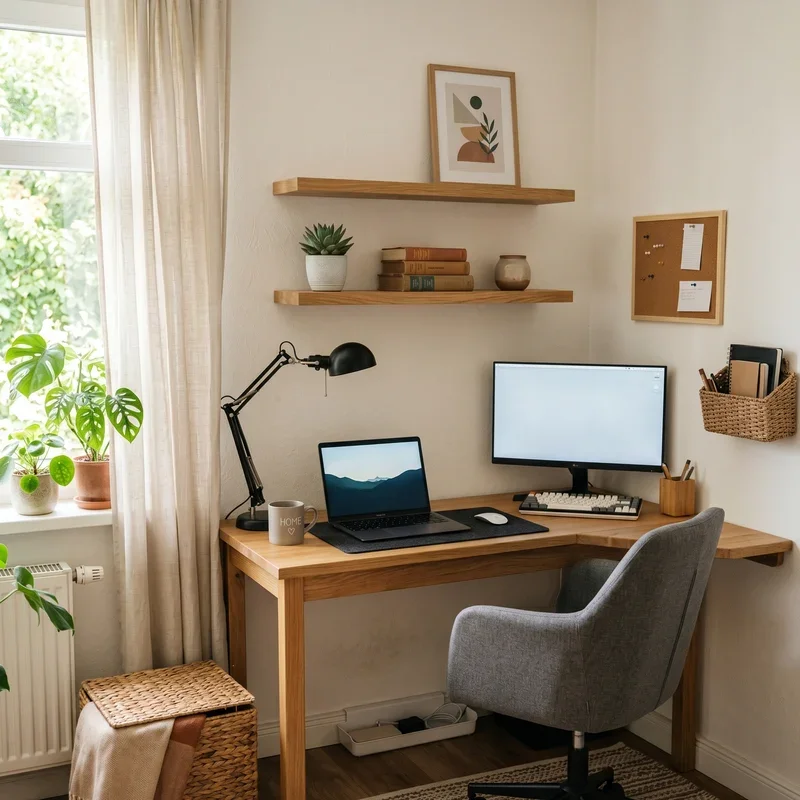
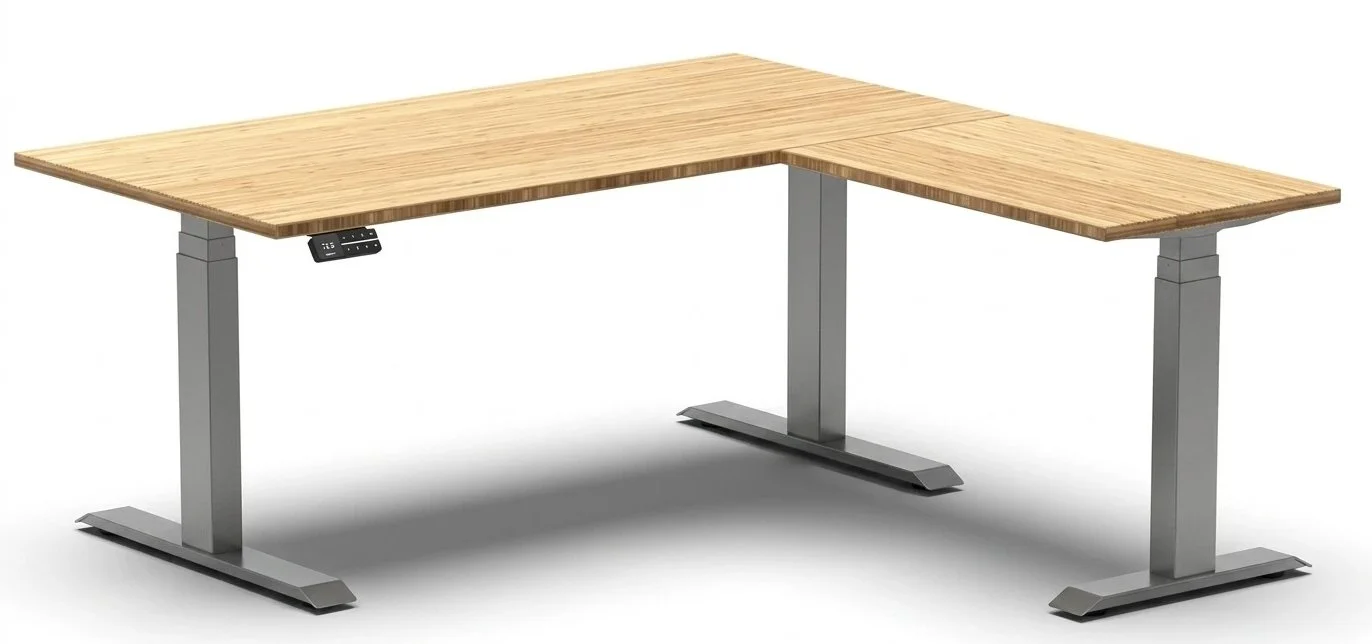
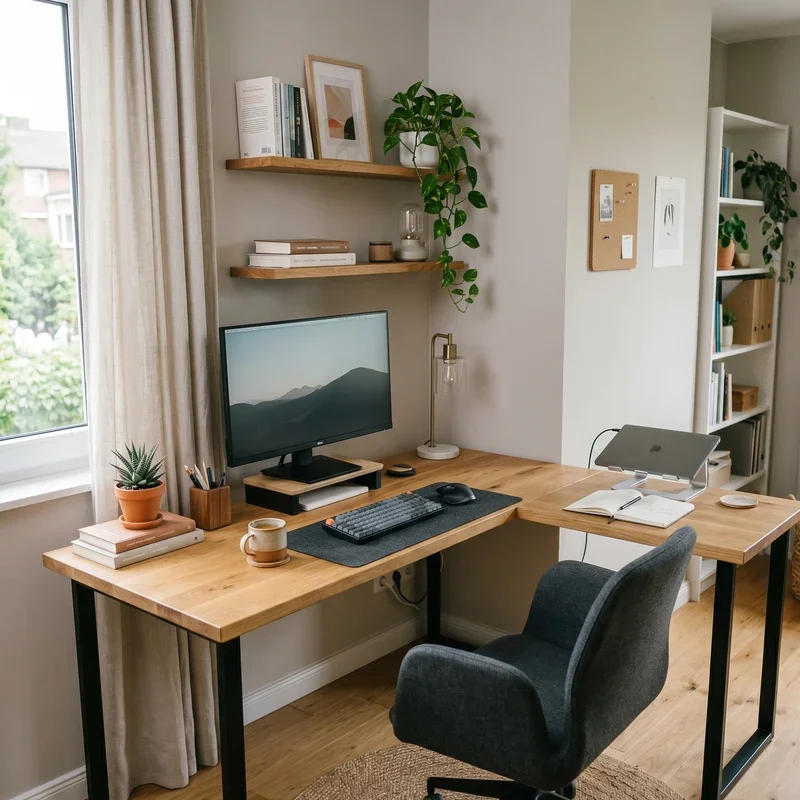
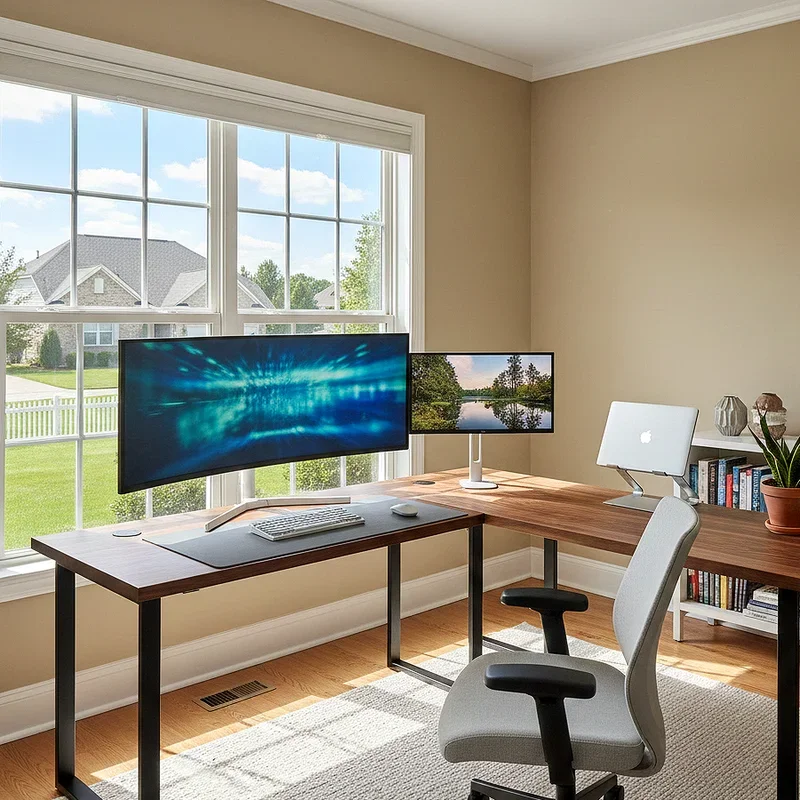
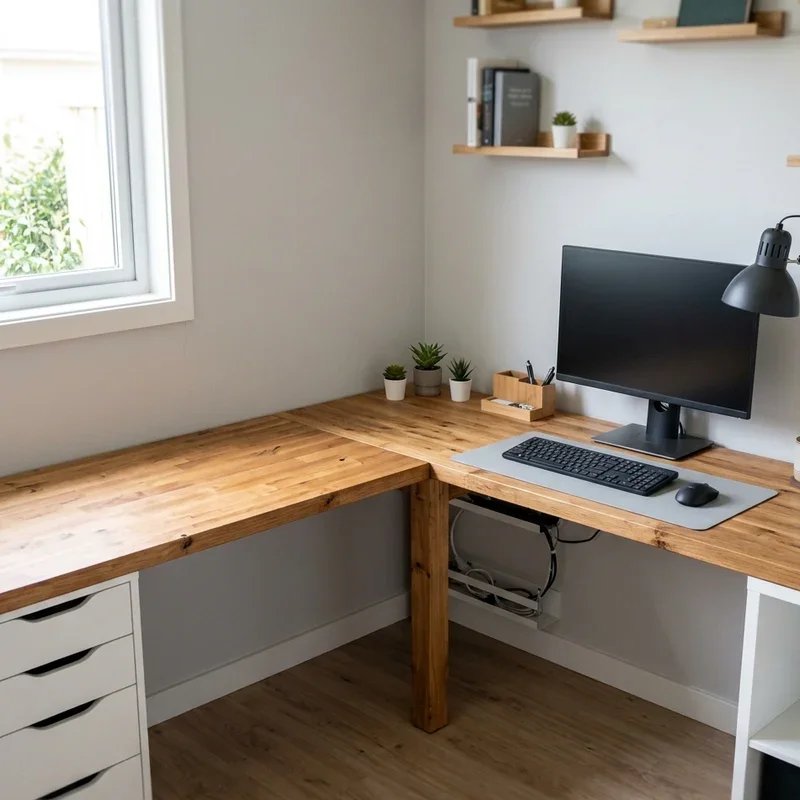
A corner L-shaped DIY desk fills your room's angular dead zone with dual-wing workspace wrapping two walls, creating the generous, multi-monitor, spread-everything-out surface area that single-surface, straight-line desks cannot provide through their limited, one-direction, turn-your-chair-to-reach-the-other-side layout restricting productive multitasking to the narrow, elbow-width, forward-facing zone directly between your keyboard and your nose during concentrated working hours. Build two matching desk surfaces, then join them at a ninety-degree angle using a corner support bracket or a triangular corner piece, since the connected junction creates structural rigidity that two independent, unjoined surfaces lack through their gap-prone, shifting, independently wobbling, unstable corner meeting point. Mount legs or wall brackets. Match finishes across both wings. Think of L-shaped desks like doubling your workspace through geometry. Your corner earns productive purpose.
7. Standing Desk Conversion
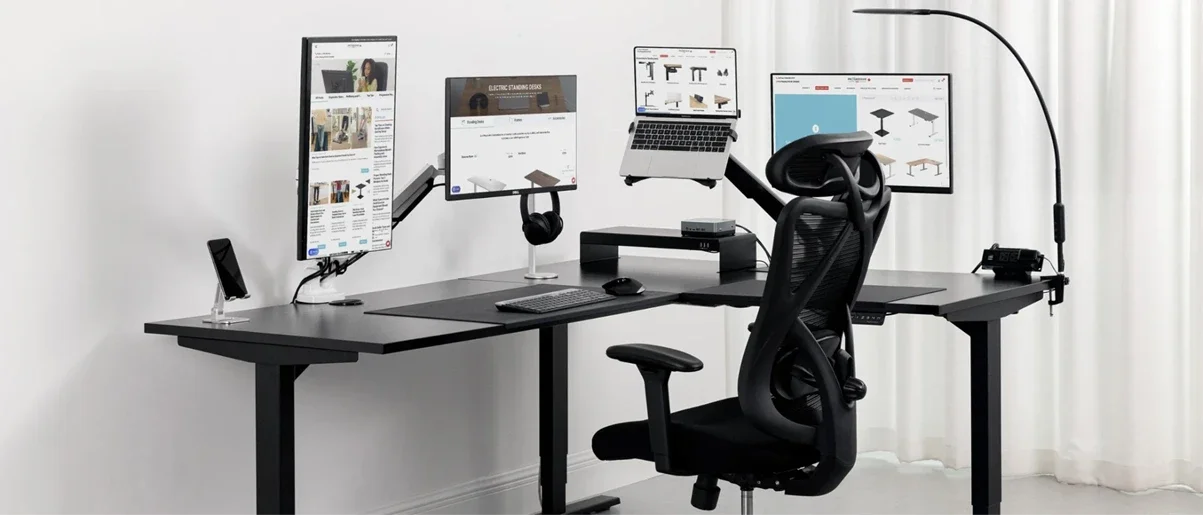
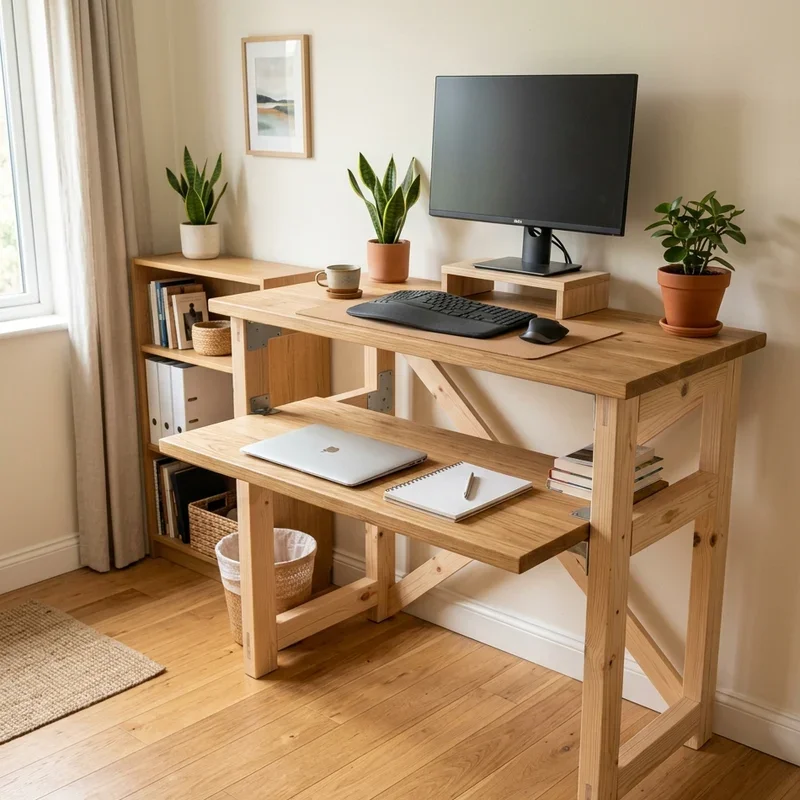
A standing desk conversion builds an elevated work surface at standing height, creating the health-conscious, posture-improving, energy-boosting workspace that seated-only desks prevent through their chair-locked, hip-flexor-shortening, lower-back-compressing, all-day-sitting format that medical research increasingly identifies as the productivity-killing, health-damaging, should-have-stood-up-hours-ago work position that millions of office workers maintain throughout eight-hour days because their desks offer no alternative height option beyond the standard, sit-down, thirty-inch surface demanding seated use exclusively. Build a desk at forty-two to forty-eight inches tall depending on your height, since the elevated surface positions your screen at eye level while your elbows rest at comfortable ninety-degree angles. Add an anti-fatigue mat. Include a drafting-height stool for sitting breaks. Think of standing desks like health upgrades built from lumber. Your posture improves through elevation.
8. Pallet Wood Desk
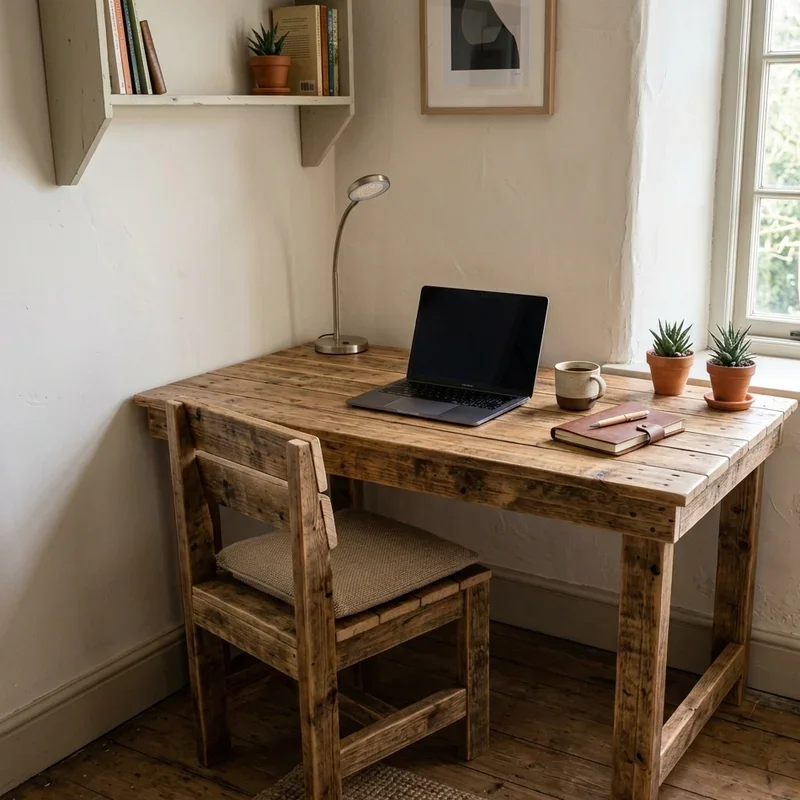
A pallet wood desk builds your workspace entirely from free salvaged shipping pallets, turning discarded, warehouse-floor lumber into a rustic, characterful, genuinely zero-cost desk that proves impressive home office furniture grows from creative resourcefulness rather than generous budgets when determination, a few screws, and willingness to sand rough wood smooth transform industrial waste into the kind of handmade, conversation-starting, nobody-else-has-this workspace that mass-produced alternatives never deliver through their identical, factory-stamped, personality-free uniformity shared by thousands of other buyers who all received the exact same flat-packed, instruction-sheet-included, assembly-required result. Disassemble clean pallets, then cut and reassemble the planks into a desktop surface using screws and wood glue, since the randomized, varied plank widths create the rustic, authentically imperfect character that defines pallet furniture's visual appeal. Sand thoroughly. Stain and seal. Add sturdy legs. Think of pallet desks like free furniture from your creativity. Your workspace costs nothing.
9. IKEA Hack Storage Desk
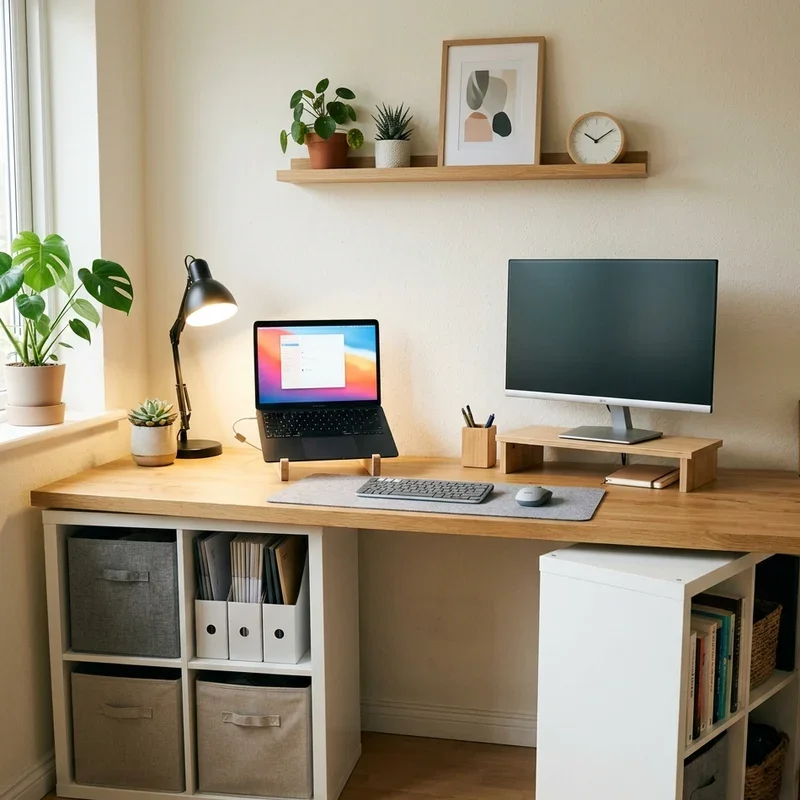
An IKEA hack storage desk combines affordable IKEA components in unintended, creative configurations that produce custom-looking workspaces with built-in storage at prices dramatically below what equivalent custom furniture would cost through traditional, made-from-scratch, everything-measured-and-cut-individually construction methods demanding tools, skills, and material budgets that simple, bolt-together, instruction-following IKEA assembly eliminates through its pre-cut, pre-drilled, everything-included packaging designed for tool-minimal, skill-minimal, frustration-moderate weekend completion by ordinary humans following pictorial instructions featuring those little cartoon people who never seem stressed despite holding fourteen parts simultaneously. Place a countertop across two IKEA storage cabinets or drawer units, since the flanking storage provides built-in filing, supply organization, and structural support while the bridging top creates generous desktop surface. Choose the ALEX drawer units. Add a KARLBY countertop. Think of IKEA hacks like affordable custom furniture through creative assembly. Your workspace organizes affordably.
10. Murphy Fold-Down Wall Desk
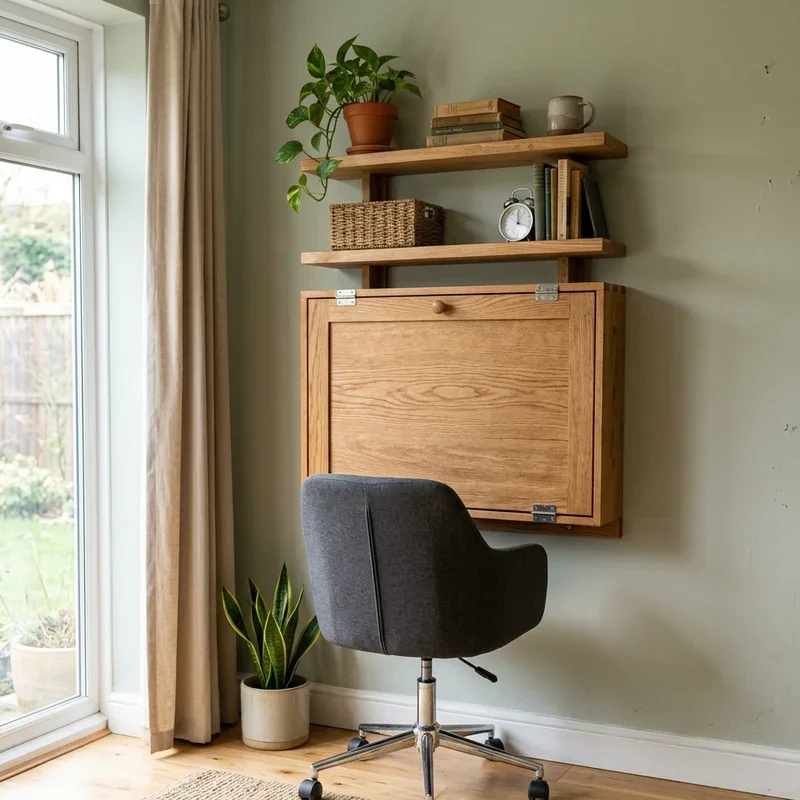
A Murphy fold-down wall desk mounts a hinged panel that folds flat against the wall when not in use, then drops down into a horizontal work surface when needed, creating the space-disappearing, room-reclaiming, only-exists-when-you-need-it workspace that permanent, always-occupying, never-moves desks consume through their twenty-four-hour, seven-day, regardless-of-whether-anyone-is-working floor occupation in rooms that desperately need the liberated space during non-working hours for other activities besides staring at an empty desk nobody sits at until tomorrow morning. Build a sturdy panel with piano hinges mounted to a wall-secured frame, since the full-length hinge distributes the desktop's weight evenly while the frame provides the structural anchor that the folding mechanism depends upon for smooth, reliable, daily operation. Add a chain or leg support. Include a wall-mounted shelf above. Think of Murphy desks like workspace origami. Your room reclaims its space.
11. File Cabinet Bridge Desk
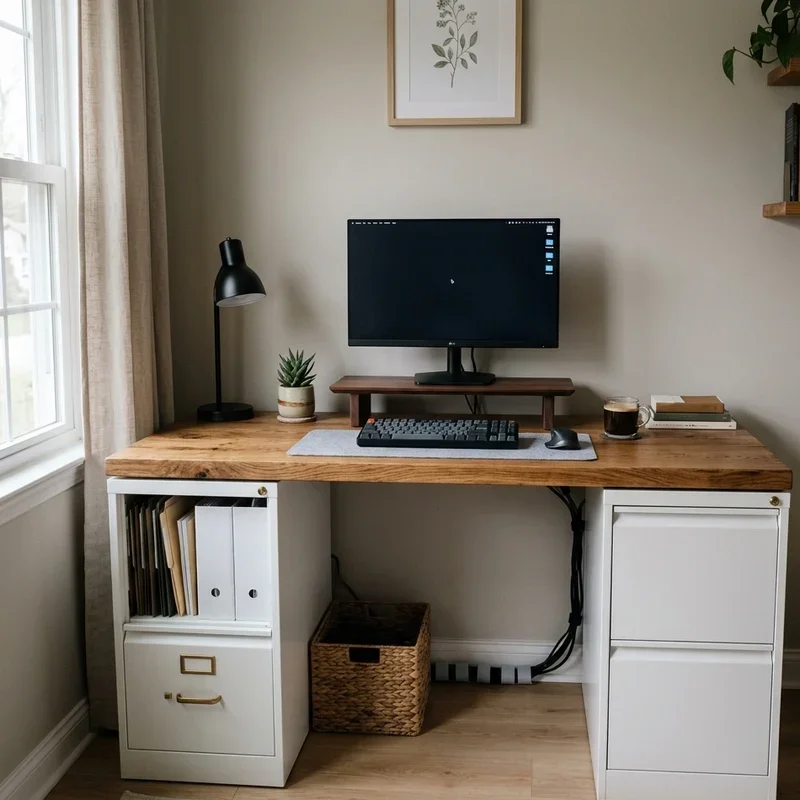
A file cabinet bridge desk positions a flat surface across two flanking file cabinets, creating the practical, heavily-organized, storage-rich workspace where the supporting structures double as filing systems while the bridging top provides the generous, dual-cabinet-wide work surface that narrow, storage-lacking, where-do-I-put-anything alternative desks fail delivering through their drawer-free, shelf-less, everything-piles-on-top construction leaving no organized place for the papers, supplies, and office materials that accumulate daily without dedicated, built-in, within-reach filing solutions. Buy two matching file cabinets, then bridge a finished wood plank across both tops, since the standard file cabinet height creates comfortable desk-level positioning while the dual-cabinet base provides four to six filing drawers immediately accessible beneath the working surface. Secure the top to both cabinets. Think of file cabinet desks like organized foundations supporting your work. Your storage builds into the structure.
12. Live Edge Slab Desk
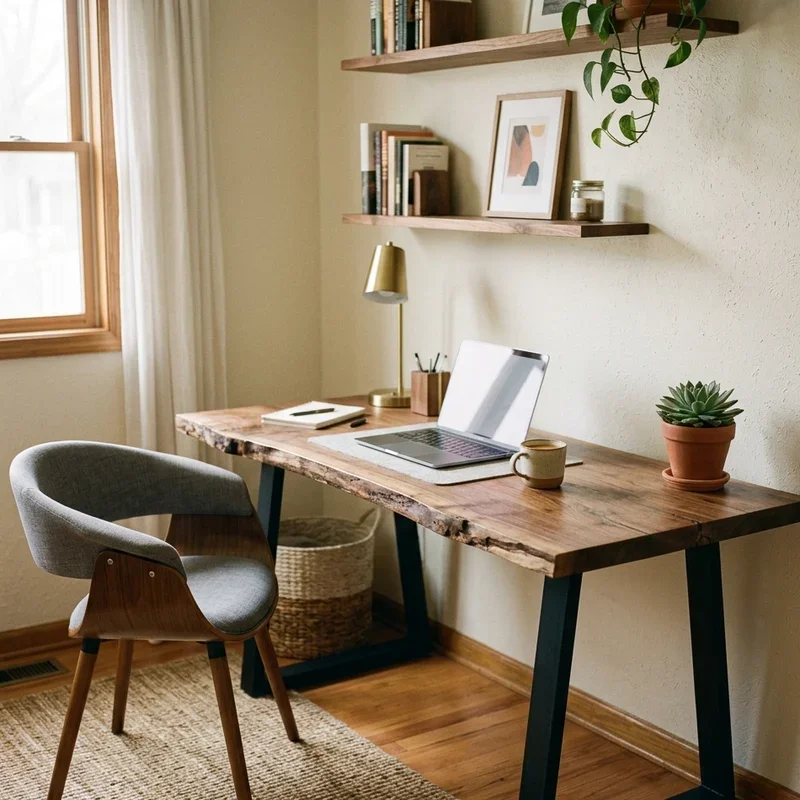
A live edge slab desk positions a single, bark-edged, naturally-shaped wood slab as your desktop, creating the organic, one-of-a-kind, genuinely artistic workspace where the tree's original growth edge defines the desk's silhouette through its undulating, never-straight, nature-determined outline producing a piece of functional furniture that doubles as genuine natural art occupying your office with the kind of warmth, character, and biological beauty that rectangular, straight-edged, factory-cut alternatives strip away through their geometric uniformity eliminating every trace of the living tree that provided the raw material. Source a kiln-dried hardwood slab from a lumber mill or specialty wood dealer, since proper drying prevents the warping, cracking, and splitting that green, unseasoned slabs develop through moisture loss after installation. Sand and finish with clear epoxy or oil. Add metal or wooden legs. Think of live edge like nature designing your desk. Your workspace grows organically.
13. Crate and Plank Desk
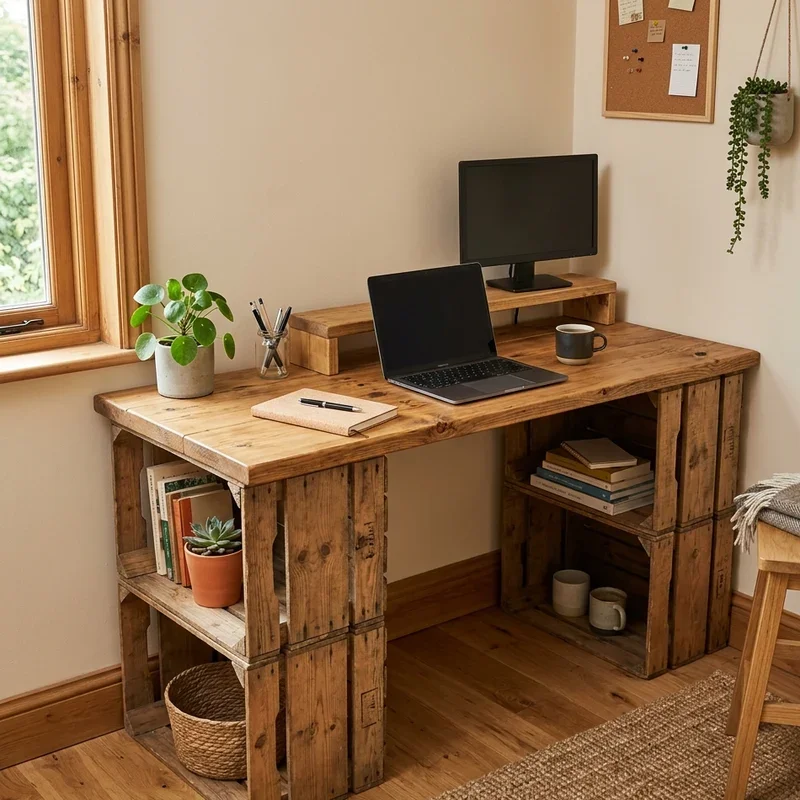
A crate and plank desk stacks wooden storage crates beneath a simple plank top, building a rustic, storage-integrated, visually charming workspace from the most basic, widely available, extremely affordable materials that hardware stores, craft shops, and online retailers sell for a few dollars per crate while the assembled result looks like intentional, design-magazine-featured, farmhouse-industrial furniture rather than the obviously improvised, clearly-temporary, held-together-by-hope construction that cheap, creative, we-had-no-budget DIY projects sometimes produce unconvincingly through their visible structural compromises and aesthetic shortcuts. Stack wooden crates on each side to desired desk height, then bridge a finished plank across both stacks, since the crate openings create built-in shelving for books, supplies, and decorative objects. Stain crates and plank to match. Secure the top. Think of crate desks like rustic building blocks for workspaces. Your storage stacks creatively.
14. Closet Office Built-In Desk
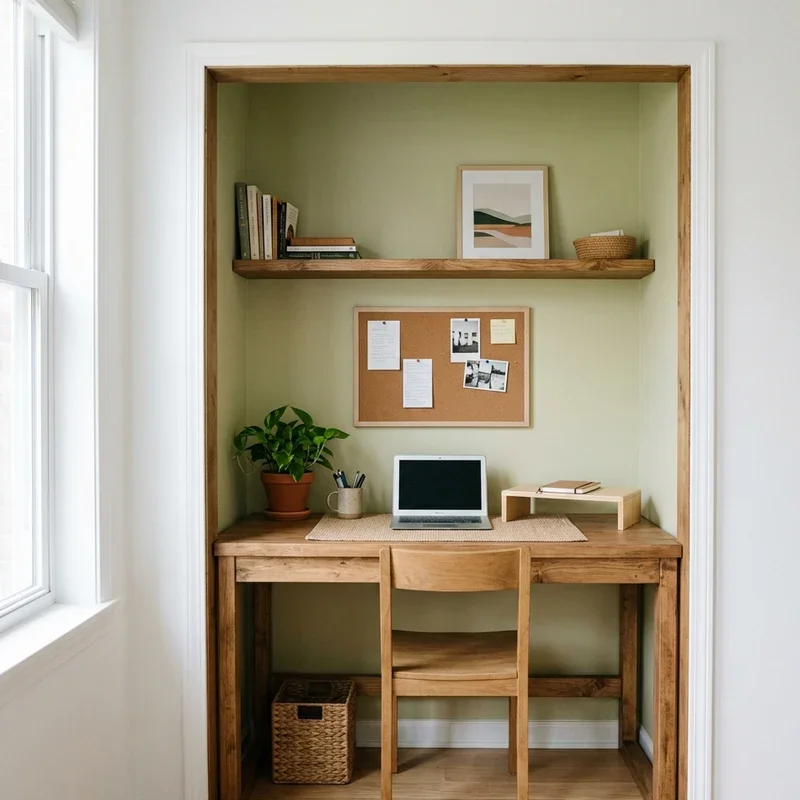
A closet office built-in desk converts an unused closet into a compact, door-closeable, hide-the-mess workspace where a shelf-height desktop spans the closet's width while the walls above and below accommodate shelving, pegboards, and storage that transform the small, enclosed space into a surprisingly complete, fully functional, close-the-doors-when-guests-arrive home office occupying zero visible room footprint when the closet doors shut and the workspace disappears behind their ordinary, nothing-to-see-here, looks-like-a-regular-closet exterior panels. Remove the closet rod and shelving, then install a sturdy shelf at desk height spanning wall to wall, since the full-width surface maximizes the narrow closet's limited dimensional workspace potential. Add upper shelving. Mount a pegboard on the back wall. Include a task light. Think of closet offices like hidden workspaces behind ordinary doors. Your office disappears when needed.
15. Mid-Century Tapered Leg Desk
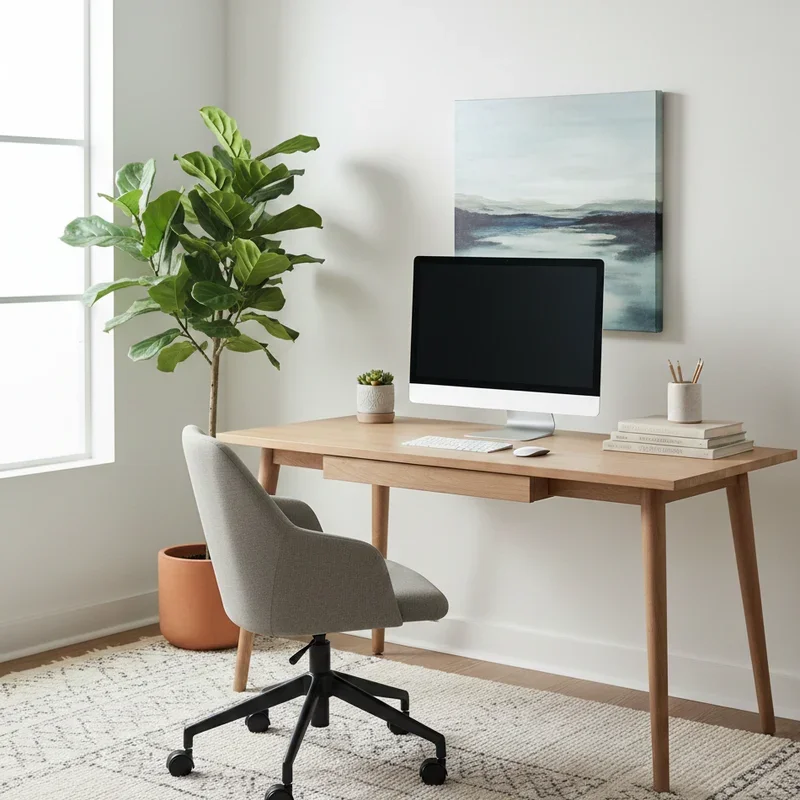
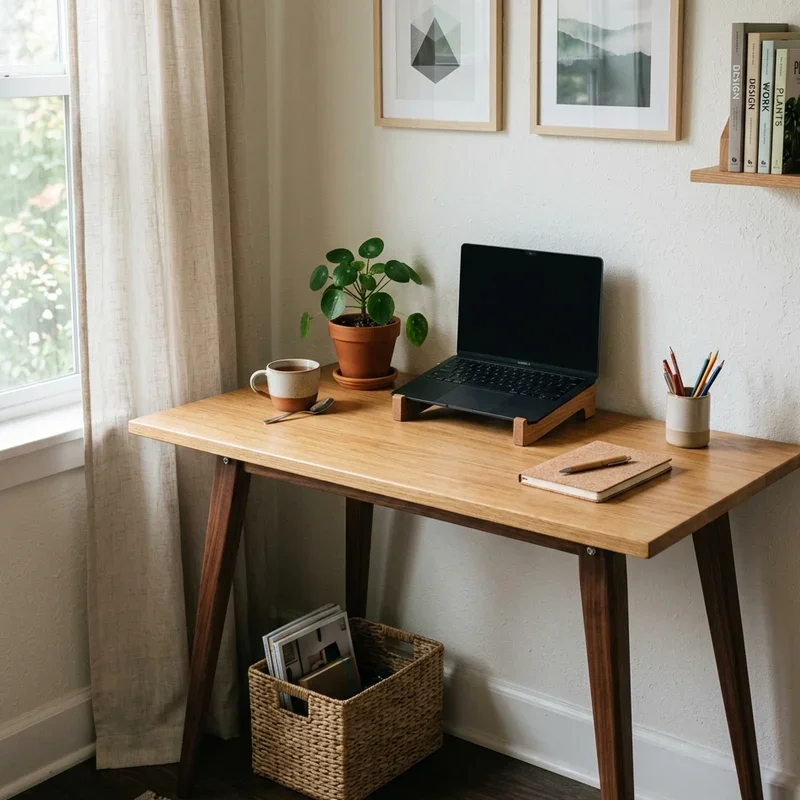
A mid-century tapered leg desk pairs a simple, clean-lined desktop with angled, pencil-tapered wooden legs, creating the retro-modern, design-movement-inspired workspace that mid-century furniture collectors pay premium prices acquiring from vintage dealers while your DIY version builds the identical aesthetic for hardware-store lumber costs through the straightforward, cut-and-attach, anyone-can-do-this construction process joining four tapered legs to one flat surface for the clean, elegant, design-historically-significant desk silhouette that defined the mid-twentieth century's most influential furniture era. Buy pre-made tapered legs online or at furniture supply stores, then attach them to a simple, clean-edged desktop using mounting plates, since the pre-turned legs eliminate the lathe work that custom tapering requires through its specialized, equipment-demanding, skill-intensive woodturning process. Choose walnut-stained wood. Add a slim drawer. Think of tapered legs like retro design on a DIY budget. Your workspace channels mid-century cool.
Conclusion
DIY office desk ideas prove that the best workspace in your home comes from your own hands, where custom dimensions, chosen materials, and personal style combine into the exact desk your office needs rather than the approximate, close-enough, compromise-accepting, this-will-do alternative that store-bought options deliver through their limited, one-size-fits-most, nobody's-perfect-match mass-produced inventory. These fifteen ideas span hairpin leg simplicity to live edge artistry, matching every skill level, budget, and style vision. Whether you hack IKEA components or build from pallet wood, DIY desks deliver personalized perfection. Start building your dream desk today.
Read next: 15 Small Home Office Desk Ideas for Stylish Rooms
Frequently Asked Questions
Q1: What's the easiest DIY desk to build for beginners?
A: Hairpin leg butcher block desks and file cabinet bridge desks require minimal tools and build in under an hour.
Q2: How much does building a DIY desk typically cost?
A: Most DIY desks cost between fifty and two hundred dollars depending on materials, hardware, and finish choices.
Q3: What wood works best for DIY desk tops?
A: Butcher block, pine, birch plywood, and reclaimed wood deliver attractive, durable, budget-friendly desktop surfaces reliably.
Q4: What height should a DIY desk be?
A: Standard sitting desks measure twenty-eight to thirty inches, while standing desks range from forty to forty-eight inches.
Q5: Do I need advanced tools to build a DIY desk?
A: Most designs require only a drill, saw, sandpaper, and measuring tape for successful, professional-looking results.
Stay up to date with our latest ideas!