Learn how to arrange two desks in a small office with clever layouts, space-saving tips, and creative ideas that maximize every inch.
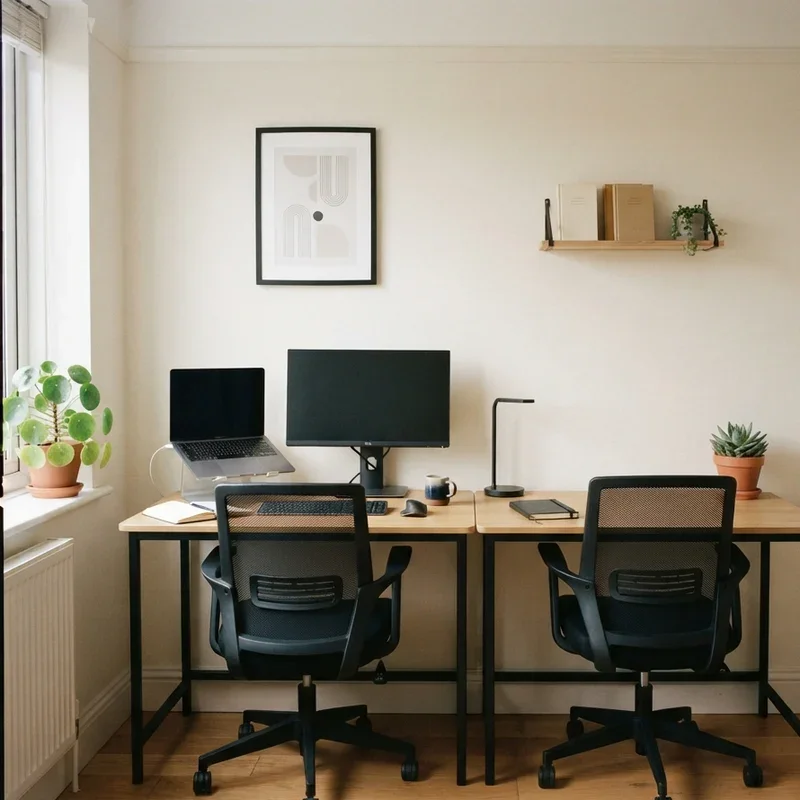
Let's be honest. Squeezing one desk into a tiny office already feels like solving a puzzle, so fitting two in there? That sounds downright impossible. But here's the thing. Plenty of people do it every single day, and their offices don't look like cluttered storage rooms. Whether you're sharing a home office with your partner, setting up a workspace for two employees, or simply need separate stations for different tasks, learning how to arrange two desks in a small office is a skill worth picking up. The good news is you don't need to knock down walls or rent a bigger place. With a little creativity, some smart planning, and a willingness to think outside the box, you can make two desks work beautifully in even the most compact rooms. So grab a cup of coffee, and let's dive into making your small office feel twice as productive without feeling half as spacious.
Why Two Desks in a Small Office Can Actually Work
A lot of folks assume that a small office simply can't handle two workstations. That's a myth, plain and simple. The truth is, most people waste more space than they realize. Dead corners, awkward gaps between furniture, and oversized desks that eat up square footage for no good reason are common culprits. Once you start looking at your room with fresh eyes, you'll notice opportunities everywhere.
Think of it this way. A well-organized small office with two desks can actually feel more intentional and put-together than a large office with furniture scattered randomly. It's all about being deliberate with every piece you bring in and every inch you use. When constraints force you to be creative, the results often end up looking better than spaces where people had unlimited room to spread out. Constraints breed innovation, as they say.
Besides, working side by side with someone can boost motivation and make the day feel less isolating. There's something comforting about having another person nearby, even if you're both buried in your own projects. So don't write off the idea before giving it a fair shot.
Measure First, Move Furniture Later
Before you start shoving desks around like you're rearranging deck chairs, take a step back and measure your space. This might sound obvious, but you'd be surprised how many people skip this step and end up frustrated. Grab a tape measure and jot down the length and width of your room. Note where the door swings open, where the windows are, and where electrical outlets live. These details matter more than you'd think.
Once you've got your measurements, sketch a rough floor plan. It doesn't have to be fancy. A simple drawing on graph paper or even a note on your phone will do. Mark the fixed elements like doors, windows, radiators, and outlets. Now you've got a clear picture of what you're working with, and you can start experimenting with desk placements without throwing your back out moving heavy furniture around.
Also, measure the desks themselves. Know their exact dimensions, including any parts that stick out like keyboard trays or drawer units. A desk that's listed as 48 inches wide might actually need 52 inches of clearance when you account for everything attached to it.
How to Arrange Two Desks in a Small Office Layout Ideas That Actually Work
Now for the fun part. There are several tried-and-true layouts that people use when fitting two desks into a compact workspace. The best one for you depends on your room's shape, how much you interact with your desk mate, and your personal preferences.
The Side-by-Side Setup
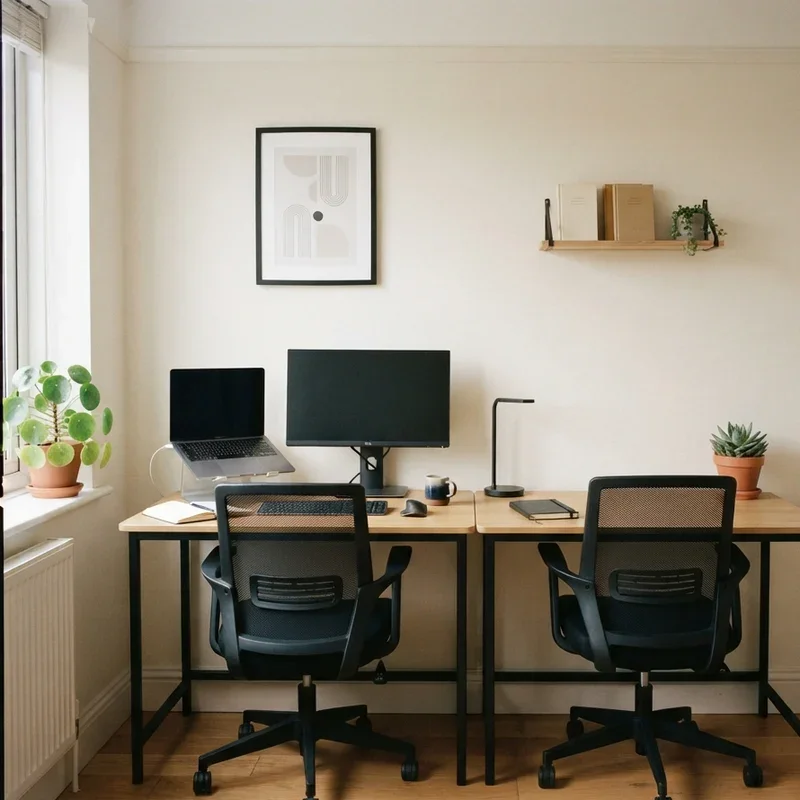
This is probably the most straightforward arrangement. You place both desks along the same wall, sitting right next to each other. It's simple, it's clean, and it makes great use of a long wall. The biggest advantage here is that both people face the same direction, which can help reduce distractions. You're not staring at each other all day, and you each get your own defined workspace.
To make this layout work in a small room, choose desks that aren't too deep. A depth of 20 to 24 inches is usually plenty for a monitor, keyboard, and a few essentials. If you can find desks without bulky legs or pedestals, even better. Slim-profile desks keep the visual weight down and make the room feel more open.
One quick tip is to place a small divider or a tall plant between the two desks. It creates a subtle boundary without building a wall, giving each person a sense of their own territory.
The L-Shape Corner Arrangement
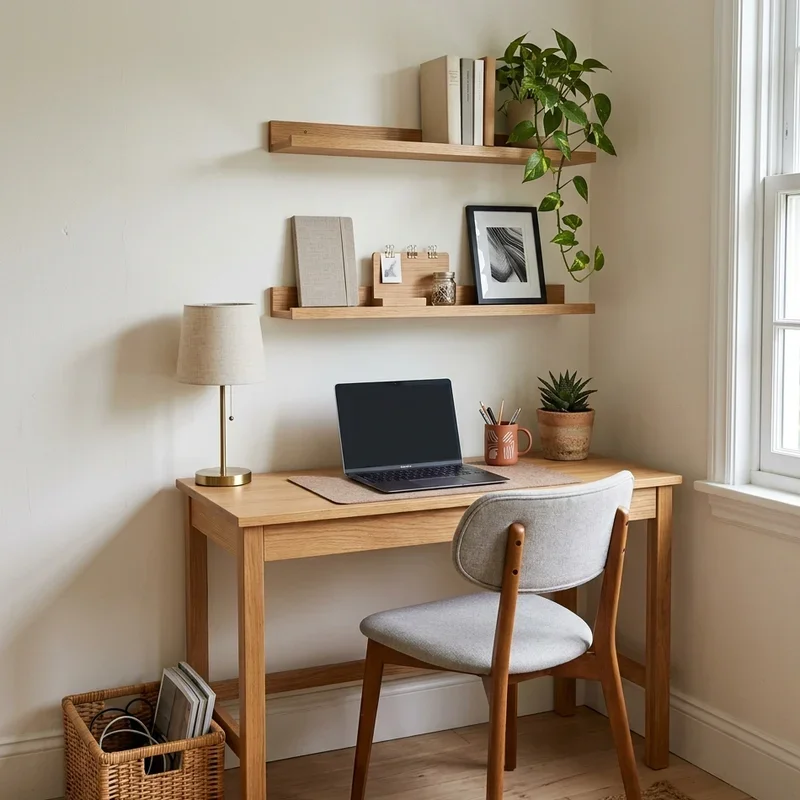
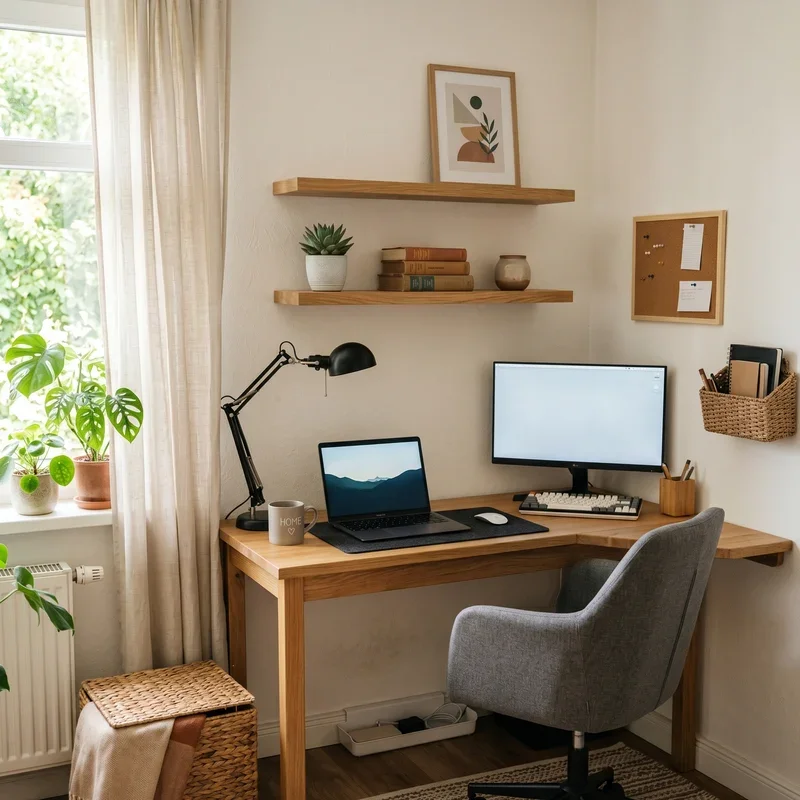
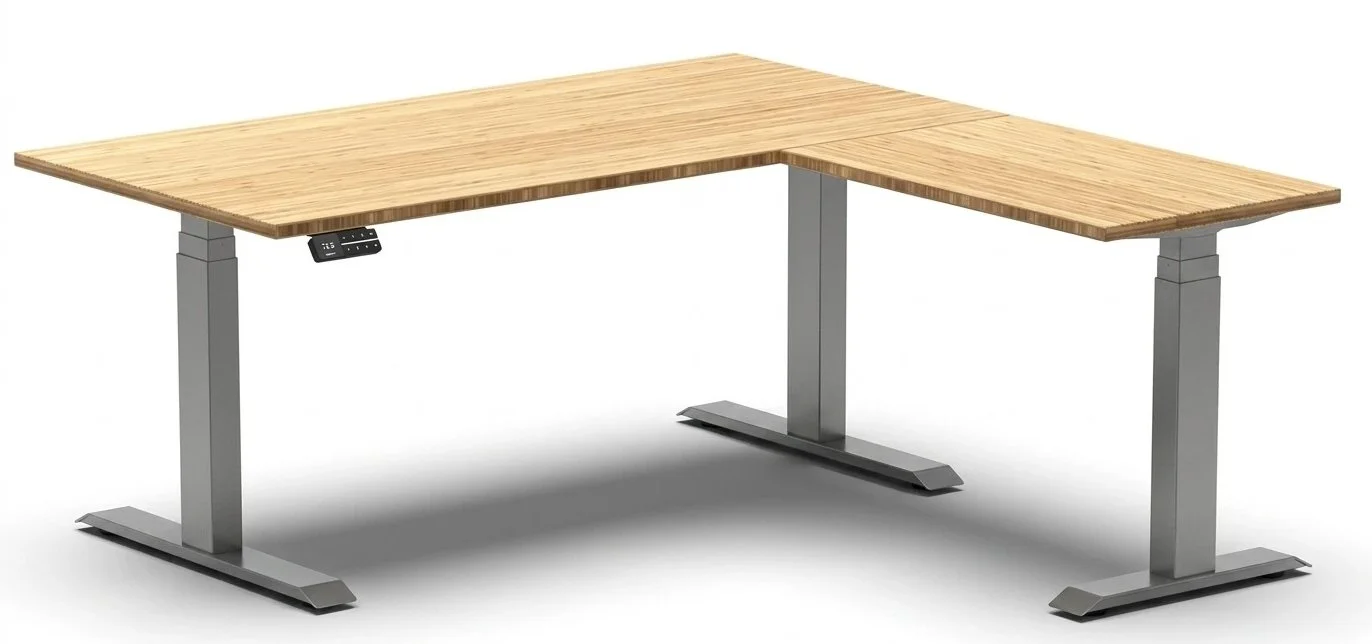
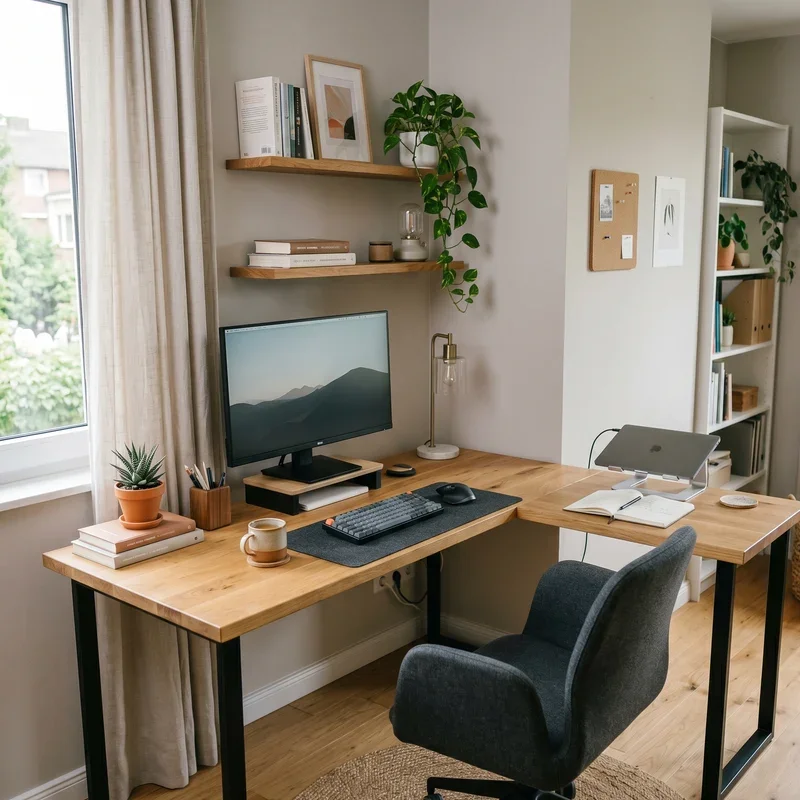
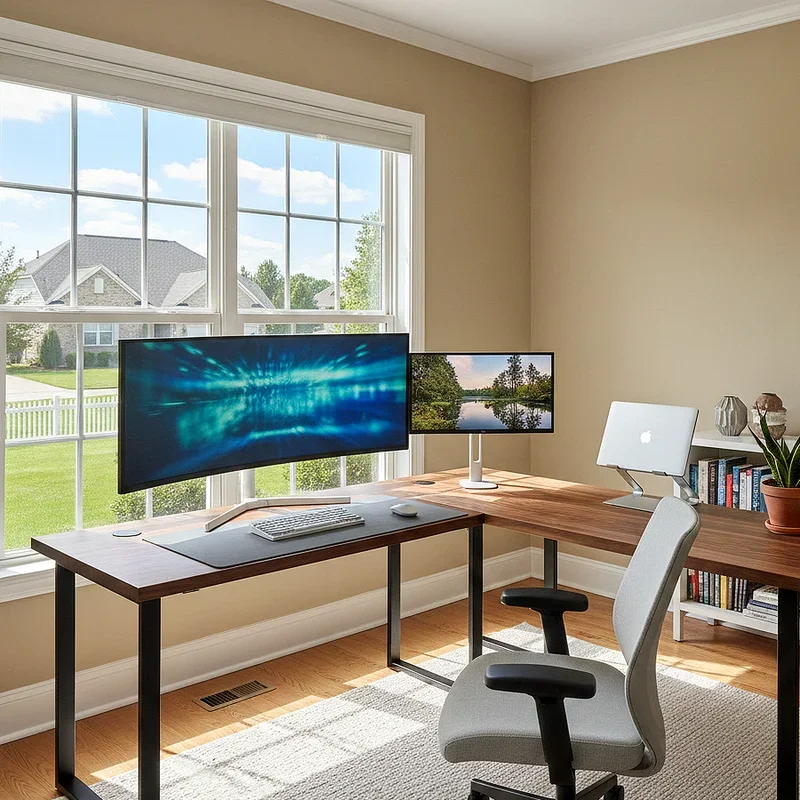
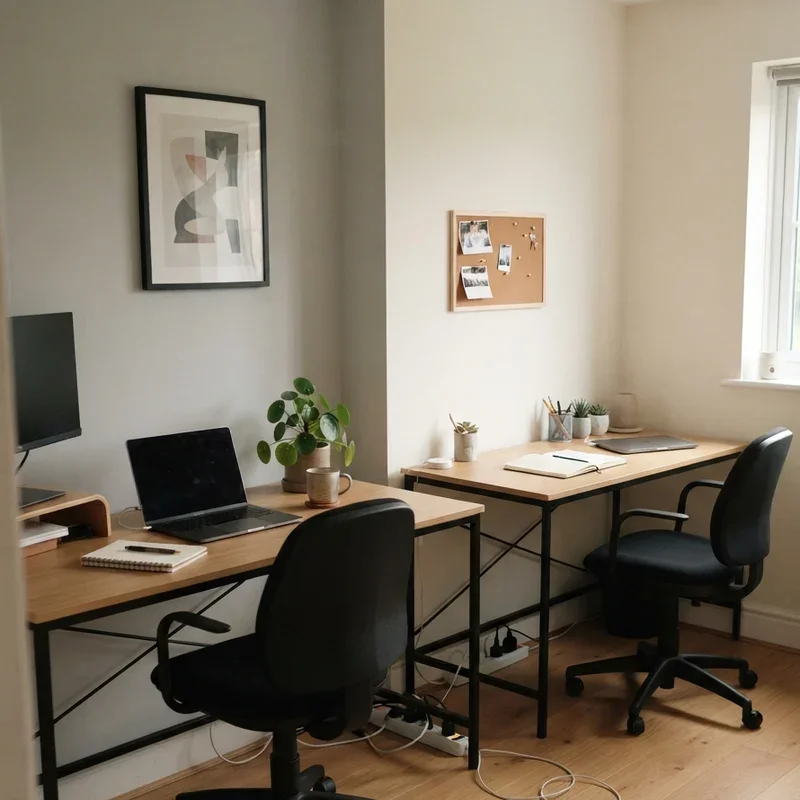
Got a corner that's just collecting dust? Put it to work. By placing one desk along one wall and the second desk along the adjacent wall, you create a natural L-shape. Each person gets their own wall, their own view, and plenty of elbow room.
This layout is fantastic for rooms that are more square than rectangular. It keeps the center of the room open, which is a huge win in a small space. You can even place a shared filing cabinet or printer stand right in the corner where the two desks almost meet. That way, both people can reach it without getting up.
The L-shape also works well when one person needs more desktop real estate than the other. You can give the longer wall to the person with more gear and the shorter wall to someone who works primarily on a laptop.
The Face-to-Face Configuration
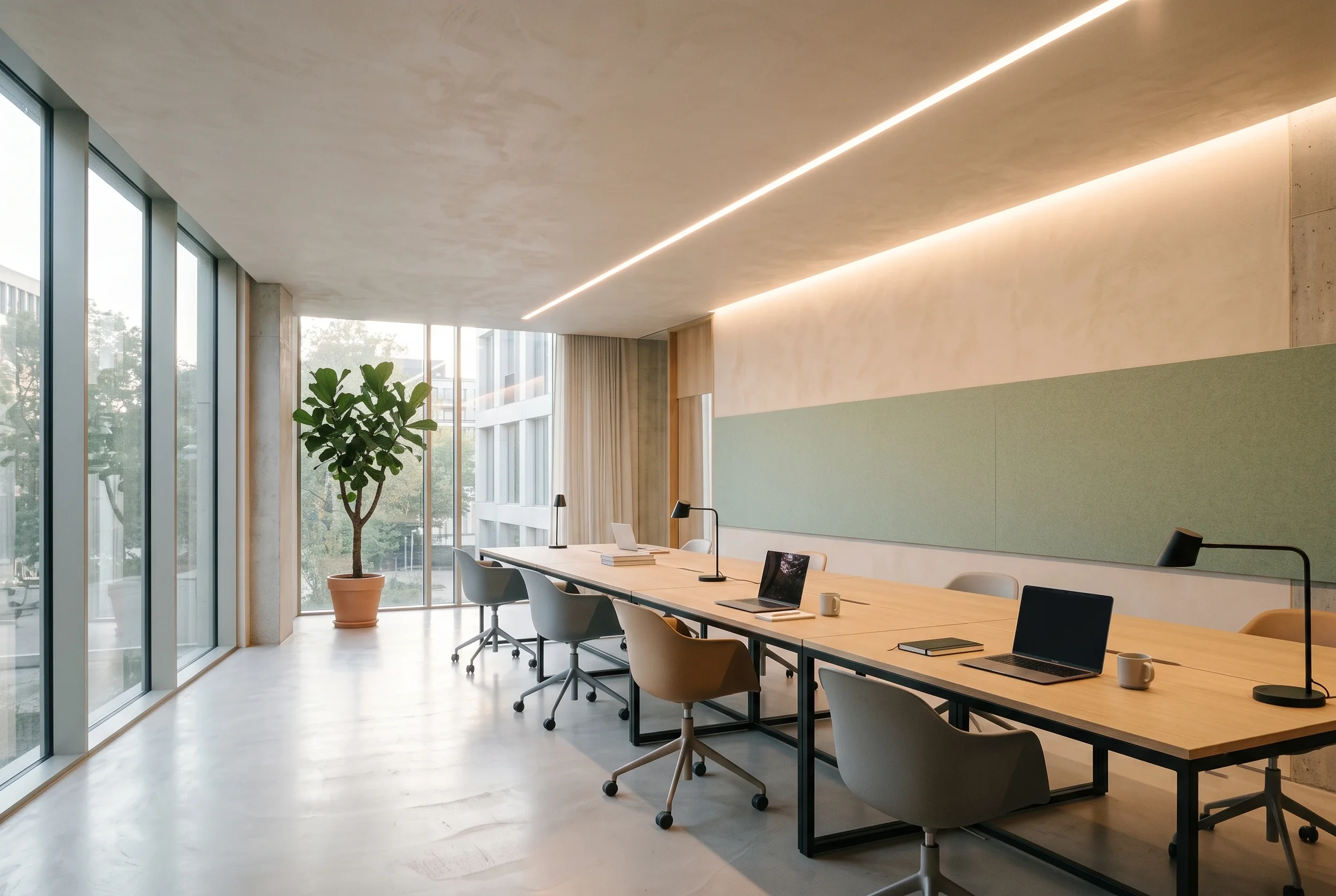
If collaboration is a big part of your workday, consider placing the desks facing each other. This setup encourages conversation, brainstorming, and teamwork. It's the go-to layout for duos who need to communicate frequently throughout the day.
Now, there's a catch. Sitting directly across from someone for eight hours can get a little intense. Eye contact every time you look up from your screen isn't everyone's cup of tea. To soften this, add a small shelf, a monitor riser, or a row of plants along the center line. It breaks the sight line just enough to give both people some visual privacy without killing the collaborative vibe.
This arrangement also works surprisingly well in narrow rooms. Since the desks face each other, you only need the width of two desk depths plus some chair space in between. That leaves the side walls completely free for shelving, storage, or a whiteboard.
The Back-to-Back Layout
Here's one that people often overlook. Place both desks in the center of the room, back to back. Each person faces an opposite wall, which gives everyone their own view and plenty of privacy. It almost feels like having two separate offices within one room.
This layout requires the room to have some depth, but it doesn't need much width. It also opens up all four walls for storage, artwork, or bookshelves. If your room has a window, one person gets the window view while the other faces the opposite wall. You might want to rotate every few months to keep things fair. Nobody wants to be the one permanently staring at drywall.
The Floating Desk Strategy
When floor space is truly at a premium, wall-mounted floating desks can be a lifesaver. These attach directly to the wall and don't have legs, which frees up the floor underneath for storage bins, a small filing cabinet, or simply some breathing room. You can mount two floating desks on the same wall, on opposite walls, or even at different heights if one person prefers standing while the other sits.
Floating desks do have weight limits, so make sure you're mounting them into studs and checking the manufacturer's guidelines. They're not ideal for heavy desktop setups with multiple monitors, but for laptop users or people who keep their workspace minimal, they're a game-changer.
Smart Storage Solutions for Double-Desk Offices
Two desks mean two people's worth of stuff, and in a small office, clutter can spiral out of control fast. Staying organized isn't just nice to have. It's essential.
Go Vertical With Shelving
When you can't spread out, go up. Wall-mounted shelves above the desks give you tons of storage without stealing any floor space. Use them for books, binders, decorative items, or small bins that hold office supplies. Floating shelves look sleek and modern, while bracket-mounted shelves can handle heavier loads.
Use Under-Desk Space Wisely
The area under your desk is prime real estate that often goes unused. Rolling carts, small drawer units, or even a simple basket can turn that empty space into functional storage. Just make sure whatever you put down there doesn't interfere with your legroom. Comfort always comes first.
Share What You Can
Do both people really need their own printer, their own stapler, their own tape dispenser? Probably not. Identify items you can share and keep them in a central spot that's accessible to both workstations. This cuts down on duplicate supplies and frees up desk space for things that actually need to be within arm's reach.
Lighting and Comfort Don't Overlook the Basics
Cramming two desks into a room is one thing, but making sure both people are comfortable and well-lit is another story entirely. Poor lighting leads to eye strain, headaches, and a general feeling of gloom. Nobody does their best work in a cave.
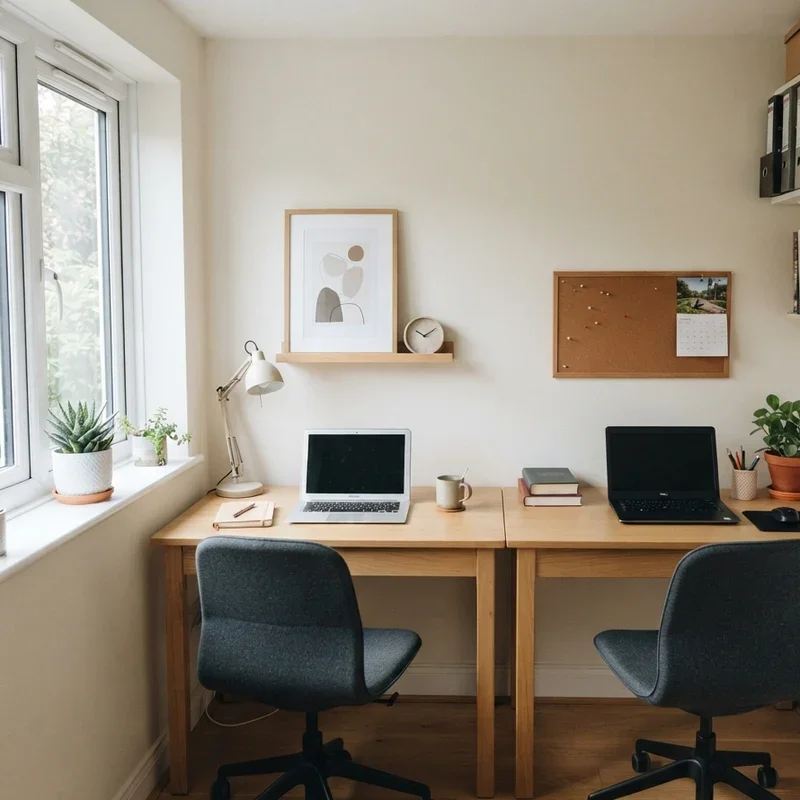
If your room has a window, try to position the desks so that natural light reaches both workstations. Side lighting tends to work better than having a window directly behind your monitor, which creates glare, or directly in front of you, which can be blinding at certain times of day. Each desk should also have its own task lamp so people can adjust their lighting independently.
As for chairs, don't skimp. When two people are sharing a small space, being physically uncomfortable makes everything worse. Invest in chairs that offer good lumbar support and fit comfortably under the desks without bumping into each other. Slim-profile ergonomic chairs are your best friend in this scenario.
Setting Boundaries in a Shared Small Office
Sharing a small office requires some ground rules. Without them, small annoyances can turn into big frustrations over time. Talk openly about noise levels, phone call habits, music preferences, and break schedules. It might feel awkward at first, but establishing expectations early saves a lot of headaches down the road.
Noise-canceling headphones are practically mandatory in a shared small office. They let each person create their own sound environment without affecting the other. If one person likes working in silence and the other enjoys background music, headphones solve that conflict instantly.
Personal space boundaries matter too. Even if you're best friends or a married couple, everyone needs a little corner that feels like their own. Respect each other's desk space, don't borrow supplies without asking, and keep shared areas tidy. These small courtesies go a long way when you're working elbow to elbow.
Common Mistakes to Avoid When Setting Up Two Desks
Even with the best intentions, people make mistakes when arranging two desks in a small office. Here are a few pitfalls you'll want to dodge.
Choosing desks that are too large is the number one mistake. It's tempting to go for a big, impressive desk, but in a small shared office, compact is king. Oversized desks eat up walking paths, block doorways, and make the room feel cramped and claustrophobic.
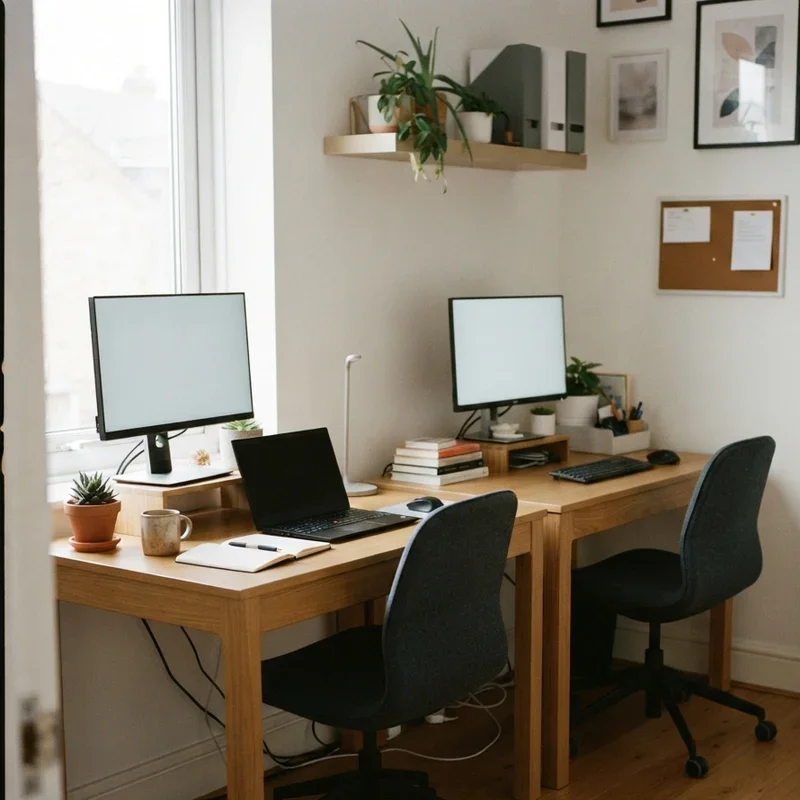
Ignoring cable management is another common blunder. Two desks mean double the cables, and tangled wires look messy and can actually be a tripping hazard. Use cable clips, cord covers, or a simple cable tray under each desk to keep things neat.
Forgetting about airflow is a sneaky one. Two people, two computers, and possibly a printer all generate heat. If your office doesn't have good ventilation, it can get stuffy fast. A small fan or keeping the door open during warmer months can make a big difference.
Finally, not leaving enough room to move around is a critical error. You should be able to pull your chair back, stand up, and walk to the door without performing an obstacle course. If the layout doesn't allow for basic movement, it's time to rethink things.
How to Arrange Two Desks in a Small Office on a Budget
You don't need to spend a fortune to create a functional two-desk office. There are plenty of budget-friendly options that look great and get the job done. Flat-pack desks from popular retailers are affordable and come in slim sizes perfect for tight spaces. Secondhand furniture shops and online marketplaces are gold mines for finding solid desks at a fraction of the original price.
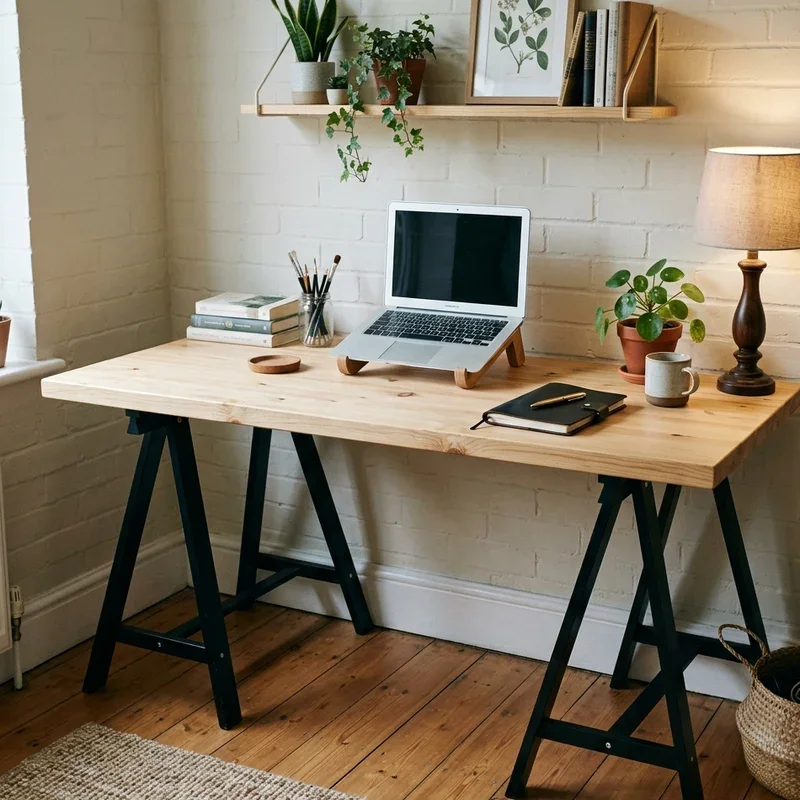
If you're feeling handy, you can even build your own desks using a simple tabletop and some hairpin legs or wall-mounted brackets. A solid-core door from the hardware store makes an excellent, affordable desktop when paired with basic legs or sawhorses. It might sound unconventional, but plenty of people swear by this approach.
For storage, repurpose items you already own. Old bookshelves, kitchen carts, and even shoe organizers can find new life in a small office. Think creatively and you'll realize that a stylish, functional two-desk setup doesn't have to break the bank.
Conclusion
Figuring out how to arrange two desks in a small office takes some planning, but it's far from impossible. By measuring your space carefully, choosing the right layout, keeping clutter under control, and respecting each other's boundaries, you can create a workspace that's both productive and comfortable. Remember, the goal isn't to cram as much furniture in as possible. It's to design a room where two people can do their best work without feeling squeezed. With the right approach, even the tiniest office can serve two people beautifully.
Read next: Where to Place Desk in Home Office for Productivity and Comfort
Frequently Asked Questions
1.What is the best desk layout for a very small office?
An L-shape corner arrangement works best because it maximizes corner space efficiently.
2.Can two people comfortably work in a 100-square-foot office?
Yes, with compact desks and smart organization, two people can work comfortably together.
3.Should desks face each other or the same wall?
It depends on your work style and how much collaboration you need daily.
4.What desk size works best for a small shared office?
Desks around 40 to 48 inches wide and 20 inches deep work perfectly.
5.How do you reduce noise in a small shared office?
Use noise-canceling headphones, soft furnishings, and agree on quiet hours during the day.
Stay up to date with our latest ideas!