Compare pool coping and pavers to choose the best material for your pool deck based on durability, safety, appearance, maintenance, and cost.

Every pool deck starts with 2 material decisions people often mix up: the coping that caps the pool's edge and the pavers that cover the surrounding surface. These 2 elements do different jobs, and choosing the wrong one affects safety, drainage, and how the whole deck holds up over time. This guide breaks down what separates pool coping from pavers, how they compare on cost and upkeep, and how to decide which material fits your project.
What Is Pool Coping, and How Does It Differ From Pavers?
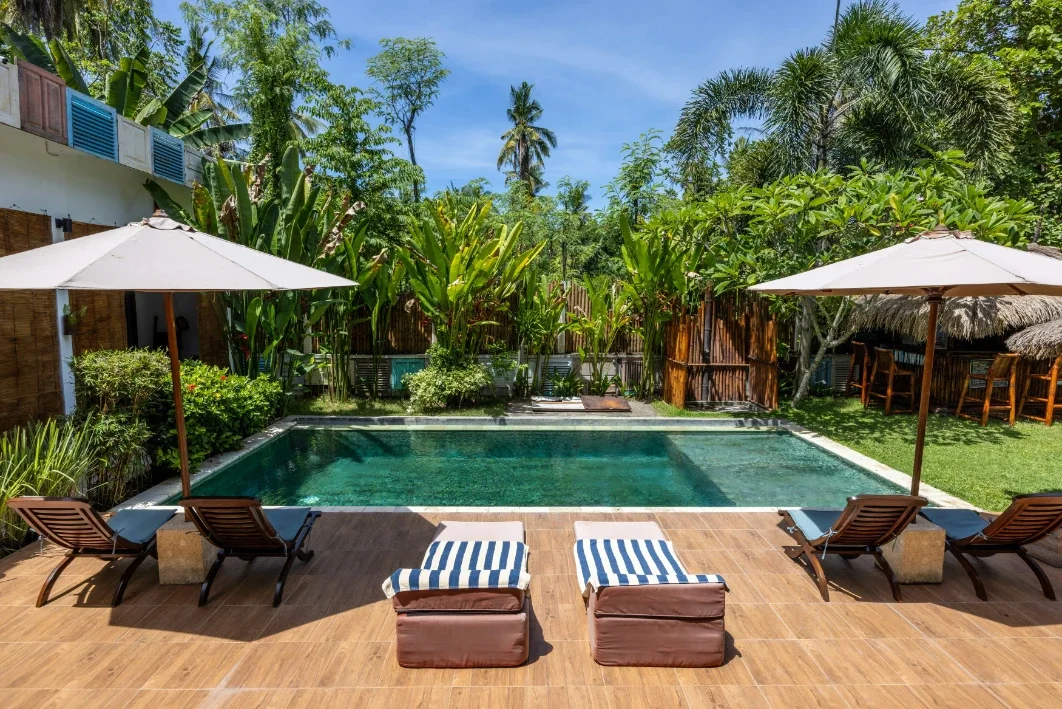
Pool coping and pavers sit side by side on most decks, yet they solve separate problems. Coping finishes and protects the pool's edge, while pavers build out the walking surface around it.
Because coping takes the most water exposure of any part of the deck, the material you choose for the edge matters more than almost anywhere else. Brands like Techo-Bloc make pool coping built to resist freeze-thaw cycles and repeated splash-out, so the edge stays sound instead of needing repair every few seasons. That durability is what keeps a pool deck looking finished long after the install.
What Is Pool Coping?
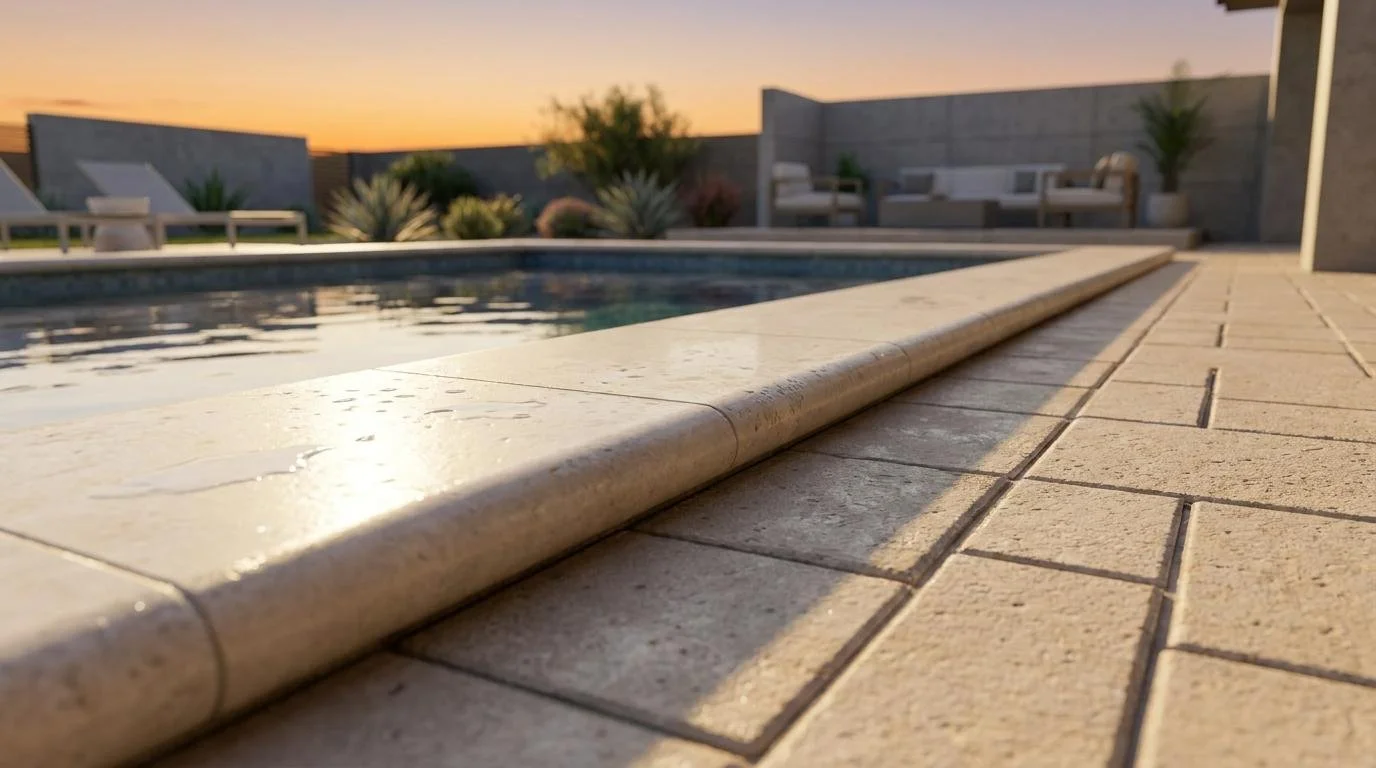
Pool coping is the capping material installed along the top edge of a pool wall. It covers the joint where the pool structure meets the deck, which protects the shell from water intrusion and gives swimmers a defined edge to grip. Coping also directs splash-out toward the deck's drainage instead of letting water run back behind the shell.
What Are Pool Deck Pavers?
Pavers are individual units of concrete, stone, or brick that form the deck surface around the pool. They interlock over a prepared base, which lets the surface flex with ground movement instead of cracking like a poured slab. Because each unit is separate, a damaged paver can be lifted and replaced without tearing out the whole deck.
Why Are Coping and Pavers So Often Confused?
The confusion comes from how similar they look once installed. Many decks pair coping and pavers in matching colors and finishes, so the eye reads them as one surface. The difference is functional, not visual: coping is the edge piece with a specialized profile, and pavers are the field units that fill the space around it.
Pool Coping vs Pavers: What Are the Main Differences?
Coping and pavers differ in 3 areas that matter most for a pool project: what they do, how they're shaped, and what they cost to own.
How Do Their Functions Differ?
Coping caps and seals the pool edge, so its main job is protection and safety at the waterline. Pavers cover the surrounding deck, so their job is traffic, drainage, and design across a larger area. One defines the boundary, the other builds the space.
Differences in Shape and Edge Profile
Coping units carry a finished edge profile, such as a bullnose or a square-cut lip, that rounds or defines the pool's rim. Pavers are usually flat, uniform units built to sit flush across the deck. That edge profile is why you can't simply swap a standard paver in where coping belongs.
How Do Cost and Long-Term Value Compare?
Coping and pavers are priced differently because coping's specialized edge costs more per unit than field pavers cost to cover the same area. Premium materials also cost more upfront than poured concrete or generic precast, but the long-term math favors durability. Quality coping and pavers resist freeze-thaw damage and can be spot-repaired, so you avoid the recurring patching and full replacements that cheaper surfaces demand.
Which Option Is Safer Around the Pool?
Safety near water depends on 2 things: grip when the surface is wet and comfort when it's hot. Coping and pavers each contribute differently.
Which Surface Is More Slip-Resistant?
Coping is built for the wettest zone of the deck, so it often carries a textured or rounded profile that improves grip right at the edge. Pavers add slip resistance across the broader surface through their texture and the small joints between units, which channel water away underfoot. Together they keep the busiest wet areas safer than a single smooth slab would.
Which Material Stays Cooler Underfoot?
Surface temperature depends on color and material more than on whether a unit is coping or paver. Lighter finishes reflect more heat, so pale coping and pavers tend to stay cooler than dark ones under direct sun. If bare feet are a priority, choosing lighter tones for both matters more than the coping-versus-paver decision itself.
Can You Use Pool Coping and Pavers Together?
In practice, most pool decks use both. Coping and pavers are designed to work as a single system, not as competing choices.
Coping and Pavers as One Deck System
Coping caps the pool edge while pavers extend the surface outward, and the two meet at a clean transition line. Pairing them lets each material do its specialized job, so the coping protects the shell and the pavers carry foot traffic. That's why the real question is rarely coping or pavers, but how to combine them.
Which Design Pairings Look Best?
One common approach contrasts the coping against the pavers so the pool edge reads as a crisp frame. Another matches tones for a seamless, expansive look. Both work well, so the choice comes down to whether you want the pool outlined or blended into the deck.
How Do You Choose Between Pool Coping and Pavers?
Since most projects need both, choosing well means selecting the right type of each for your climate, use, and style.
What Factors Should Guide Your Decision?
Start with climate, because freeze-thaw regions need materials rated to handle repeated freezing without spalling. Then weigh traffic and safety, which point toward textured, slip-resistant surfaces near the water. Finally, factor in maintenance, since durable, repairable materials cost more upfront but save money over the life of the deck.
When Should You Bring in a Professional?
Coping installation is where most pool decks succeed or fail, because a poorly set edge lets water reach the pool shell. A qualified installer sizes the coping profile, sets the slope for drainage, and ties the coping and pavers into one stable system. For a new build or a full resurfacing, professional installation protects both the look and the structure.
Key Takeaways for Your Pool Deck Project
Pool coping and pavers aren't rivals. Coping caps and protects the pool's edge, pavers build the surface around it, and the best decks use both. Focus on climate-rated, repairable materials, prioritize slip resistance and lighter tones near the water, and lean on a professional for the coping details. Get those choices right and your deck stays safe, good-looking, and low-maintenance for years.
Frequently Asked Questions About Pool Coping and Pavers
Do You Really Need Pool Coping, or Can You Just Use Pavers?
You need coping. It caps the pool wall and seals the joint between the shell and the deck, which pavers alone can't do. Skipping coping leaves the pool edge exposed to water intrusion and creates a rougher, less safe rim for swimmers.
Does Pool Coping Cost More Than Pavers?
Per unit, coping usually costs more than field pavers because of its specialized edge profile and its role at the pool's rim. Across a full deck the totals depend on size and material, but coping is the higher-value piece because it protects the pool structure.
Can You Replace Pool Coping Without Redoing the Whole Deck?
Often, yes. Because coping is set as individual units along the edge, damaged sections can usually be lifted and reset without disturbing the surrounding pavers. That's one of the practical advantages of a unit-based deck over a poured slab.
Stay up to date with our latest ideas!