How to Tell if You Have Mice in Your House
Learn how to tell if you have mice in your house by spotting early warning signs, identifying common entry points, and preventing a larger infestation.

A sudden scratching sound behind the drywall or a chewed corner on a cereal box can make your stomach drop. Mice are small, quiet, and highly skilled at moving through your home without being seen. By the time you glimpse a furry tail darting under the refrigerator, a small group of rodents might already be nesting inside your walls.
Finding out if you have pests sharing your living space does not require catching them in the act. Mice leave permanent physical clues as they travel between their nests and your kitchen counters every night. Learning the clear indicators of an active rodent problem helps you take control of your home before a few pests turn into a massive headache.
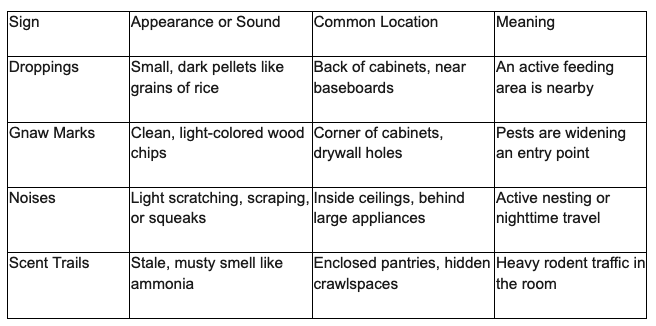
Rodent Sign Quick Guide
1. Inspect Cabinets for Fresh Droppings
The most common indicator of a rodent issue is the presence of small fecal pellets left behind after a night of foraging. A single mouse can produce up to seventy droppings a day, meaning the evidence piles up quickly. Fresh droppings are dark and feel soft like clay, while older waste looks grey, dry, and crumbles easily when touched.
Focus your search along the back corners of your kitchen cabinets, underneath the kitchen sink where water pipes enter the wall, and behind large kitchen appliances. If you find these pellets, wear gloves and wipe them away with disinfectant. If new spots appear the next morning, you are dealing with an active pest problem that needs attention.
2. Listen for Strange Noises After Dark
Mice are nocturnal creatures that spend their daylight hours sleeping in safe, dark voids. Once the house goes quiet and the lights go out, they leave their nests to search for food and water. This nighttime activity creates distinct sounds that travel through your floorboards and walls.
Pay close attention to light scratching, scraping, or faint squeaks coming from your ceilings or behind your baseboards. Mice use wall insulation to build nests, and you can often hear them dragging nesting materials through crawlspaces. These sounds are loudest in calm areas like utility closets, attics, and laundry rooms.
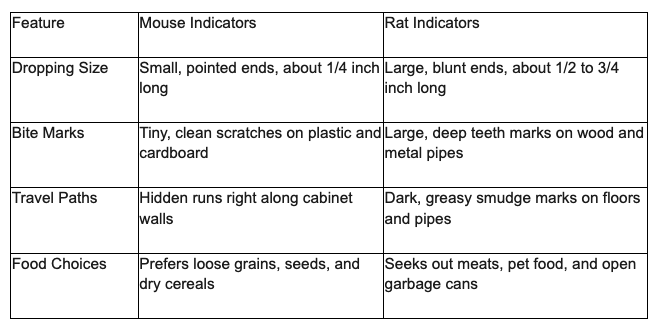
Mouse Signs vs. Rat Signs
3. Look for Fresh Gnaw Marks on Food Packaging
A rodent's front teeth grow constantly throughout their life. To keep their teeth sharp and short, they must chew on hard materials every day, including wood, plastic, drywall, and even electrical wiring. This constant chewing creates distinct markings around your home.Check your pantry for clean-cut holes in cardboard boxes of rice, cereal, or pet food. You might also notice tiny piles of wood shavings along the baseboards or at the bottom of your cabinets. Mice can squeeze through any opening the size of a dime, and they will quickly chew the edges of a small gap until they can fit their bodies through.
4. Track Dark Smudge Marks Along Baseboards
Mice have poor eyesight, so they navigate your home by keeping their whiskers and fur in direct contact with walls and baseboards. Over time, the natural oils and dirt in their fur leave a dark, greasy trail along their favorite pathways.Look for faint grey or brown smudges on your white trim work, especially near corners or small structural gaps. These grease marks are a map of how the rodents move through your house. If you see a thick, dark trail, it means multiple pests have used that exact path for a long time.Your family dogs and cats have far better hearing and a sharper sense of smell than you do. Long before you notice any physical signs of a mouse, your pets will detect the sounds and scents of a rodent hiding in the house.If your cat starts staring intently at a blank spot on the kitchen wall, or if your dog paws frantically at the gap beneath the oven, do not ignore the behavior. Pets can hear the high-frequency squeaks and scratches made by mice inside the wall voids. Watch where your animals focus their attention, as they are often pointing directly at a pest entry point.
6. Deploy Reusable Traps in High-Traffic Spots
The fastest way to confirm a mouse issue is to place a few mechanical traps along the paths where you suspect the pests are traveling. Mice are curious but cautious, and they will look for food sources right against the safety of your walls.Avoid cheap plastic or single-use wooden options that fail to secure a clean catch. Investing in heavy-duty reusable mouse traps ensures you have durable tools that snap instantly when a rodent triggers the bait mechanism. Place the baited end of the trap flush against the baseboard so the mouse must step on it as it travels down its usual path.
Taking Control of Your Home This Week
Finding signs of mice in your house can feel unsettling, but acting quickly can prevent a small issue from getting out of hand. This week, pull your appliances away from the wall to vacuum up any hidden food crumbs and store your dry pantry items inside thick glass or metal containers. Set a few high-quality traps along your kitchen baseboards to catch intruders, helping you secure your living space and protect your family's health.
Frequently Asked Questions
1. What does a mouse infestation smell like?A significant mouse presence creates a distinct, stale odor reminiscent of ammonia or dirty cat litter. This unpleasant scent comes from accumulated rodent urine and droppings hidden in tight spaces like cabinets, closets, or under floorboards.
2. How do mice manage to get inside a clean house?Mice do not enter a home because it is dirty; they are simply looking for warmth, shelter, and a dependable water source. They can find entry points through tiny gaps around outdoor utility lines, broken basement vents, or spaces beneath your exterior garage doors.
3. Should I use poison to clear out a mouse problem?Using toxic bait blocks can be risky because the pests often climb deep inside your walls or ceiling joists to die after eating the bait. This leaves you with a terrible decomposition odor that can linger in your drywall for weeks, making mechanical traps a cleaner option.
Stay up to date with our latest ideas!