Learn how to source interior materials from China for your hotel fit-out, with practical tips on supplier selection, quality control, costs, and logistics.
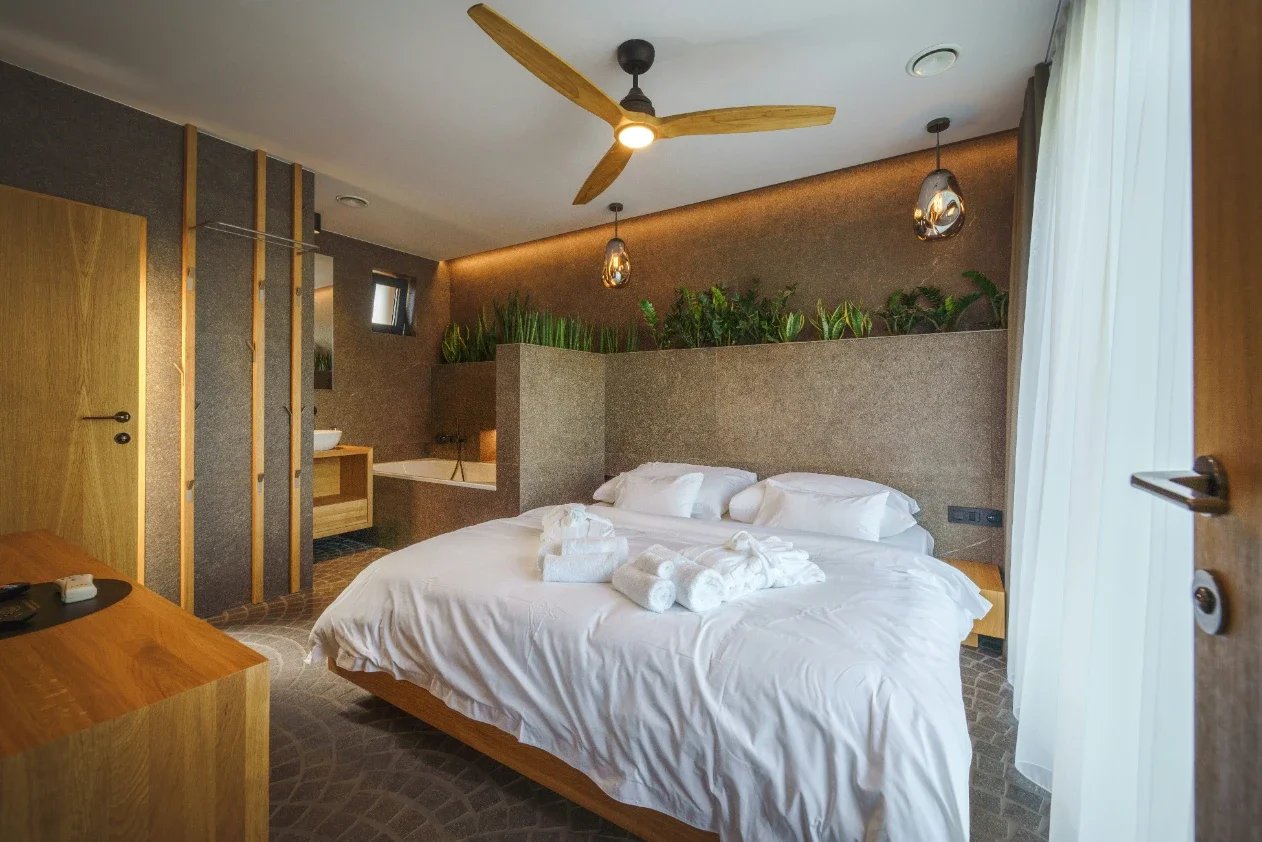
Planning a hotel fit-out requires more than selecting attractive finishes. Contractors, builders, and overseas dealers must coordinate design intent, technical performance, budgets, lead times, compliance, and installation across hundreds of products. When managed correctly, sourcing from China can provide access to broad manufacturing capacity, competitive pricing, custom production, and coordinated interior packages.
However, successful procurement depends on a structured process. The following guide explains how to evaluate Chinese building material suppliers, manage FF&E procurement, and reduce risk when sourcing materials and furnishings for a hotel project.
1. Define the Hotel Fit-Out Scope Before Sourcing
Begin by converting the design concept into a clear procurement scope. A supplier cannot accurately quote or produce materials without sufficient information about quantities, dimensions, performance requirements, and intended applications.
Organize the scope by room type and product category. Typical hotel fit-out packages may include:
Guestroom casegoods, wardrobes, desks, beds, and nightstands
Public-area furniture for lobbies, lounges, restaurants, and meeting rooms
Doors, wall panels, flooring, ceilings, and decorative finishes
Bathroom vanities, countertops, sanitary accessories, and hardware
Lighting, mirrors, artwork, soft furnishings, and decorative accessories
Outdoor furniture and materials for terraces, pools, and landscaped areas
Prepare drawings, schedules, finish boards, room data sheets, and a bill of quantities wherever possible. These documents give Chinese building material suppliers a reliable basis for pricing and allow different quotations to be compared on an equivalent specification.
2. Separate Design Requirements from Product Preferences
Hotel projects often include a mixture of essential technical requirements and flexible aesthetic preferences. Separating the two helps suppliers identify suitable alternatives without compromising the design.
Essential requirements may include fire ratings, moisture resistance, acoustic performance, dimensions, load capacity, cleaning requirements, and local building-code compliance. Flexible elements may include veneer species, paint colors, hardware styles, textile patterns, or comparable stone and ceramic options.
Provide an approved-equivalent process for substitutions. A supplier should submit samples, technical data, color references, and price implications before an alternative is accepted. This prevents unapproved substitutions from creating inconsistencies across guestrooms or public spaces.
3. Evaluate Chinese Building Material Suppliers Carefully
Supplier selection should go beyond the lowest initial quotation. Assess each company’s manufacturing capability, quality systems, export experience, product range, communication, and ability to manage a complete project package.
During the evaluation stage, request the following information:
Company profile, factory location, and ownership details
Relevant hotel, hospitality, residential, or commercial project references
Product catalogs, technical specifications, and available certifications
Production capacity and typical lead times
Quality-control procedures and inspection checkpoints
Packaging standards and experience with international shipping
Warranty terms, spare-parts support, and after-sales service
Factory audits or video inspections can help verify whether a supplier manufactures products directly or relies heavily on subcontractors. Subcontracting is not automatically a concern, but responsibilities must be transparent, particularly for products requiring consistent finishes or precise coordination.
4. Choose Between Direct Factories and Turnkey Procurement
Direct factory purchasing may be appropriate when the project team has strong technical resources, sufficient order volume, and the capacity to coordinate multiple manufacturers. It can offer direct communication and competitive factory pricing, but it also requires the buyer to manage specifications, samples, production follow-up, inspections, consolidation, and logistics.
A turnkey procurement partner can simplify this process by coordinating multiple categories through one commercial and project-management channel. This approach is particularly useful when a hotel requires coordinated casegoods, wall finishes, lighting, loose furniture, and decorative products from different production sources.
When comparing procurement models, consider the total cost of ownership rather than product price alone. Include sampling, inspection, warehousing, consolidation, documentation, transport, installation support, replacement items, and the internal time required to manage the order.
5. Manage FF&E Procurement as a Coordinated Package
FF&E procurement is most effective when furniture, fixtures, and equipment are coordinated with the interior design and construction schedule. A mistake in one category can affect several others. For example, a change to a headboard may alter electrical outlets, wall protection, bedside tables, lighting positions, and installation sequence.
Create a procurement matrix that records each item’s specification, quantity, supplier, approved sample, production status, inspection date, shipping status, and installation location. Use consistent item codes across drawings, quotations, purchase orders, packing lists, and installation documents.
For each FF&E item, confirm:
Final dimensions and tolerances
Materials, finishes, colors, and edge details
Hardware, electrical components, and accessories
Packaging and labeling requirements
Required samples or pre-production approvals
Delivery destination and installation responsibility
6. Source Custom Hotel Furniture with Detailed Specifications
Custom hotel furniture can create a distinctive guest experience, but it requires more documentation than standard catalog products. A written specification should identify the frame construction, substrate, veneer or laminate, upholstery, foam density, finish system, hardware, and applicable performance requirements.
For custom hotel furniture, approve a representative prototype or first article before mass production. The prototype should be reviewed for appearance, dimensions, comfort, access for maintenance, durability, and compatibility with adjacent products.
Finish control is especially important. Ask suppliers to produce a master sample or signed finish panel. Color variation can occur between veneer batches, paint production runs, metal coatings, stone slabs, and textile lots. A defined approval reference gives the factory and inspection team a clear standard.
7. Confirm Compliance and Performance Requirements
Products manufactured for an overseas hotel must meet the requirements of the destination market and the project’s technical specifications. Compliance may apply to fire performance, electrical safety, chemical emissions, slip resistance, structural loading, accessibility, and hygiene.
Do not rely solely on a supplier’s general statement that a product is certified. Request current test reports, declarations, product labels, and technical documentation relevant to the exact material or model being purchased. Confirm whether testing was completed on the same construction, thickness, finish, and component combination.
Coordinate compliance reviews with the project architect, engineer, local consultant, and authority having jurisdiction. Supplier documentation supports the approval process but does not replace local professional review.
8. Control Samples, Prototypes, and Pre-Production Approvals
Samples should be treated as formal project controls rather than informal references. Record sample numbers, approval dates, comments, and responsible approvers. Keep a digital archive and, where practical, a physical sample library.
Before production begins, approve shop drawings for items with custom dimensions or installation interfaces. Drawings should show fixing points, service openings, tolerances, material transitions, and the relationship to walls, floors, ceilings, and neighboring furniture.
A pre-production meeting is useful for large or complex orders. Review the approved drawings, finish standards, packaging method, inspection plan, production schedule, and change-control procedure with the supplier.
9. Build Quality Control into the Purchase Process
Quality control should occur at several stages. Factory inspections can include raw-material verification, in-process checks, pre-shipment inspection, and container loading supervision. The appropriate level depends on product complexity, value, and project risk.
Inspection criteria should be measurable. Instead of stating “good quality,” define acceptable color variation, surface defects, alignment, dimensions, weld quality, hardware operation, upholstery tension, and packaging protection. Use photographs and approved samples to support the inspection report.
Do not ship incomplete or nonconforming products simply to protect a date. Agree in advance how defects will be corrected, documented, replaced, or credited. For large hotel orders, include a reasonable quantity of spare consumables and selected replacement components.
10. Plan Logistics, Packaging, and Installation
International logistics can affect both cost and program. Confirm the trade terms, port of loading, destination port, inland delivery, insurance, customs documentation, and responsibility for unloading. Consolidating products from multiple Chinese building material suppliers may reduce transport costs, but it requires careful scheduling and warehouse coordination.
Packaging specifications should address moisture, impact, abrasion, stacking, and long-distance handling. Every carton, crate, or pallet should carry an item code, quantity, room or area reference, and handling instructions. This is particularly important when products arrive before installation teams are ready.
Review installation requirements before purchase. Some materials require specialist tools, local labor, adhesives, templates, or site conditioning. Determine whether the supplier will provide installation drawings, remote support, site supervision, or a complete installation team.
11. Protect the Budget and Project Schedule
Establish a procurement program that works backward from the required installation date. Include time for design clarification, quotation, sampling, approvals, production, inspection, export documentation, shipping, customs clearance, delivery, and site distribution.
Use a cost plan that distinguishes product cost from landed cost. Landed cost may include packaging, inland freight, international freight, insurance, duties, taxes, inspection, storage, handling, and installation. This provides a more realistic comparison between overseas sourcing and local purchasing.
Maintain a contingency for material substitutions, damaged goods, quantity changes, and freight fluctuations. Clear change orders and written approvals help prevent disputes when project requirements evolve.
Conclusion
Sourcing interior materials from China can support hotel projects with broad product access, customization, and coordinated procurement. The strongest results come from disciplined preparation: define the scope, verify supplier capability, document specifications, approve samples, inspect production, and plan logistics well before shipment.
For overseas dealers, contractors, and builders, the goal is not simply to find a low quotation. It is to establish a reliable supply chain that delivers consistent quality, predictable lead times, and materials that perform as intended after installation.
Designing a cohesive interior for your clients? ExploreOPPOLIA whole-house turnkey solutions. Discover options to coordinate materials, finishes, and styles across rooms, then connect with the team to discuss your project’s specifications and design requirements.
Stay up to date with our latest ideas!