Learn how to diagnose window failure, identify glass and frame damage, and determine whether glass-only repair or full frame replacement is the best solution.

Identifying Seal Failure, Thermal Fogging, and Surface Condensation
It is important to know the difference between common condensation and a true window failure. If you see fog or water droplets trapped inside the space between your panes, your insulated glass unit (IGU) has failed. This happens when the perimeter seal breaks, allowing moisture to enter and saturate the desiccant inside the spacer. Over time, this leads to permanent mineral etching on the glass surface.
You cannot fix this by cleaning the glass, nor can you replace a single pane of an IGU in the field. Because these units are factory-sealed to maintain a vacuum or gas fill, the entire unit must be replaced as one component. Repairing this seal failure is vital, as it stops cold drafts and prevents the moisture buildup that causes mold or wood rot in your sash.
Checking Frame and Sash Integrity Across Wood, Vinyl, and Aluminum
Before you order new glass, examine your window frames. If you have wood windows, check for soft spots, rot, or peeling paint. You can often fix minor issues by scraping away damaged material and applying linseed oil, but severe rot may require professional carpentry.
For vinyl windows, look for cracked weld joints at the corners, bowing, or warping. If the frame is distorted, it will not hold a new piece of glass securely. If you have aluminum windows, inspect the sash channels for corrosion and check that the vinyl glazing beads are still flexible. Finally, test your window locks and balance systems. If the window does not slide or crank smoothly, you should address those mechanical issues before investing in new glass.
When Glass-Only Replacement Is the Most Economical Choice
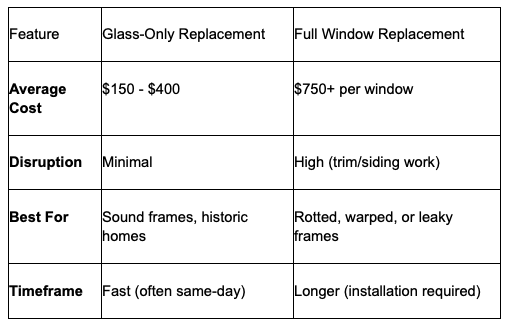
Glass-only replacement is usually the best financial decision when your frames are in good shape. A professional glass repair typically costs between $150 and $400, which is significantly cheaper than a full-frame window replacement that can average $750 per opening.
Choosing to replace the glass allows you to keep your original architectural details, especially in older homes with custom millwork. Furthermore, this method avoids the messy, expensive work of removing interior trim, drywall, or exterior siding.
Pricing by Glazing Type: Estimating Material Costs Accurately
Single-Pane vs. Insulated Glass Units
Single-pane annealed glass is the most basic option, with material costs starting at roughly $150. Most modern homes, however, use insulated glass units (IGUs). These consist of two panes separated by a spacer. You will find these in various thicknesses, including 1/2-inch, 5/8-inch, 3/4-inch, 7/8-inch, and 1-inch. The thickness of the unit is critical for structural stability. The spacer bar between the panes is also important, as it helps prevent thermal bridging, which is the movement of heat through the metal frame.
High-Performance Coatings and Gas Fills
You can boost your energy efficiency by choosing specific glass coatings. Low-Emissivity (Low-E) glass costs between $350 and $840. This coating reflects interior heat back into your room during the winter and blocks solar heat during the summer.
If your glazing pocket is narrow, you might choose krypton gas instead of the standard argon gas fill. Krypton is denser and provides better insulation in tighter spaces. For those dealing with intense sun, spectrally selective coatings—ranging from $8 to $16 per square foot—and tinted glass are excellent ways to control solar heat gain without blocking your view.
Safety Glazing Mandates: Tempered and Laminated Glass Costs
Building codes are strict about safety. If your window is near a door, on a stair landing, or in a bathroom, you likely need tempered safety glass. This glass is heat-treated to be four times stronger than standard glass, and if it breaks, it crumbles into small, dull pieces rather than dangerous shards.
Tempered glass costs between $180 and $700. You must order this glass to the exact final size, as it cannot be cut or drilled after it is tempered. Laminated glass, which costs $275 to $625, is another option. It uses a resin layer between two sheets of glass, providing better sound dampening and impact resistance.
How to Take Precise Measurements Before Requesting Estimates
Measuring Daylight Openings and Pane Thickness
To get an accurate price without paying for a professional service call, measure the "daylight opening." This is the visible portion of the glass. Use a metal tape measure to record the width and height. You also need to know the total thickness of the glass. You can use a profile gauge or a sliding caliper to measure the thickness of the glass pane or the entire IGU.
Accounting for Clearances and Frame Tolerances
Never order glass that fits perfectly edge-to-edge. Industry standards require your replacement glass to be 1/16-inch to 1/8-inch smaller than the rough opening. This gap allows for thermal expansion, which prevents the glass from cracking when temperatures change. If you have a vinyl window, remember to leave space for the setting blocks that support the weight of the glass at the bottom.
Gathering Critical Window Specifications for Fast, Accurate Bids
When you contact a shop for a quote, provide as much detail as possible to avoid extra fees. Tell them the window type (e.g., double-hung, slider, or casement). Note the color of the spacer bar and whether there are decorative grids inside the glass.
Take clear photos of the window and look for any etchings in the corner of the glass. These small stamps often contain the manufacturer's name, safety ratings, and production dates. Having this information allows shops to give you a firm price without sending a technician to your home.
Strategies to Lower Professional Labor and Glazier Costs
Batching Replacements and Off-Season Scheduling
Professional glaziers typically charge $50 to $75 per hour. You can save money by grouping all your repairs into a single visit. If you have three windows with failed seals, fixing them all at once reduces the time spent on setup and travel. Additionally, try to book your work during the off-season. Contractors are often more willing to negotiate rates when they are not busy with peak-season demand.
Comparing On-Site Service with In-Shop Drop-Off Options
If you are comfortable removing your own window sashes, you can save a significant amount of money. Many glass shops offer a lower price if you bring the sash to them. By dropping off the sash, you eliminate travel fees, trip minimums, and on-site setup charges. This is often the fastest way to get a repair done, as the shop can work on your window in their controlled environment.
Evaluating Installer-Led Consultations and Long-Term Labor Warranties
When you need a professional, look for companies that focus on technical expertise rather than high-pressure sales. A quality professional will provide an honest assessment of your window's condition. For instance, a window glass pane replacement specialist can verify if your frames are actually sound enough for a simple glass swap. This helps you avoid the common mistake of paying for a full-frame replacement when your existing structure is perfectly fine. Always prioritize contractors who offer a long-term labor warranty, as this protects you if a new seal fails shortly after installation.
DIY Glass Replacement to Eliminate Labor Expenses
Necessary Glazing Tools, Safety Gear, and Workspace Preparation
If you have the right tools and a steady hand, you can replace many glass panes yourself. Safety is your first priority. You must wear ANSI-rated cut-resistant gloves and safety goggles. If the glass is already cracked, use heavy-duty painter's tape to create an "X" pattern across the pane. This holds the shards in place while you work. Prepare a clean, flat workspace, such as a sturdy table or sawhorses covered with a drop cloth.
Step-by-Step Pane Replacement in Wood and Aluminum Frames
For wood frames, use a heat gun to soften the old, hardened glazing putty. Be careful not to burn the wood. Once the putty is soft, scrape it away with a putty knife and remove the metal glazier points. Before setting the new glass, apply a thin coat of linseed oil to the bare wood to keep it from drying out.
For aluminum windows, you generally do not need to remove the sash. Simply pry out the vinyl snap-in strips, remove the old silicone, and clean the channel. After placing your new glass, apply a fresh bead of silicone and snap the vinyl strips back into place.
Replacing Sealed IGUs in Modern Vinyl Sash Systems
Replacing an IGU in a vinyl window is a common project. First, use a stiff putty knife to pry out the interior vinyl glazing beads. You will likely find factory-applied foam tape holding the glass in place. Slice through this tape with a utility knife.
Before putting in the new IGU, place small neoprene setting blocks in the bottom corners of the frame. These blocks keep the glass from resting directly on the vinyl, which prevents cracking. Finally, seat the new IGU against new double-sided glazing tape and snap your trim beads back into their original position.
Conclusion: Making the Cost-Effective Decision for Your Home
Replacing window glass is a smart way to improve your home's energy efficiency without the high cost of a full renovation. By accurately diagnosing your window failure, taking precise measurements, and understanding your glass options, you can secure the best pricing from local professionals. Whether you choose to drop off your sash at a local shop for a quick repair or handle a simple pane replacement yourself, the key is to prioritize the condition of your frames. With the right approach, you can restore your windows to like-new performance while keeping your budget intact.
Stay up to date with our latest ideas!