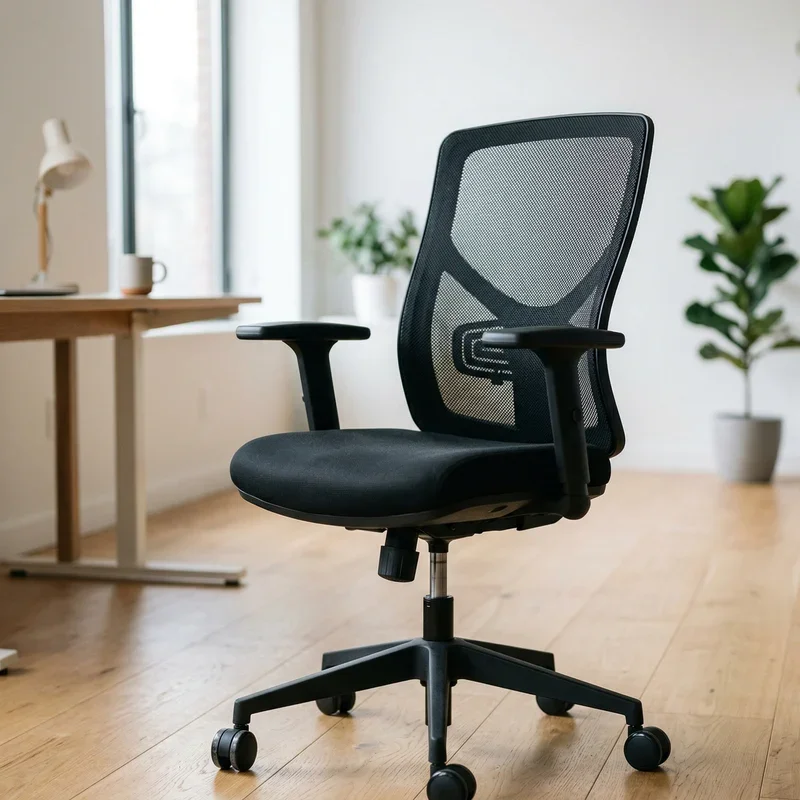
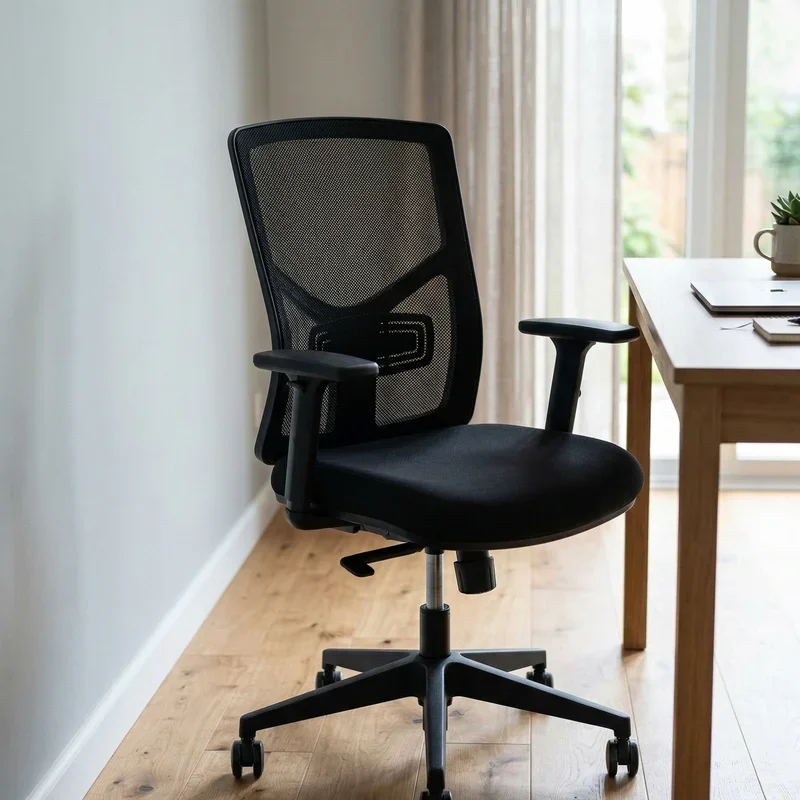
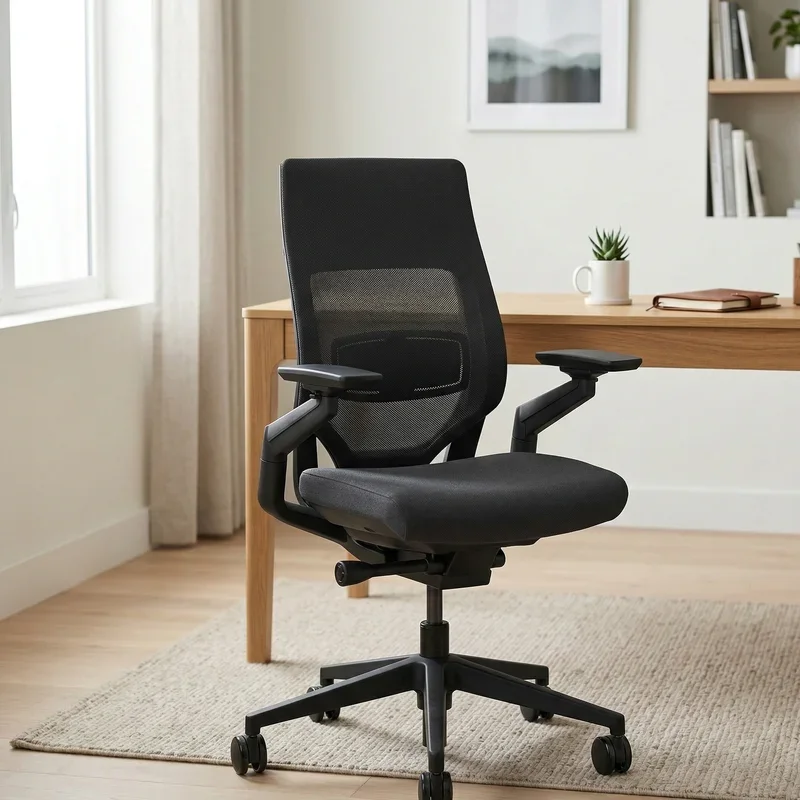
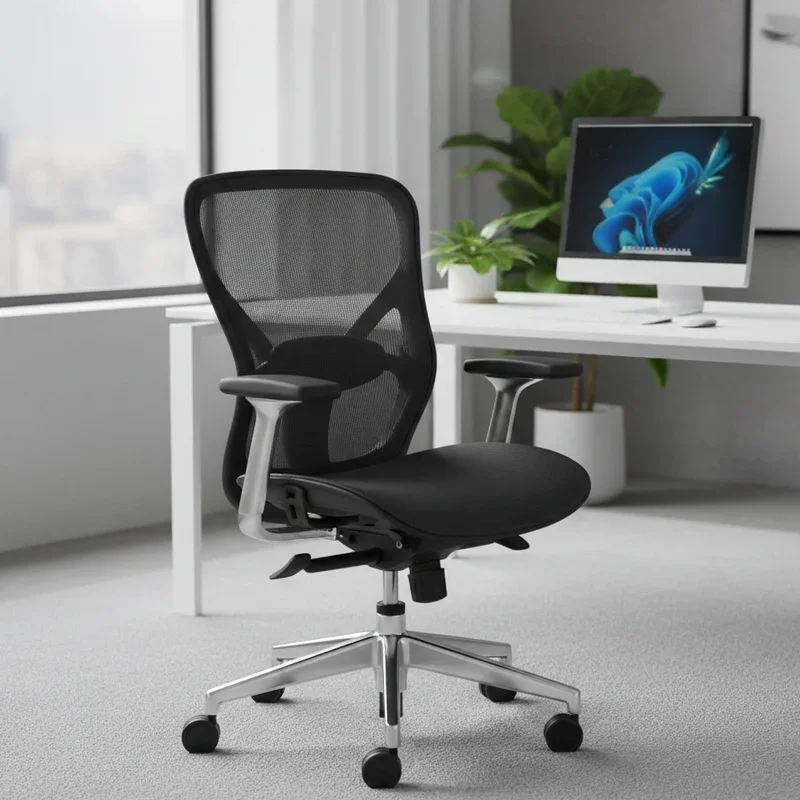
What Is the Knob on the Bottom of My Office Chair?
Discover what is the knob on the bottom of my office chair and how to use it. Learn about tension control and ergonomic adjustments.

You've probably been sitting in your office chair for months, maybe even years, without ever really examining all those mysterious mechanisms hiding underneath. Then one day, curiosity strikes. You lean over, peek beneath the seat, and spot it. A knob, sitting there all innocently, looking like it does something important but giving absolutely no indication of what that something might be.
Welcome to the club. Countless office workers have stared at that same enigmatic knob wondering whether turning it would make their chair more comfortable or somehow launch them across the room. The uncertainty keeps many people from ever touching it, which means they're missing out on a feature that could genuinely improve their sitting experience.
Here's the thing about office chairs. They're designed with adjustability in mind because everyone's body is different. That seemingly random knob actually serves a specific purpose that affects how your chair responds to your movements throughout the day.
Understanding what is the knob on the bottom of my office chair helps you unlock your chair's full potential for comfort and support. Most people use maybe twenty percent of their chair's adjustable features simply because they never figured out what all those levers and knobs actually do.
This comprehensive guide will demystify that bottom knob once and for all. We'll explain exactly what it controls, how to adjust it properly for your body, and why getting this setting right can make a genuine difference in your daily comfort. By the time you finish reading, you'll be a chair adjustment expert ready to optimize your seating situation.
The Mystery Knob Revealed
Let's cut straight to the answer you've been wondering about.
It's the Tension Control Knob
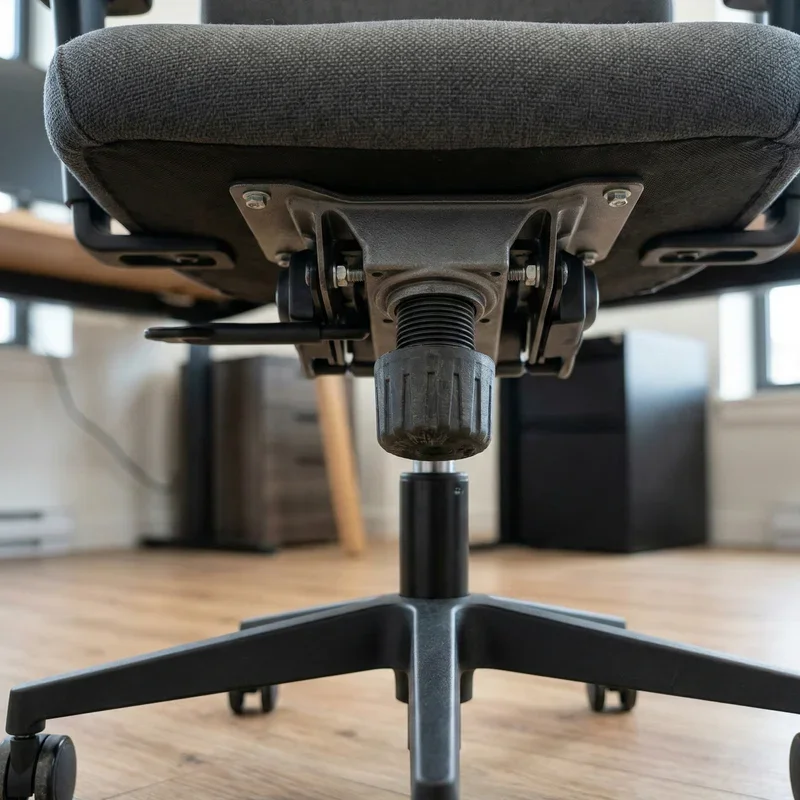
That knob on the bottom of your office chair is almost certainly the tilt tension control. This mechanism adjusts how much resistance you feel when leaning back in your chair.
When you recline in your chair, a spring mechanism provides the force that supports your body weight. The tension knob increases or decreases how tightly that spring is wound, changing how easily the chair tilts backward.
Think of it like this. A loose tension setting makes your chair recline with minimal effort, like sitting in a recliner. A tight tension setting requires more force to lean back, keeping the chair more upright and stable.
Why Tension Adjustment Matters
Different people need different tension levels based on their body weight and sitting preferences.
A lightweight person using a chair with high tension might find it nearly impossible to recline at all. The spring pushes back harder than their body weight, keeping them perpetually upright even when they want to lean back.
Conversely, a heavier person using a chair with low tension might feel like they're constantly fighting against backward movement. The chair wants to recline under their weight, requiring effort to stay upright while working.
Finding your sweet spot means the chair supports comfortable reclining when you want it while staying stable when you don't.

What Is the Knob on the Bottom of My Office Chair? Understanding the Mechanism
Let's dive deeper into how this feature actually works.
The Spring System
Inside your chair's base mechanism sits a compression spring that provides resistance against reclining motion. When you lean back, you're essentially compressing this spring, which then wants to push you back upright.
The tension knob typically connects to a mechanism that pre-loads this spring. Turning the knob clockwise usually increases tension by compressing the spring more, while counterclockwise loosens it.
Some chairs use gas cylinder systems rather than traditional springs, but the principle remains similar. The knob adjusts how the mechanism responds to backward pressure.
Location Variations
While most chairs position this knob directly beneath the seat, exact placement varies between manufacturers.
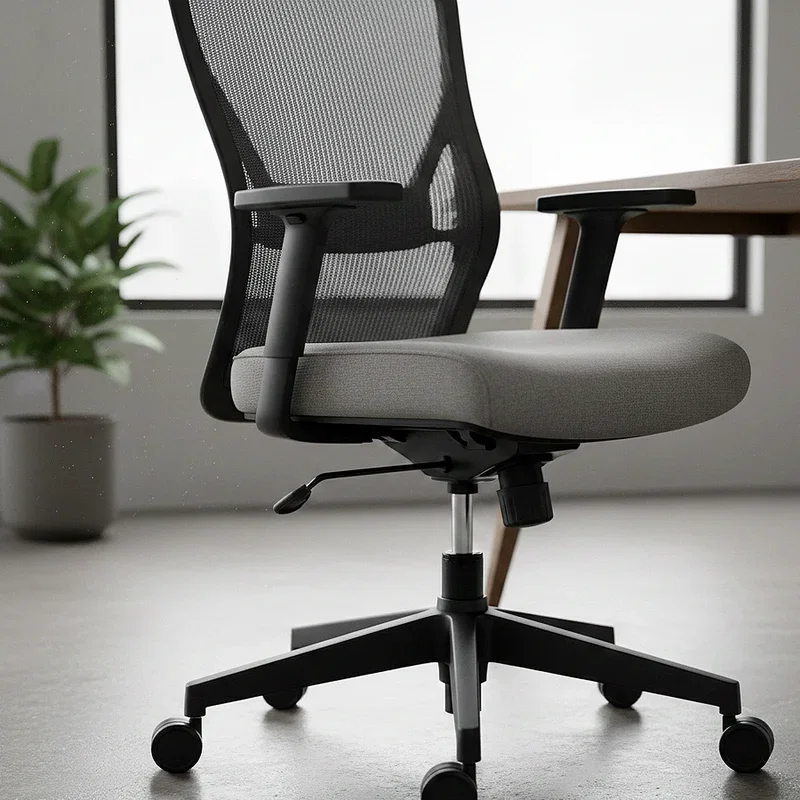
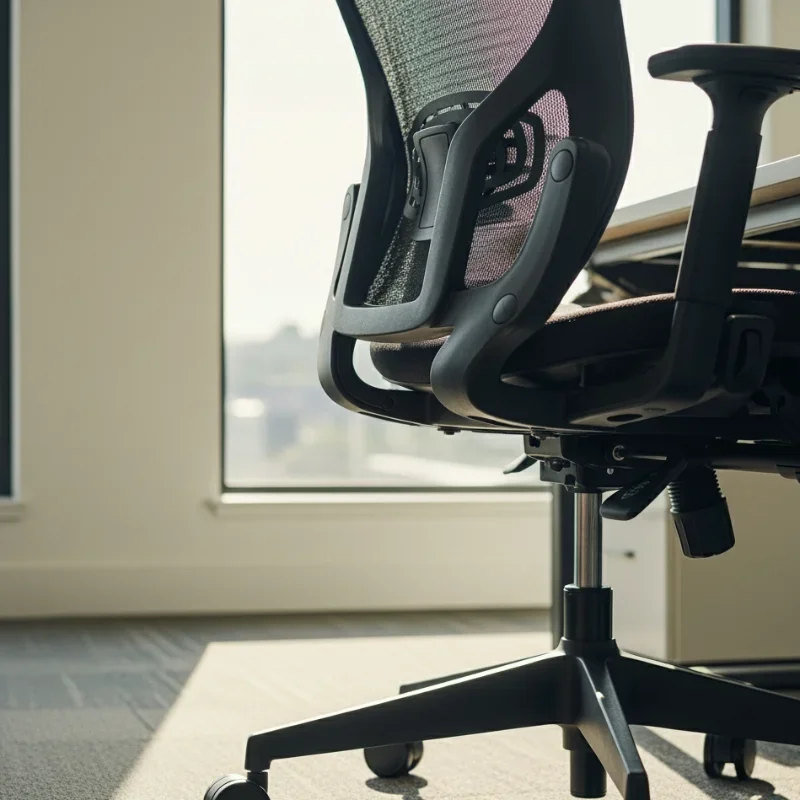
Some chairs feature the tension knob on the front underside of the seat, easily accessible while sitting. Others place it toward the back, requiring you to lean forward or reach under to find it.
A few chair designs integrate tension control into side-mounted adjustment handles rather than using a separate bottom knob. If you can't find a knob underneath, check the sides for a dial or lever serving the same function.
Visual Identification
The tension knob typically appears as a round, knurled dial somewhere between one and three inches in diameter. The textured surface provides grip for turning with your fingers.
Most knobs feature directional indicators showing which way to turn for more or less tension. Plus and minus symbols, arrows, or written instructions help guide proper adjustment.
Some premium chairs use larger, more ergonomically designed knobs that are easier to grip and turn. Budget chairs might have smaller, less accessible controls.
Proper Adjustment Techniques
Getting your tension set correctly requires some experimentation.
Finding Your Baseline
Start by sitting in your chair in your normal working position. Without intentionally reclining, notice whether the chair feels stable or wants to tip backward.
If the chair constantly tries to recline even when you're sitting upright working, your tension is too loose. If you can't lean back at all no matter how hard you try, it's too tight.
Most people should be able to lean back with moderate effort while having the chair return them to upright when they stop applying pressure.
Making Adjustments
Reach underneath your chair and locate the tension knob. Give it a few turns in one direction, then test the results by leaning back.
Small adjustments make bigger differences than you might expect. One or two full rotations often significantly changes the chair's behavior.
Test after each adjustment rather than making large changes and hoping for the best. This gradual approach helps you find the exact sweet spot.
Body Weight Considerations
Your weight directly affects ideal tension settings. Heavier individuals generally need higher tension to prevent uncontrolled reclining, while lighter people require less.
Manufacturer recommendations sometimes include weight-based guidance for tension settings. Check your chair's documentation if available.
Don't be afraid to experiment beyond standard recommendations. Your comfort matters more than following generic guidelines.
Common Problems and Solutions
Sometimes the tension control doesn't work as expected.
Knob Won't Turn
A stuck tension knob usually results from lack of use combined with dust, debris, or corrosion building up over time.
Try applying penetrating lubricant around the knob shaft and letting it soak for several minutes. Gentle back-and-forth wiggling often loosens stuck mechanisms.
If lubrication doesn't help, the internal mechanism might be damaged or worn. Professional repair or chair replacement might be necessary.
Tension Doesn't Hold
If your tension setting keeps reverting to loose regardless of adjustments, the spring mechanism might be failing.
Worn springs lose their ability to maintain compression. The chair might need internal mechanism replacement to restore proper function.
Some chairs have set screws that lock the tension knob in place. Check whether your chair has this feature and whether it needs tightening.
Maximum Tension Still Too Loose
Very heavy individuals sometimes find that even maximum tension doesn't provide adequate support for their body weight.
This indicates the chair isn't rated for your weight class. Most standard office chairs accommodate users up to 250 pounds, but heavier individuals need chairs specifically designed for higher weight capacities.
Heavy-duty chairs feature stronger springs capable of supporting greater weight with appropriate tension adjustment range.

What Is the Knob on the Bottom of My Office Chair? Beyond Basic Tension
Some chairs feature additional bottom-mounted adjustments worth understanding.
Tilt Lock Mechanisms
Many chairs combine tension control with a tilt lock lever or switch. This separate control locks the chair in an upright position, preventing any reclining regardless of tension setting.
The tilt lock is particularly useful during tasks requiring stable positioning, such as typing or precision work. Unlocking enables reclining for relaxation or thinking periods.
Don't confuse tilt lock with tension control. They work together but serve different purposes.
Seat Angle Adjustment
Premium ergonomic chairs sometimes include separate knobs controlling forward seat tilt, allowing the seat surface to angle slightly downward at the front.
This feature promotes proper posture by tilting the pelvis forward and reducing pressure on lower back muscles.
If your chair has multiple bottom knobs, consult the manual to identify which controls what function.
Recline Limiter Settings
Some chairs feature adjustments limiting maximum recline angle. Rather than continuous reclining until you're practically horizontal, these settings stop the chair at predetermined angles.
Limiter adjustments might appear as a separate knob or as clickable positions on the existing tension control.
Understanding whether your chair has this feature prevents confusion about why it won't recline past certain points.
Ergonomic Benefits of Proper Tension
Getting this adjustment right offers real health benefits beyond mere comfort.
Spinal Support During Reclining
Appropriate tension keeps your spine supported throughout the reclining motion. Too loose, and you fall backward uncontrollably. Too tight, and you can't access reclined positions that relieve spinal pressure.
Periodic reclining during long sitting sessions allows spinal discs to recover from compression. The right tension setting makes these microbreaks natural and effortless.
Dynamic Sitting Encouragement
Modern ergonomic philosophy emphasizes movement over static positioning. Your body isn't designed to hold one position for hours, regardless of how perfect that position might be.
Properly adjusted tension enables dynamic sitting where you naturally shift between upright and reclined positions throughout the day. This movement promotes blood circulation and reduces muscle fatigue.
Preventing Muscle Strain
Wrong tension settings can cause muscle strain as your body constantly fights against the chair's behavior.
Fighting against overly loose tension to stay upright strains back muscles. Pushing against overly tight tension to recline strains similar muscle groups in the opposite direction.
Correct tension eliminates this unnecessary muscular effort, allowing your body to relax while properly supported.
Maintenance and Care
Keep your tension control functioning properly with basic maintenance.
Regular Cleaning
Dust and debris accumulate around the tension knob over time, potentially affecting function.
Periodically wipe the knob and surrounding area with a clean cloth. Use compressed air to blow debris from crevices around the mechanism.
Lubrication
Squeaking or resistance during adjustment indicates the mechanism needs lubrication.
Apply a small amount of silicone-based lubricant to the knob shaft. Work the knob back and forth to distribute the lubricant throughout the mechanism.
Avoid petroleum-based lubricants that might damage plastic components common in chair mechanisms.
Annual Inspection
Once yearly, examine your chair's adjustment mechanisms including the tension control.
Check for unusual wear, damage, or deterioration. Address problems early before they result in mechanism failure or affect your seating comfort.

Alternative Chair Designs
Not all chairs feature traditional tension knobs.
Fixed Tension Chairs
Budget chairs sometimes lack tension adjustment entirely. The spring is set to one level that supposedly works for average users.
These fixed designs sacrifice customization for simplicity and cost reduction. Users whose weight or preferences don't match the preset may find these chairs uncomfortable.
Electronic Controls
High-end executive chairs occasionally feature electronic tension adjustment. Buttons or touch controls replace manual knobs.
These systems allow precise tension setting and sometimes include memory positions for multiple users sharing a chair.
Knee-Tilt Mechanisms
Some ergonomic chairs use knee-tilt designs where the pivot point sits forward rather than centered under the seat.
These mechanisms often include tension controls similar to standard chairs but affect recline behavior differently due to the altered pivot point.
Conclusion
Understanding what is the knob on the bottom of my office chair transforms your sitting experience by unlocking customized comfort that matches your body and preferences. The tension control knob adjusts how easily your chair reclines, requiring proper setting based on your weight and working style. Taking a few minutes to experiment with this adjustment can dramatically improve your daily comfort while potentially reducing strain on your back and muscles. Don't ignore this simple feature that makes such a meaningful difference in your workday.
Read next: Why Are Office Chairs So Expensive? Cost Factors to Know
Frequently Asked Questions
1.Which direction should I turn the tension knob for more resistance?
Clockwise rotation typically increases tension, making the chair harder to recline and more stable.
2.Why is my office chair leaning back on its own?
The tension setting is too loose for your body weight, requiring clockwise adjustment to increase resistance.
3.Can I damage my chair by adjusting the tension knob frequently?
No, tension knobs are designed for regular adjustment and frequent use won't damage the mechanism.
4.My chair has no knob underneath, where is the tension control?
Check for side-mounted dials or integrated lever controls that serve the same tension adjustment function.
5.How do I know when tension is set correctly for my body?
Correct tension allows controlled reclining with moderate effort while maintaining stability when sitting upright.
Stay up to date with our latest ideas!