15 Contemporary Luxury Office Ideas for a High-End Workspace
Elevate your workspace with these 15 contemporary luxury office ideas that combine refined design, premium materials, and executive-level comfort for the modern professional.
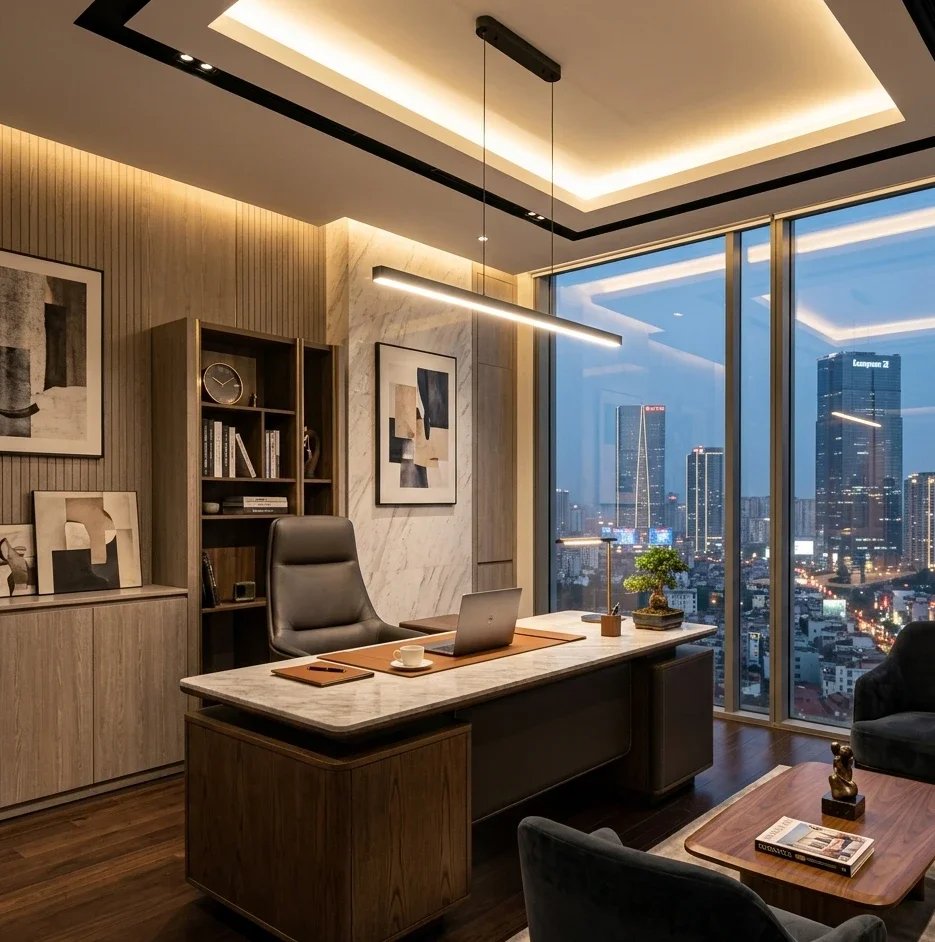
Have you ever walked into an office and immediately felt like the work happening there had to be important? That reaction is not accidental. Contemporary luxury office design speaks a specific language of materials, proportions, and detail that signals credibility before a single word is spoken. Whether you are designing a private office from scratch, upgrading a serviced space, or refining what you already have, the principles behind high-end workspace design are more accessible than most people expect. From statement furniture to curated lighting and bespoke finishes, these ideas translate the world of boutique hotels and executive lounges into a workspace that performs as well as it looks. Ready to raise the standard? Here are fifteen contemporary luxury office ideas worth stealing.
1. Warm Neutral Walls with Texture
Flat white walls belong in storage rooms. Contemporary luxury offices favour warm neutrals with depth: linen, warm greige, soft taupe, or muted clay. The real difference-maker is texture. Limewash paint, grasscloth wallcovering, or a subtle plaster finish adds tactile interest that flat paint cannot match. These surfaces respond beautifully to natural and artificial light, shifting in tone throughout the day and preventing the space from feeling static. Pair them with crisp trim in a contrasting tone for architectural definition, and the backdrop does its job without competing with anything placed against it.
2. Statement Desk as the Room's Anchor
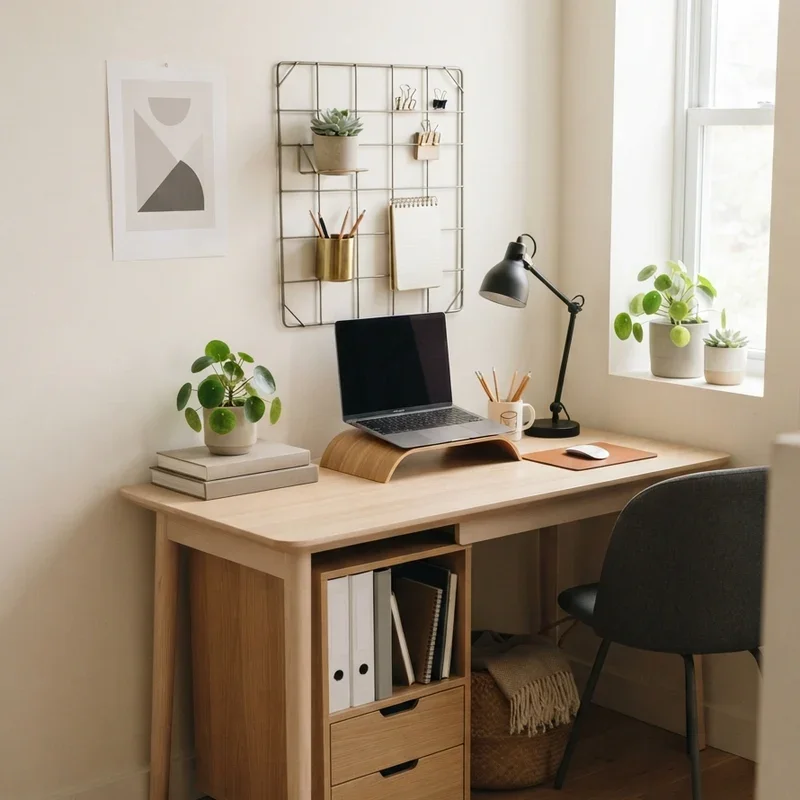
In a luxury private office, the desk is not just a work surface. It is the centrepiece around which every other design decision is made. Choose solid natural materials: stone tops, solid walnut, fumed oak, or lacquered wood with brass inlay. Size matters here — aim for a desk that fills the room with presence rather than one that gets lost in it. Pair it with a single pedestal for clean lines and route cables through an integrated management system for a surface that looks as good during a client call as it does in person. A commanding desk sets the tone for every meeting and every working hour spent in the room.
3. Leather Seating with Genuine Patina
Leather seating is a cornerstone of the executive office aesthetic, but the contemporary version has moved away from the oversized swivel-chair cliché. Look instead for a slim executive chair in full-grain leather with a clean silhouette, or a low-slung lounge chair in the corner for informal conversations. The key is genuine quality: top-grain or full-grain leather develops a patina over time that synthetic materials cannot replicate. In a meeting area, a two-seat leather sofa in cognac, charcoal, or deep olive brings warmth and formality at once. These pieces age into the room rather than wearing out of it.
4. Layered Lighting Design
Amateur office lighting relies on a single overhead source. Luxury offices layer three: ambient lighting from recessed or cove fixtures, task lighting from a well-positioned desk lamp, and accent lighting to highlight artwork or shelving. Each layer operates independently, allowing the room's atmosphere to shift from sharp morning focus to warm late-afternoon meetings. Specify fixtures with warm white bulbs in the 2700–3000K range to avoid the clinical coolness of standard office lighting. A sculptural desk lamp in brushed brass or matte black doubles as an object of interest even when switched off. Lighting is the most underestimated element in office design and one of the least expensive to get right.
5. Natural Stone Surfaces
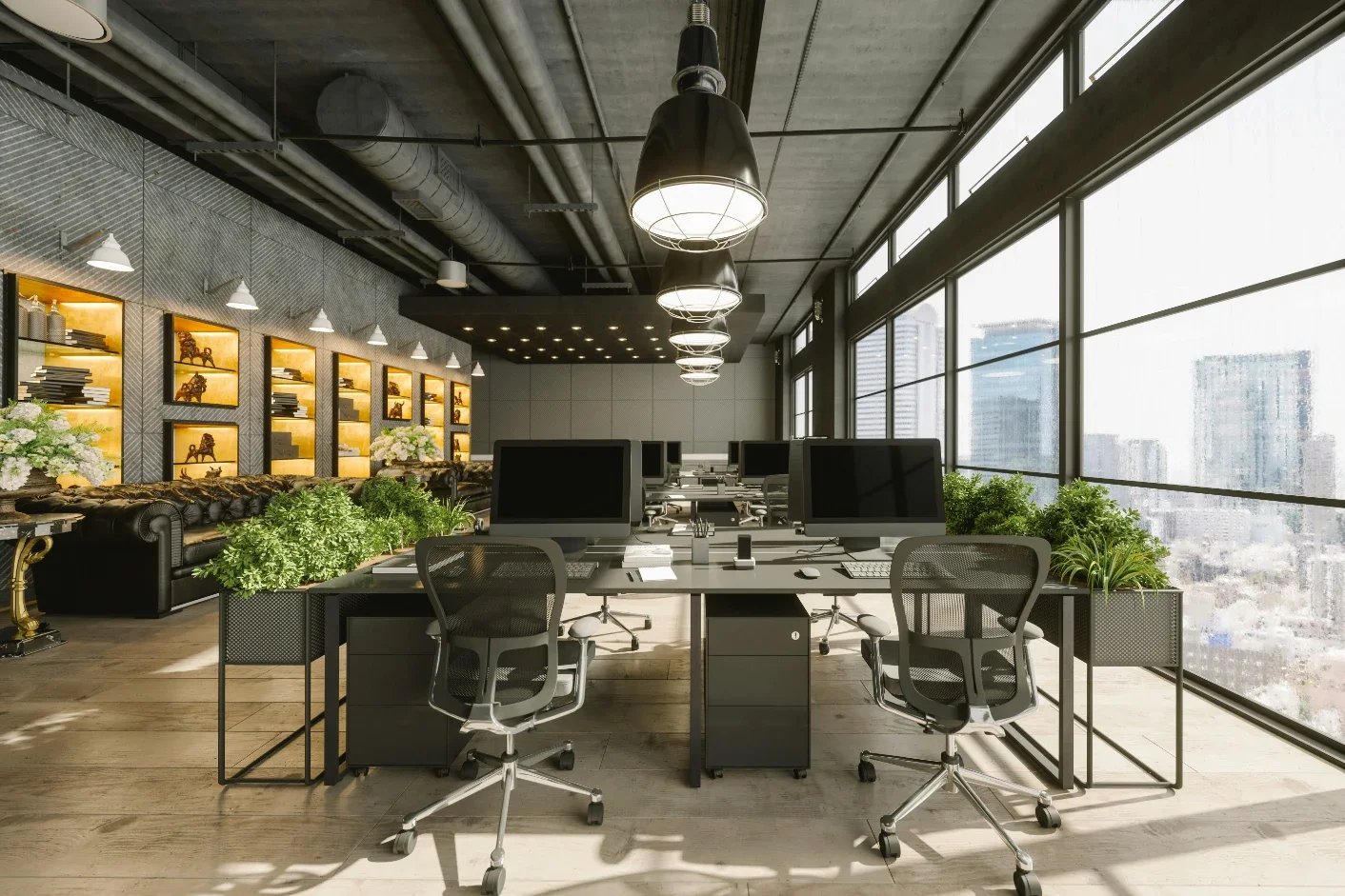
Stone brings a gravitas to a workspace that no other material matches. A marble or travertine desktop, a stone-clad feature wall behind the seating area, or a solid stone desk organiser introduces the tactile luxury of high-end hospitality into a professional environment. Choose stone with movement and character: book-matched marble panels or a honed limestone with visible fossil detail reads far better than generic engineered alternatives. Stone surfaces also photograph well, which matters for any office that doubles as a backdrop for video calls or content. The investment is considerable, but the return in how the room reads is immediate.
6. Bespoke Millwork and Built-Ins
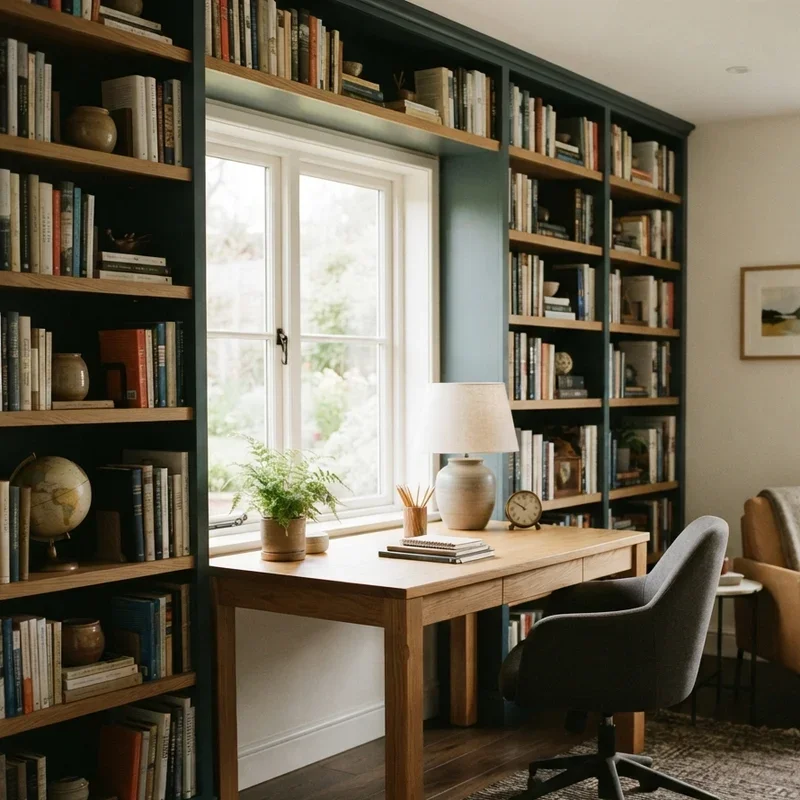
Nothing defines a luxury private office more clearly than bespoke millwork. Custom built-in shelving, a concealed wet bar, or a panelled wall behind the desk transforms a room from furnished to designed. The difference lies in the details: soft-close drawers, integrated lighting, and perfectly proportioned compartments finished in a tone that grounds the room without darkening it. Even a modestly sized office reads as far larger and more intentional when its walls are working. Commission a cabinetmaker rather than buying off-the-shelf, and the result will outlast any trend.
7. Vertical Gardens and Living Wall Panels
Biophilic design has moved well beyond the potted plant on the windowsill. Living wall panels, whether preserved or live moss, ferns, and trailing plants, bring the visual calm of nature into a private office without compromising floor space. A living wall behind the seating area creates a striking backdrop for video calls while absorbing ambient noise. Preserved moss panels require no watering or maintenance, making them practical for busy professionals. The contrast between the organic texture of a green wall and the clean lines of contemporary furniture is one of the most effective design moves in the modern office.
8. Curated Art Programme
Bare walls signal a temporary occupant. A private office with a considered art selection signals permanence, confidence, and culture. You do not need an enormous budget: a single large-format print or painting at the right scale and in the right frame can change a wall entirely. Choose work that aligns with your industry's visual language, frame consistently in one metal finish, and hang at eye height with enough breathing room for each piece to register as a deliberate choice rather than a collection of afterthoughts.
9. A Dedicated Client Seating Zone
A luxury private office separates the working zone from the client zone. Two or three well-chosen chairs arranged around a low coffee table, with a side table, a carafe of water, and a curated stack of books, creates a meeting area that feels closer to a hotel lobby than a conference room. This separation signals that you take hospitality seriously. It also changes the quality of conversation: people sit differently, speak more openly, and leave with a better impression of who you are.
10. Acoustic Treatment That Looks Intentional
Sound control is a practical necessity in any private office, but acoustic panels do not need to look industrial. Fabric-wrapped panels in a custom colour integrated into a wall gallery, perforated timber cladding, or a deeply upholstered installation behind the desk all absorb sound while contributing to the room's aesthetic. A well-treated room feels quieter and more focused, which directly affects how productive and professional every call and meeting feels. Acoustic comfort is one of those details clients notice without ever knowing why the room feels different.
11. High-Performing Private Office Spaces Done for You
Not everyone has the budget or appetite for a full interior design project, which is where premium serviced offices come in. For readers based in Singapore, The Work Project offers private office spaces that arrive fully realised: award-winning interiors designed in collaboration with architectural studios and art consultancies, ergonomic furniture, curated common areas, and a hospitality standard drawn from the founders' hotel industry background. Offices range from compact two-person suites to enterprise floors across 11 locations in Grade A CBD buildings. For businesses that want a high-end private office without a six-month fit-out project, it is one of the stronger options in the market.
12. Statement Ceiling Treatments
The fifth wall is the most neglected surface in office design. A coffered ceiling in a warm tone, a dark-painted ceiling that creates intimacy in a high-ceilinged room, or cove lighting that washes the surface in a warm glow all add architectural ambition to a space most designers leave untouched. Even a modest upgrade, removing a suspended tile ceiling to expose the slab above, painting it in a deep tone, and adding pendant lighting, changes the volume of the room entirely. Look up and consider what the ceiling is doing, because in a luxury office it should be doing something.
13. Mixed Metal Accents in One Dominant Finish
Contemporary luxury interiors have largely moved away from matching everything to a single metal. Instead, they choose one dominant finish, such as brushed brass, oxidised bronze, matte black, or satin nickel, and layer in one or two others as accents. In a private office this might mean a desk lamp in brushed brass, door hardware in satin nickel, and a decorative bowl in aged bronze. That deliberateness makes a space feel curated rather than purchased. Avoid polished chrome in warm-toned rooms; it reads as too cool and too corporate against natural materials.
14. Full-Height Glazing or Interior Glass Partitions
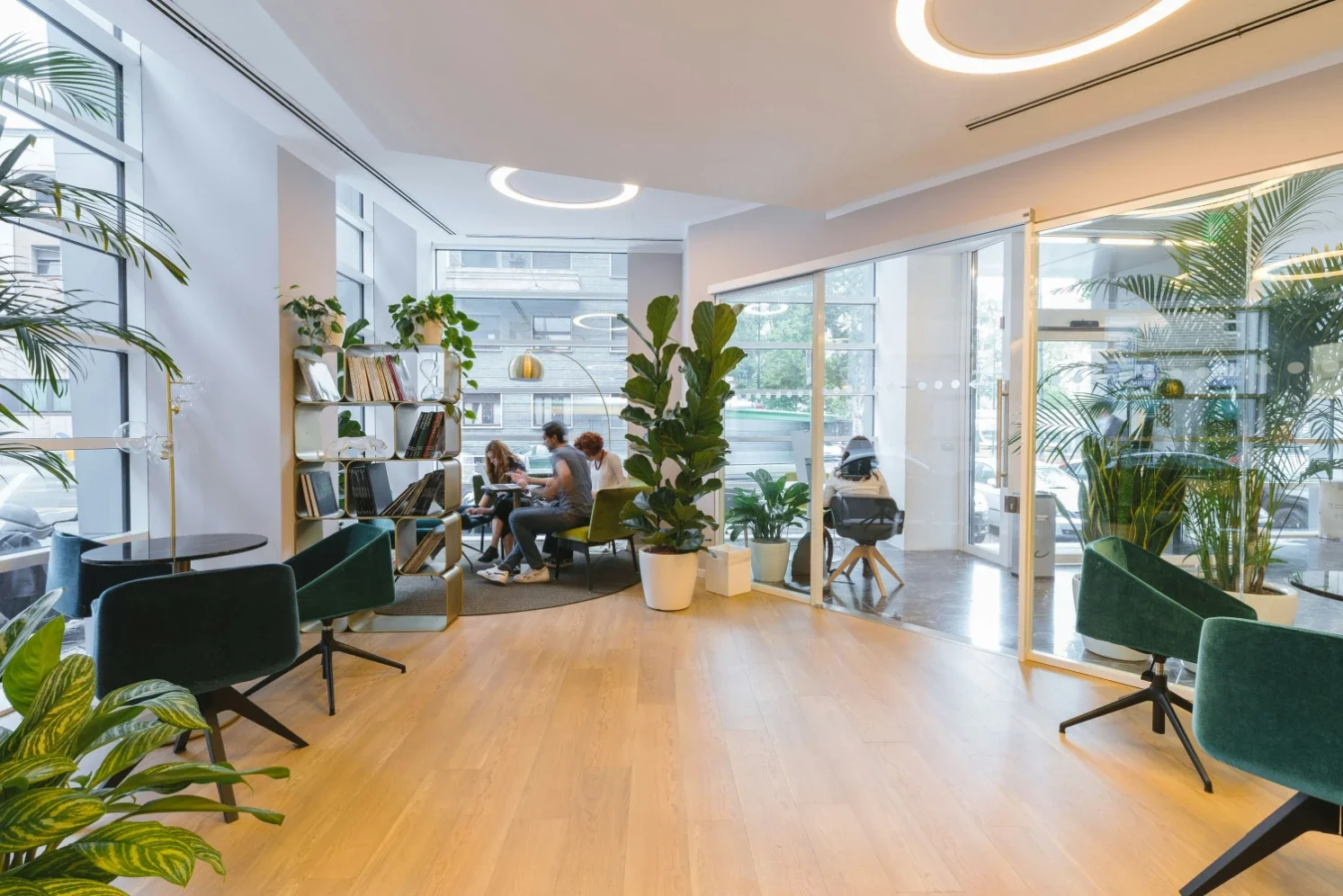
Transparency has become one of the defining features of contemporary luxury office design, particularly in serviced environments. Full-height internal glazing between a private office and an adjoining meeting room borrows light, signals openness, and makes a room feel larger than its square footage suggests, all without sacrificing acoustic separation. Specify frameless or minimally framed glazing for the cleanest result, and keep the sill and head details as flush as the structure allows.
15. A Considered Scent and Sensory Layer
Luxury hospitality has understood for decades that scent is as powerful as any visual element in creating a lasting impression. A subtle room diffuser, not a plug-in air freshener but a proper reed or cold-air diffuser with a scent matched to the room's character, adds a sensory layer that visitors register without consciously identifying. Cedar, sandalwood, vetiver, or a light leather accord all work well in professional environments. Pair this with a curated playlist at low volume, and the office becomes an environment that engages all the senses. That is the difference between a room that looks luxurious and one that feels it.
Conclusion
Contemporary luxury office design is not about spending more. It is about choosing better. Each of these fifteen ideas prioritises quality over quantity, character over conformity, and long-term value over short-term convenience. Start with the elements that have the highest daily impact: the desk, the lighting, and the acoustic environment. Build from there. An office that feels genuinely considered is one of the most effective professional tools you have, because the space you work in tells people who you are before you say a word.
Stay up to date with our latest ideas!