How to Light a Covered Patio Office for Productive Work
Learn how to light a covered patio office with practical lighting ideas that reduce eye strain, improve focus, and create a comfortable, productive workspace.

A covered patio office can feel like the best of both worlds. You get natural light, fresh air, and a more relaxed setting without giving up the structure of a dedicated workspace. On a mild day, it can be a refreshing alternative to working indoors, especially for reading, planning, video calls, or focused laptop work.
Good covered patio office lighting should respond to those changing conditions. The strongest setup combines daylight control, ambient lighting, task lighting, and a few low-level lights for comfort and safety. The goal is not to make the patio feel like a corporate office. It is to create a workspace that remains comfortable, practical, and visually inviting throughout the day.
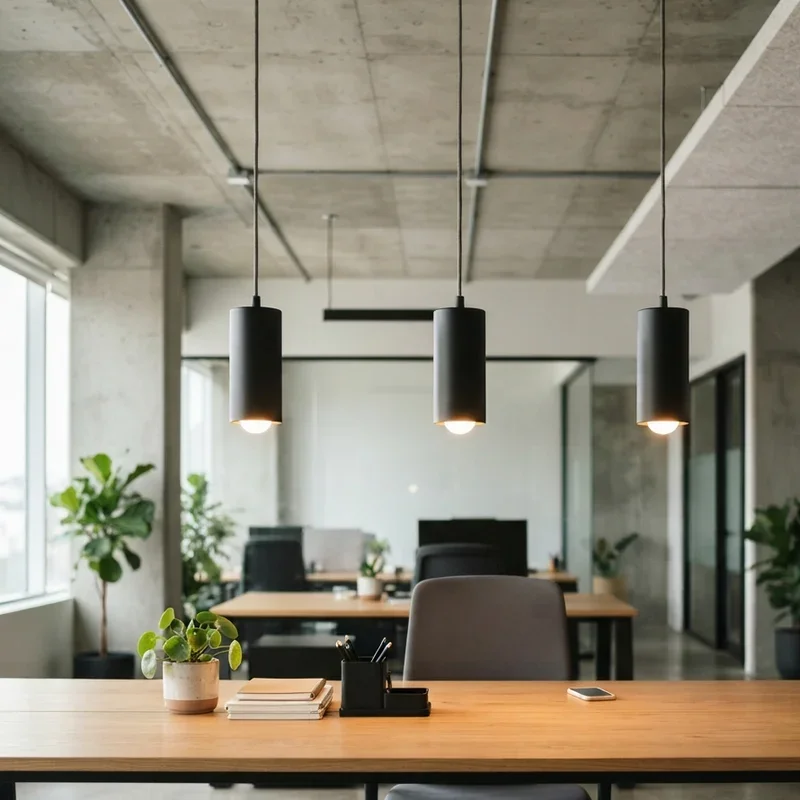
For the main overhead layer, a weather-aware fixture such as an outdoor rattan pendant light can help soften the structure of a covered patio while adding warm texture above a desk, lounge table, or work nook. Rowabi Lighting carries outdoor rattan pendant styles that fit this relaxed work-from-home setting well, especially when the space needs to feel more like an extension of the home than a temporary workstation.
Start With the Way You Use the Outdoor Office
Before choosing fixtures, think about what actually happens in the space. A patio used for an occasional morning email session needs a different lighting plan from one that functions as a full-time home office.
If you work outdoors only during daylight hours, your main priority may be controlling glare rather than adding a large amount of artificial light. A shaded desk, an adjustable task lamp, and a soft source for cloudy days may be enough.
Evening work requires a more complete setup. You will need general illumination so the patio does not feel dark, plus focused light at the desk for reading, typing, or reviewing documents. Depending on the size of the area, wall lights or step lights may also be useful for safe movement.
Video calls create another set of needs. A strong light behind you can turn your face into a shadow, while a harsh fixture directly overhead may create unflattering contrast. A diffused light positioned in front of or slightly beside the desk usually produces a more balanced image.
Reading and paperwork require direct, controllable task lighting. Shared workspaces may need more than one desk lamp or a wider central fixture. If the patio also serves as a lounge or dining area after work, choose lighting that can shift from functional to relaxed, ideally with separate controls or dimming options.
Control Daylight Before Adding More Fixtures
One of the most useful outdoor office lighting ideas is also the simplest: manage the daylight you already have before adding more electric light.
Start with desk orientation. Placing the desk directly in front of a bright opening may create glare on the screen. Positioning it with the main source of daylight coming from the side often works better. This gives you natural illumination without forcing you to stare into the brightest part of the patio.
Pergola slats can provide partial shade, but the pattern of light may shift throughout the day. Outdoor curtains, roller shades, or a retractable canopy can help soften direct sun during the brightest hours. These features also improve privacy and make the workspace easier to use in different weather conditions.
Adjust the monitor angle before assuming the space needs brighter fixtures. Sometimes a small screen adjustment solves a glare problem more effectively than adding more light. A matte screen protector can also help in highly reflective conditions.
For video calls, avoid sitting with the open yard or bright sky directly behind you. Instead, face toward the shaded side of the patio or place a soft light near the camera. This makes your face easier to see and keeps the background from looking overexposed.
A Simple Lighting Plan by Workspace Type
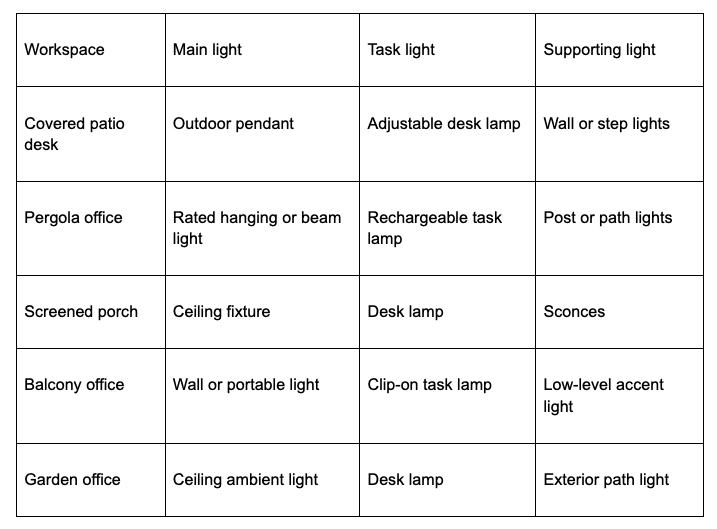
The right lighting plan depends on how protected the workspace is and how much room is available. The table below offers a practical starting point.
Layer the Lighting
A productive patio office should not rely on a single bright fixture. Layered lighting gives you more control and prevents the space from feeling flat or overly harsh.
Ambient Lighting
Ambient lighting provides the general glow that allows you to move through the space comfortably. On a covered patio, this may come from a pendant, flush mount, ceiling-mounted fixture, or a pair of wall lights.
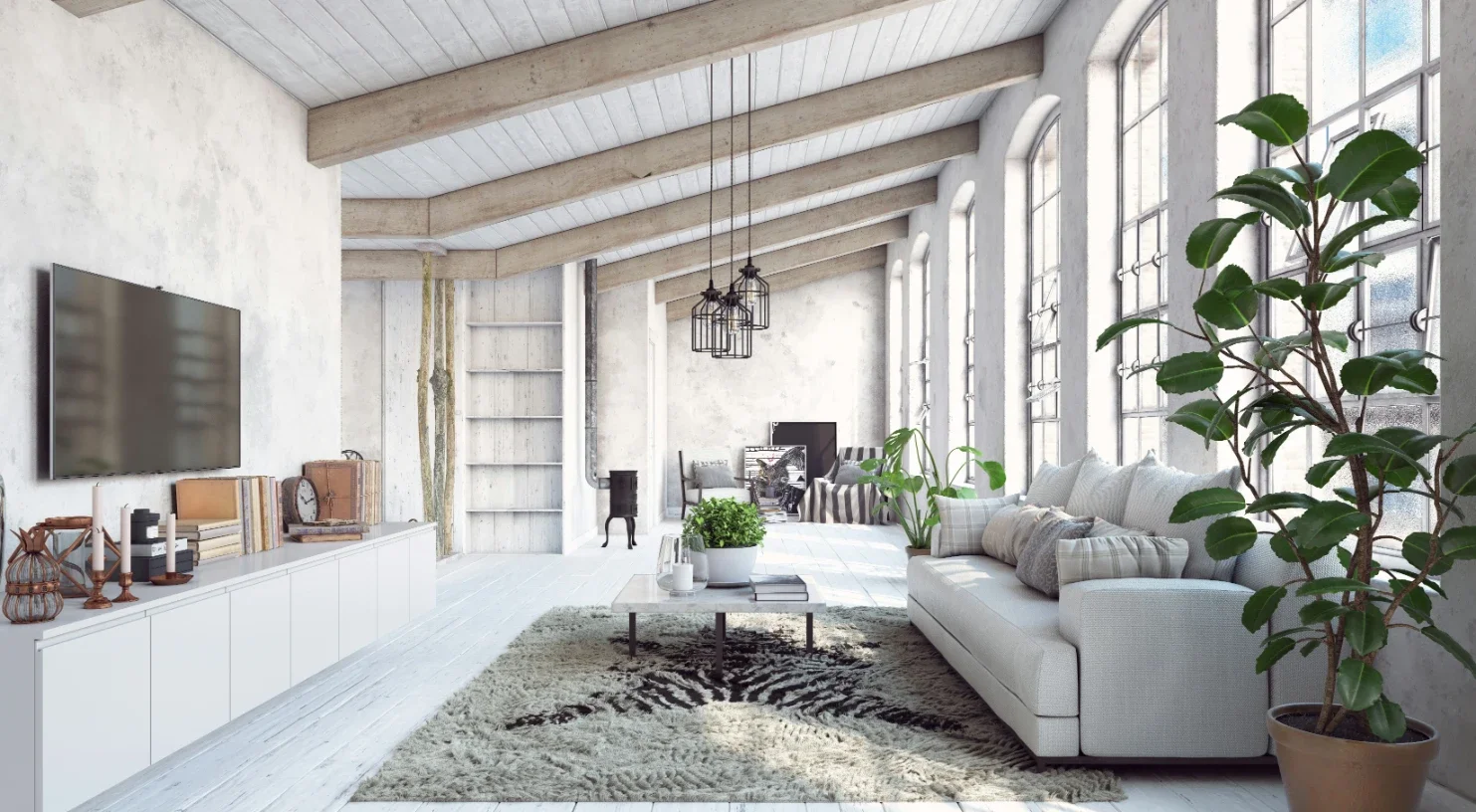
In a covered workspace with a solid overhead structure, an outdoor rattan pendant light can define the desk or meeting area while introducing the natural texture often associated with biophilic office design. The material can visually connect the workspace to the surrounding landscape, especially when paired with wood furniture, greenery, or neutral outdoor fabrics.
The fixture should provide enough general light to prevent strong contrast between the desk and the rest of the patio, but it should not be so bright that it becomes uncomfortable at eye level.
Task Lighting
Task lighting is the most important layer for focused work. An adjustable desk lamp allows you to direct light toward paperwork, a keyboard, or a notebook without illuminating the entire patio.
An adjustable wall-mounted light can save desk space, while a rechargeable portable lamp is useful when electrical outlets are limited. Portable models are also practical for hybrid patios where the work zone changes throughout the week.
Accent and Safety Lighting
Accent lighting is not essential for typing an email, but it helps the office feel finished and comfortable. Step lights, path lights, post lights, and low-level wall lights improve visibility around the edges of the patio.
These fixtures are especially helpful when the route from the patio office to the house includes stairs, changes in floor level, or uneven landscaping.
When an Outdoor Pendant Light Works Best
An outdoor pendant is most effective when the workspace has a sturdy overhead structure and enough clearance for the fixture to hang safely. Covered patios, roofed pergolas, gazebos, and screened porches are common locations.
A pendant can help define a work zone within a larger patio. This is useful when the outdoor area serves several purposes, such as a desk on one side and a lounge or dining table on the other. The fixture creates a visual boundary without the need for a wall or partition.
Placement matters. A pendant above a desk or fixed meeting table is usually safer than one hanging directly over an open walkway. It should be high enough that people can stand, move, and pull out chairs comfortably.
Woven and rattan-inspired fixtures can work particularly well in outdoor offices because they support a relaxed, nature-connected atmosphere. However, appearance alone should never determine suitability. Review the outdoor rating, installation instructions, dimensions, and expected exposure before choosing any pendant.
Select Fixtures for the Actual Exposure
A covered patio is not automatically the same as an indoor room. Wind-driven rain, humidity, temperature changes, dust, and insects may still affect the fixture.
A covered but open-sided patio may receive moisture from storms even when the roof blocks direct rainfall. A screened porch offers more protection from debris but can still be humid. A fully enclosed sunroom may behave more like an interior space, although temperature swings can still matter.
Pergolas vary widely. Some have solid roofs, while others have open slats that provide little protection from rain. An uncovered deck requires fixtures specifically intended for more direct outdoor exposure.
Do not assume that every natural-fiber or rattan fixture is suitable for outdoor installation. Product names and visual styling are not substitutes for the manufacturer's location rating. A fixture should only be described as waterproof, wet-rated, or outdoor-safe when the product documentation clearly supports that claim.
Plan Power and Cable Management
Lighting is only practical when the power setup is safe and organized. Outdoor workspaces often need electricity for a laptop, monitor, phone charger, lamp, and possibly a fan, so power planning should happen early.
Use GFCI-protected outdoor receptacles where required and choose weather-resistant outlet covers appropriate for the location. Cords should be routed along protected edges rather than across walkways.
Avoid relying on loose extension cords as a permanent solution. They can create trip hazards, become exposed to moisture, and make the workspace look unfinished. If temporary power is unavoidable, use products intended for outdoor conditions and inspect them regularly.
Permanent pendant lights, wall lights, and new outdoor receptacles should be installed by a qualified electrician. The installer can confirm that the mounting point is secure, the wiring is appropriate, and the fixture is suitable for the environment.
Create a Patio Office That Works Beyond Daylight Hours
Effective covered patio office lighting is less about adding one decorative fixture and more about creating a flexible system. Start by controlling natural light, then add ambient lighting for overall visibility, task lighting for focused work, and low-level lighting for safety.
The best result is a workspace that feels comfortable in the morning, remains functional on cloudy afternoons, looks balanced on video calls, and can still be used after sunset. With thoughtful fixture selection, safe power planning, and attention to the actual outdoor exposure, a covered patio can become one of the most enjoyable and productive places to work at home.
Stay up to date with our latest ideas!