15 Hallway Office Ideas for Stylish Home Workspaces
Discover 15 hallway office ideas for stylish home workspaces that turn narrow passageways into productive, beautiful work zones you'll love.
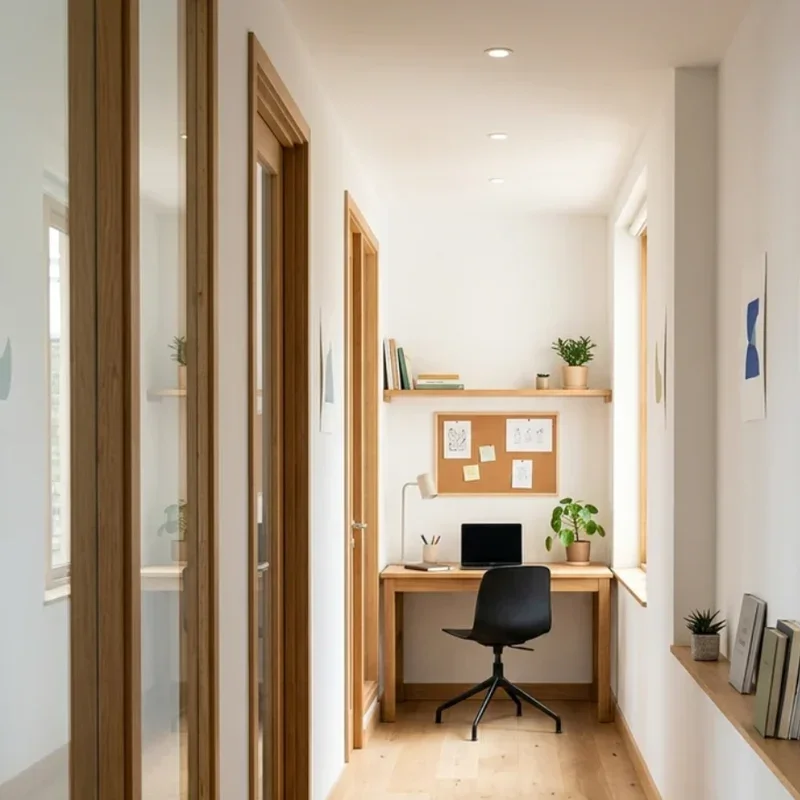
A hallway office transforms the most overlooked passageway in your home into a productive workspace that hides in plain sight between rooms you already use daily. Have you ever walked past that long, empty stretch of hallway wall and realized it holds enough space for a complete desk, shelving, and organized work station? That wasted linear footage represents untapped potential, because hallways offer something most rooms cannot, a quiet transition zone where focused work happens without commandeering an entire bedroom or living area. Think of a hallway office like a secret passage between rooms, where productive work tucks neatly along the walls without interrupting your home's flow. Whether your hallway runs narrow or wide, short or long, buildable solutions exist for every configuration. You control the desk, the storage, and the style. Let's explore fifteen ideas.
1. Floating Wall-Mounted Desk
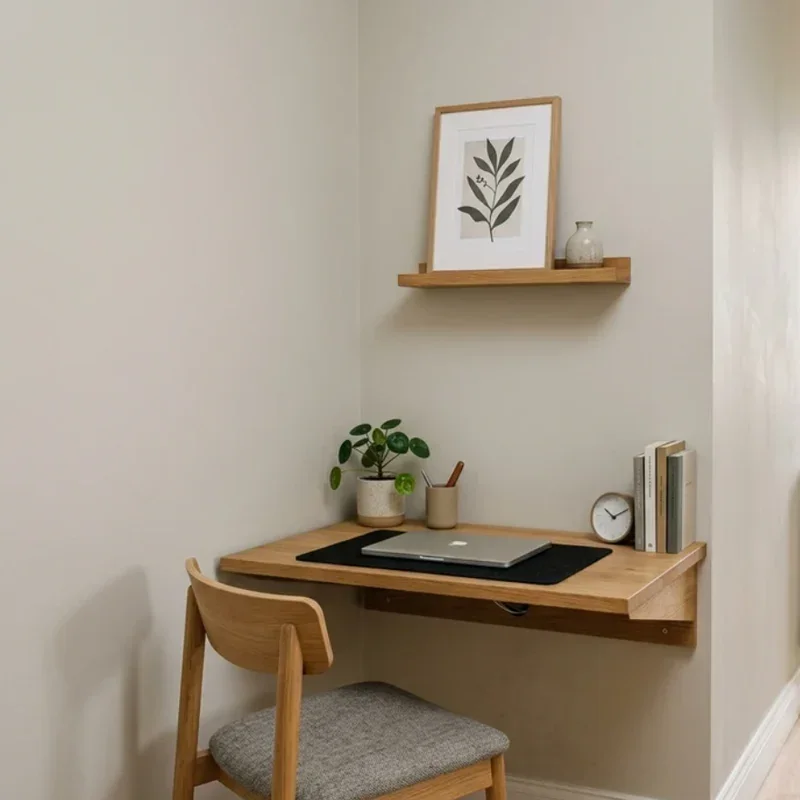
A floating wall-mounted desk attaches directly to the hallway wall without legs, creating a slim workspace that hovers cleanly above the floor while leaving the passage beneath completely clear for walking traffic. Install a sturdy shelf or custom-cut desktop at seated working height using concealed brackets or a French cleat system, since invisible mounting hardware creates the floating illusion that makes narrow hallways feel unobstructed. Choose a desk depth of twelve to eighteen inches, because shallow surfaces provide enough room for a laptop and notepad without protruding into the walking path. Add a small drawer beneath or a wall-mounted organizer above. Match the desk finish to existing hallway trim. Think of floating desks like workstations that defy gravity elegantly. Your hallway gains legless, space-saving productivity.
2. Built-In Alcove Workspace
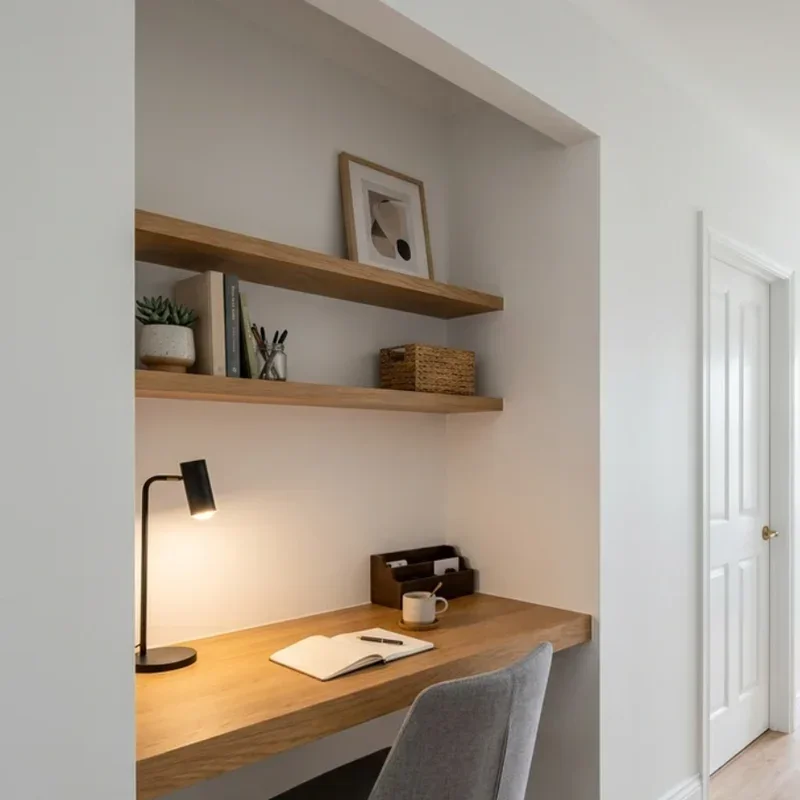
A built-in alcove workspace fills a recessed hallway nook with a custom desk, shelving, and task lighting, converting an architectural indentation into a dedicated work zone that feels intentionally designed. Measure the alcove dimensions precisely, then install a desktop spanning the full width, since wall-to-wall surfaces maximize usable workspace within the defined recess. Add shelves above for books, files, and decorative objects, because vertical storage within the alcove keeps supplies accessible without encroaching on the hallway's walking width. Mount a task lamp or install recessed lighting, since alcoves naturally sit in shadow zones that borrowed hallway illumination cannot brighten adequately. Add a comfortable chair that tucks completely inside. Think of alcove offices like private work pods carved into walls. Your hallway gains defined, contained workspace.
3. Fold-Down Murphy Desk
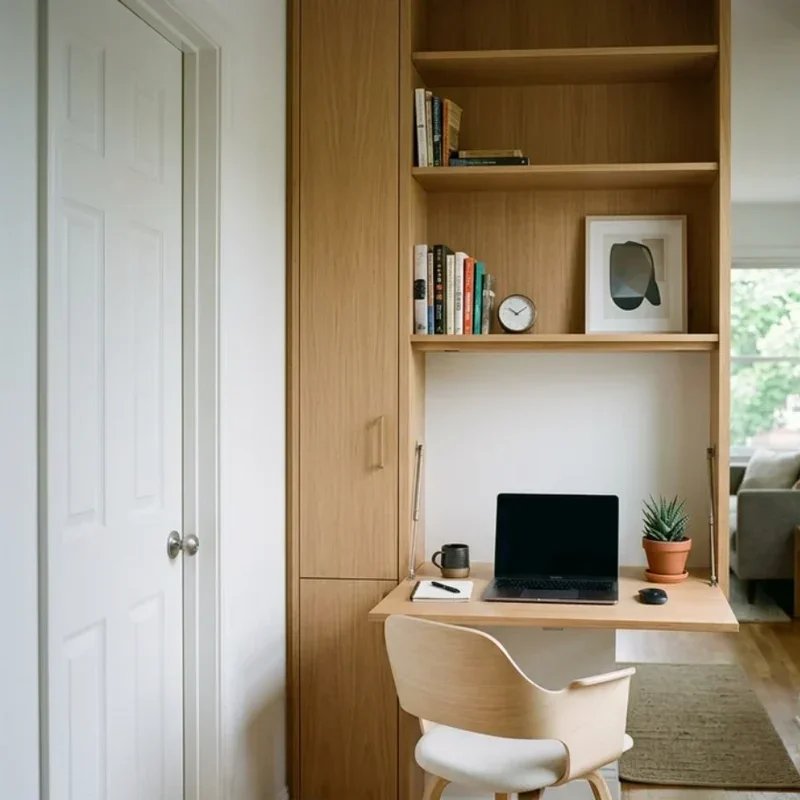
A fold-down Murphy desk hinges against the hallway wall, opening into a full workspace during productive hours then folding flat to restore the hallway's unobstructed walking width between work sessions. Install a hinged panel supported by folding legs or wall-mounted chains, since the mechanical simplicity ensures reliable daily operation without complicated hardware failing over time. Add a small cabinet or shelving unit beside the desk for permanent supply storage, because the fold-down surface handles temporary workspace needs while adjacent storage keeps essentials accessible between sessions. Choose a panel finish matching your wall color, since closed-position invisibility prevents the desk from visually cluttering the hallway when work ends. Think of Murphy desks like office origami for narrow passageways. Your hallway gains disappearing workspace.
4. Narrow Console Table Office
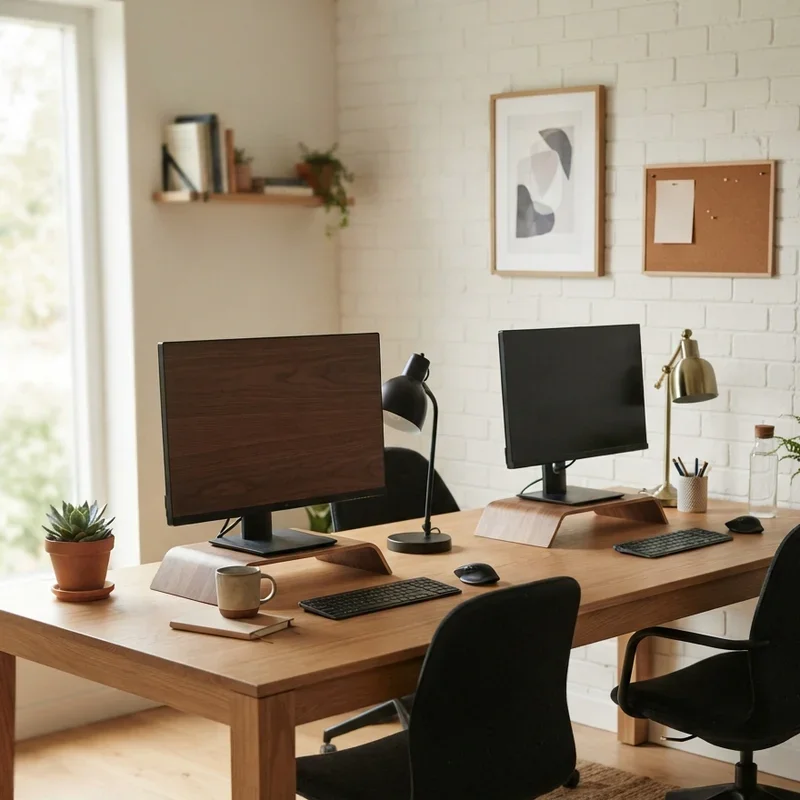
A narrow console table transforms into a hallway office by adding a task lamp, small organizer, and laptop to a slim surface that doubles between decorative entry table and functional workspace throughout the day. Choose a console twelve to sixteen inches deep, since the shallow profile provides comfortable laptop working depth without blocking hallway foot traffic. Position the table against the longest wall, because the extended surface accommodates both workspace and decorative items like a vase or framed photos simultaneously. Add a slim stool or chair that slides completely beneath the console when unused, since hidden seating maintains the clean entryway appearance between work sessions. Pair with a wall-mounted shelf above. Think of console offices like furniture pulling double duty effortlessly. Your hallway gains versatile, dual-purpose function.
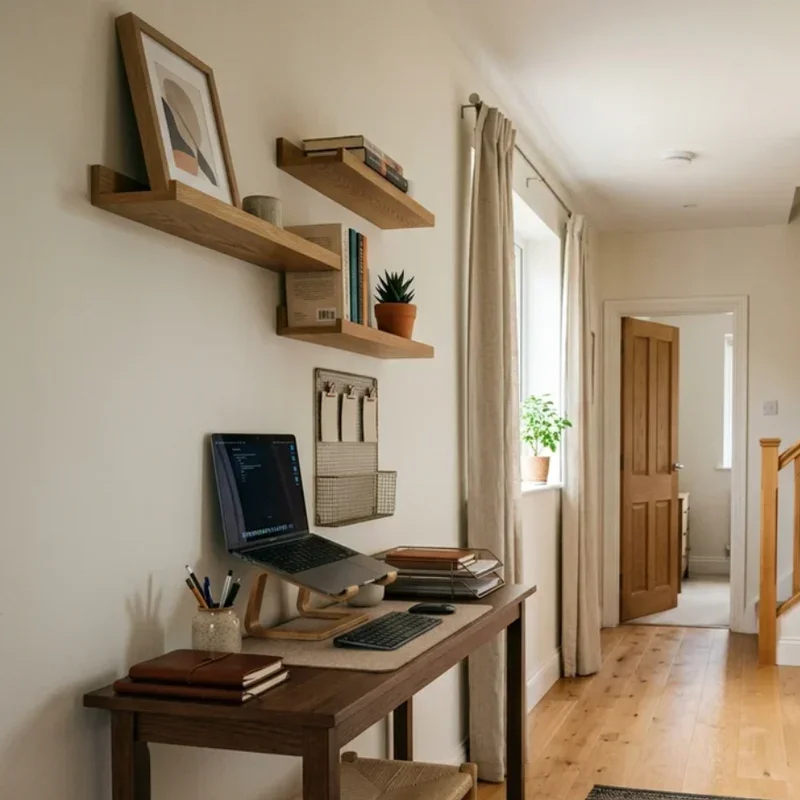
5. Gallery Wall Above Desk Display
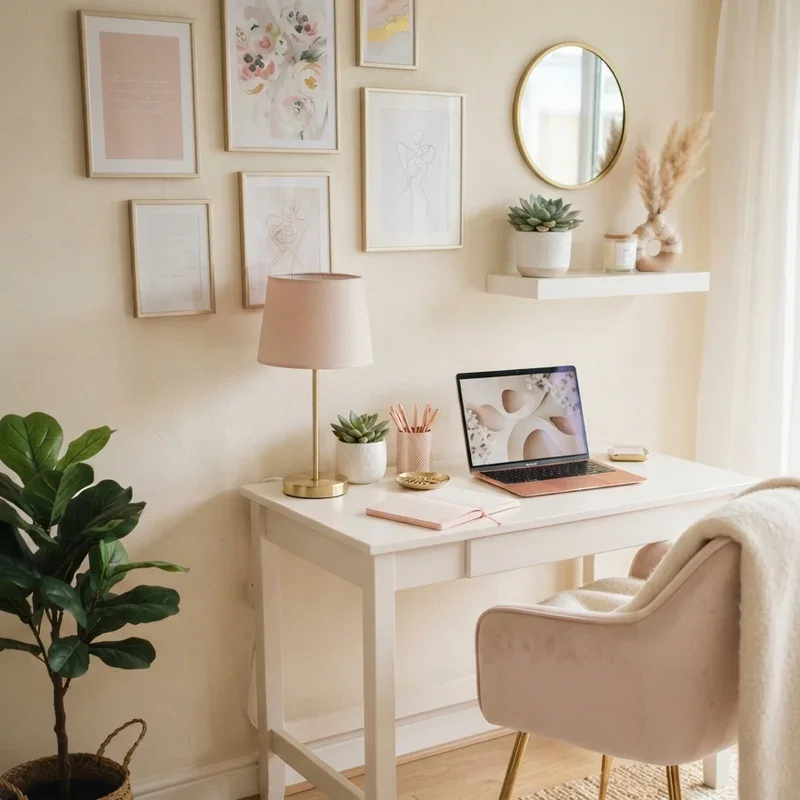
A gallery wall above your hallway desk transforms blank vertical space into a curated display that inspires creativity while making the workspace feel intentionally designed rather than temporarily placed. Hang a collection of framed prints, photos, and inspirational quotes above the desk, since art-filled walls elevate the hallway office from utilitarian afterthought into a genuine design moment. Choose frames in coordinated finishes, because consistent framing pulls diverse content into one polished collection. Mix personal photos with motivational artwork and calendar boards for functional beauty. Arrange pieces in a balanced composition starting from the desk surface upward, since the visual connection between workspace and wall art creates cohesive vertical design flow. Think of gallery walls like inspiration boards dressed in frames. Your hallway office gains artistic personality.
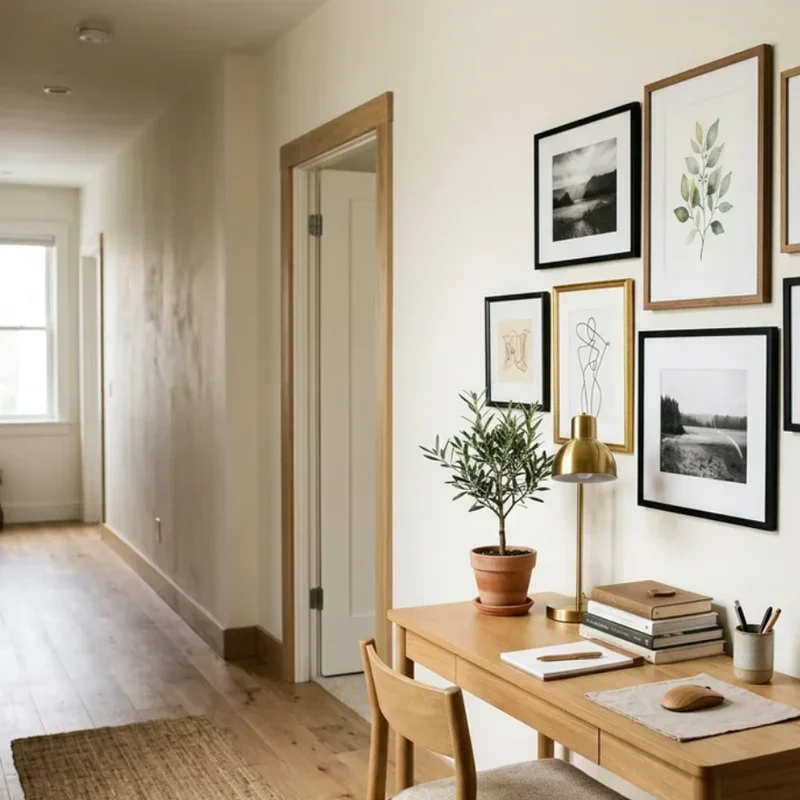
6. Under-Staircase Hallway Office
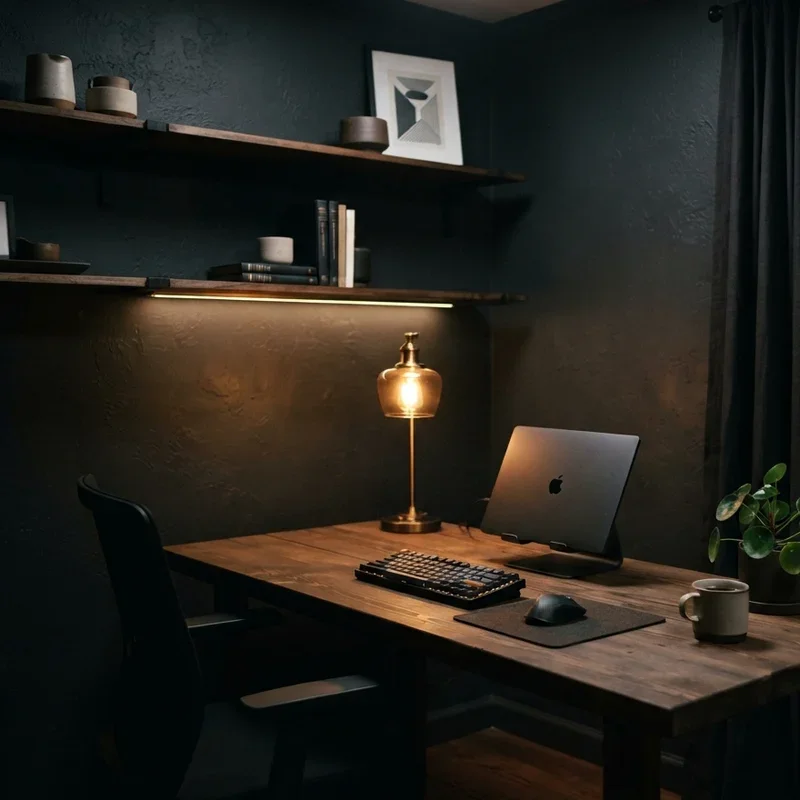
An under-staircase hallway office fills the angled space beneath your stairs with a custom desk that follows the descending ceiling line, converting dead triangular space into surprisingly functional workspace. Build a desk fitted to the staircase's exact angle, since custom sizing maximizes usable surface area within the tapering overhead clearance. Position the chair at the tallest point, because comfortable seated headroom matters more than standing height in a workspace you occupy while sitting. Add graduated shelving following the stair angle above for storage that echoes the architectural slope. Install a task light, since stairway undersides typically sit in deep shadow without dedicated illumination. Paint the nook in a contrasting color. Think of staircase offices like secret rooms discovered beneath ordinary steps. Your home gains clever hidden workspace.
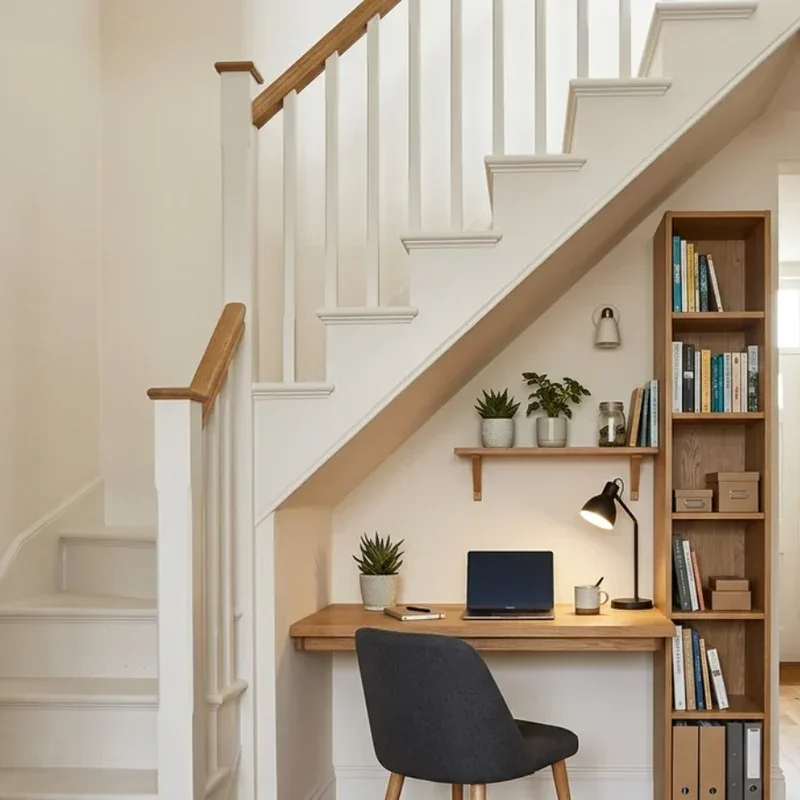
7. Slim Bookshelf Flanking Desk
Slim bookshelves flanking your hallway desk create a framed workspace where storage towers border the work surface, building a defined office zone within the open corridor without closing off the passageway. Choose narrow bookcases no deeper than your desk, since flush alignment maintains a clean profile that avoids creating bottleneck obstacles in the walking path. Fill the shelves with books, files, storage boxes, and small decorative objects, because organized vertical storage eliminates the need for additional furniture consuming limited hallway floor space. Position the desk between the bookcases symmetrically, since balanced framing creates intentional architectural composition. Match bookcase finishes to the desk material. Think of flanking shelves like bookend towers framing your productive space. Your hallway office gains defined, organized structure.
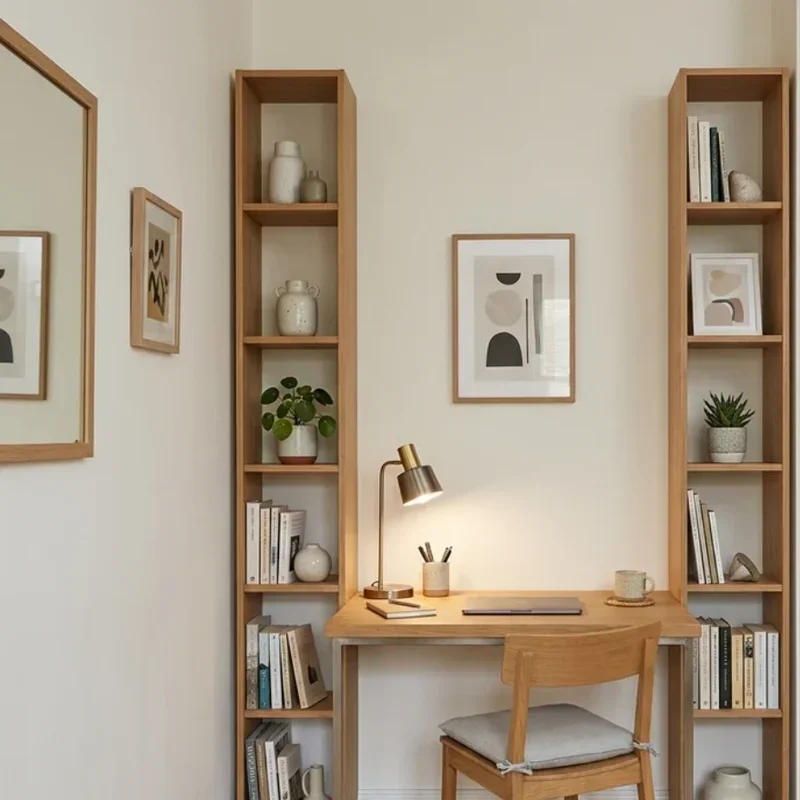
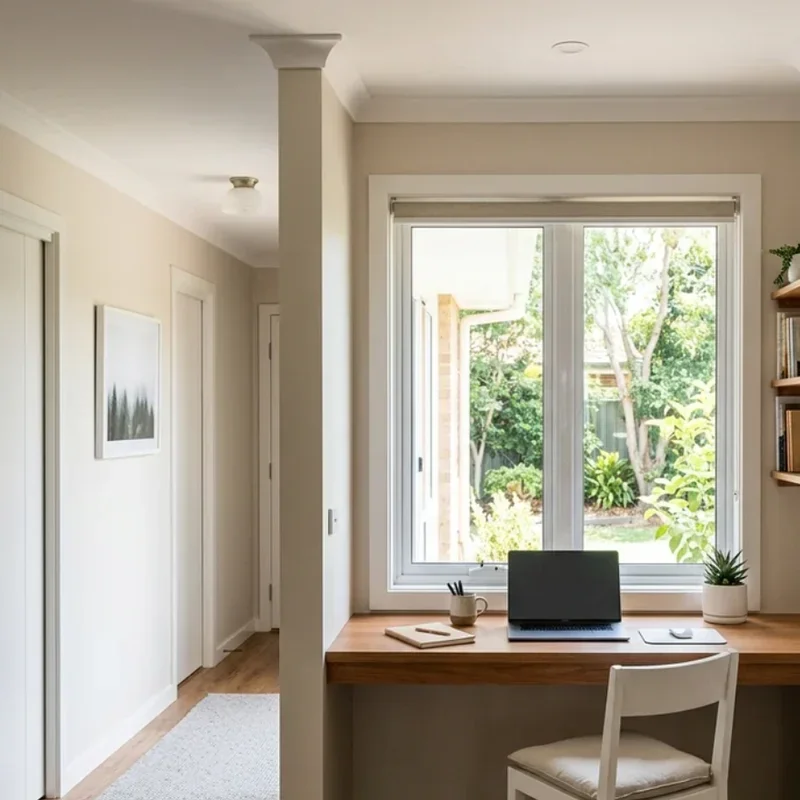
8. Window-End Hallway Desk
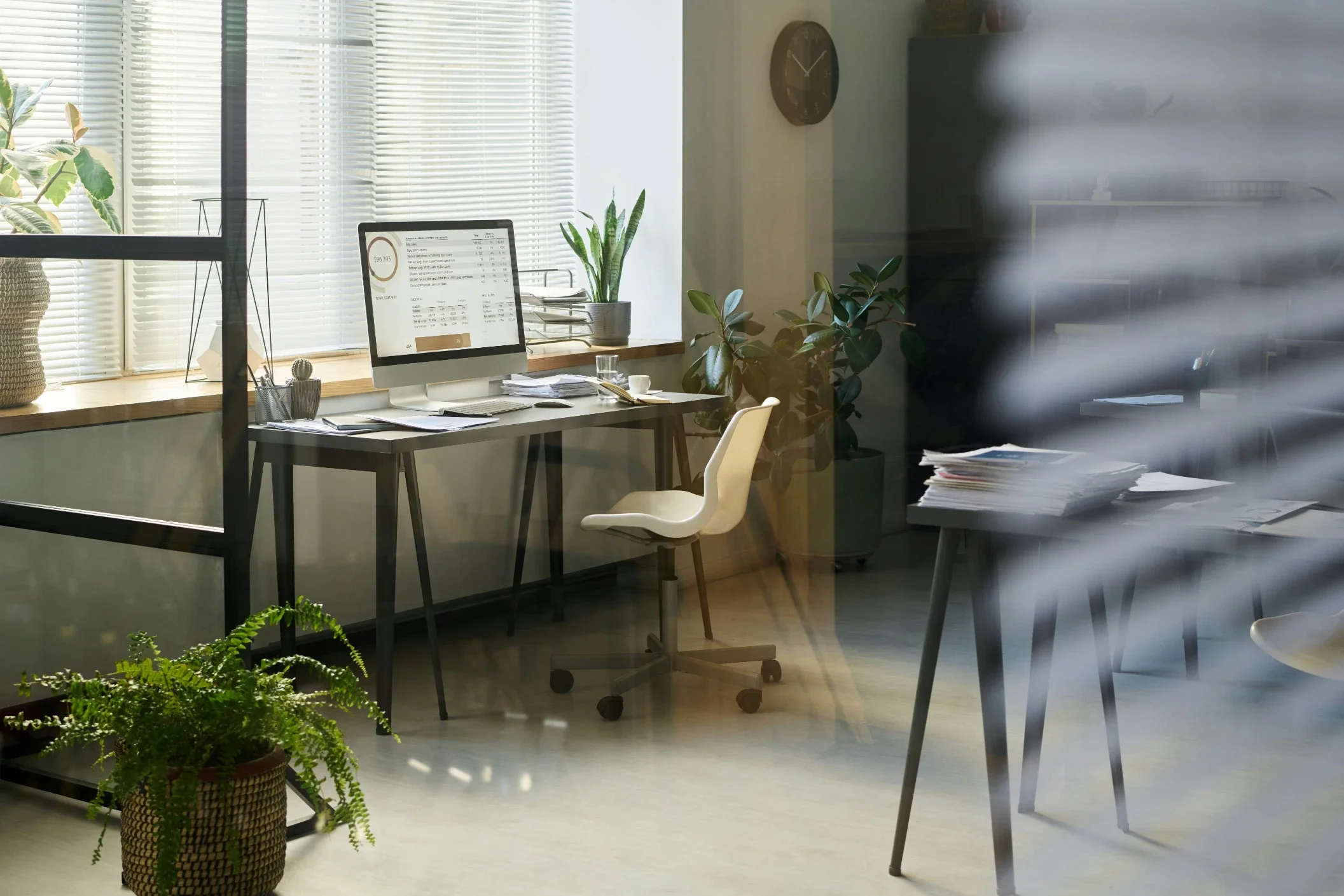
A window-end hallway desk positions your workspace at the hallway's terminal window, where natural light pours directly onto your work surface for the most comfortable, energizing illumination available in any home office location. Place the desk facing or perpendicular to the window, since both orientations capture daylight while preventing harsh glare on laptop screens that direct-facing positions sometimes create. Choose a slim desk fitting the hallway width, because wall-to-wall surfaces maximize workspace while the window provides built-in visual relief during long working sessions. Add sheer curtains for adjustable light filtering. Include a small plant on the windowsill, since greenery thrives in window-lit positions. Think of window desks like sun-soaked work sanctuaries. Your hallway office gains natural, mood-boosting illumination.
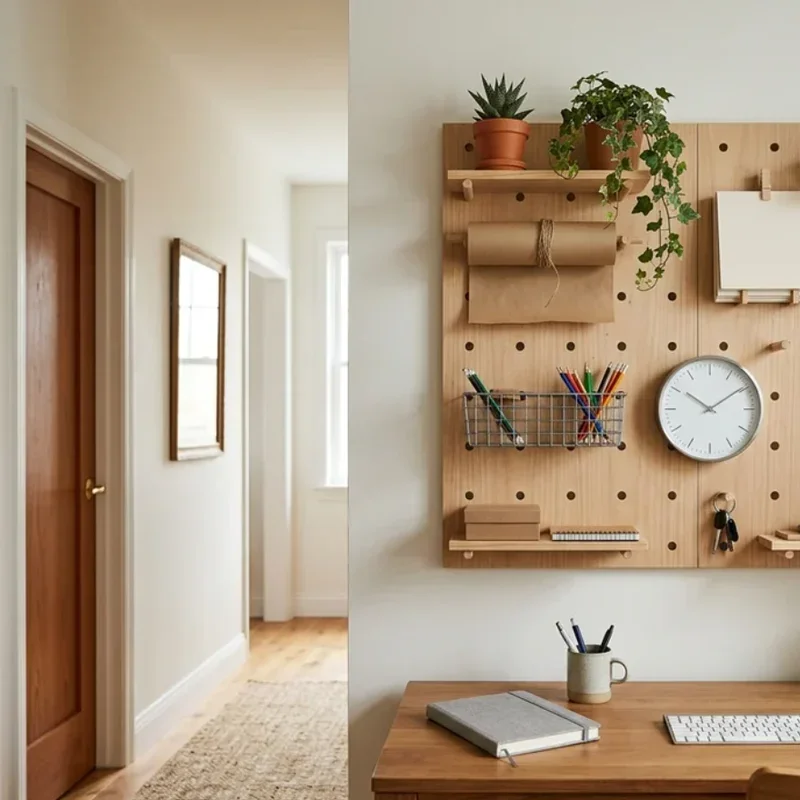
9. Pegboard Wall Organizer
A pegboard wall organizer mounts above your hallway desk, providing endlessly customizable vertical storage that keeps supplies visible, accessible, and off the slim desk surface where space runs precious. Install a painted pegboard panel spanning the desk width, since the perforated surface accepts hooks, baskets, shelves, and clips in rearrangeable configurations matching your changing workflow needs. Hang scissors, tape, headphones, and small containers exactly where your routine needs them, because personalized placement eliminates drawer-digging that wastes time during focused work. Paint the pegboard matching your hallway color, since coordinated finishes transform utilitarian organization into genuine wall decor. Rearrange hooks whenever priorities shift. Think of pegboards like customizable command centers for your hallway office. Your workspace gains flexible, visible organization.
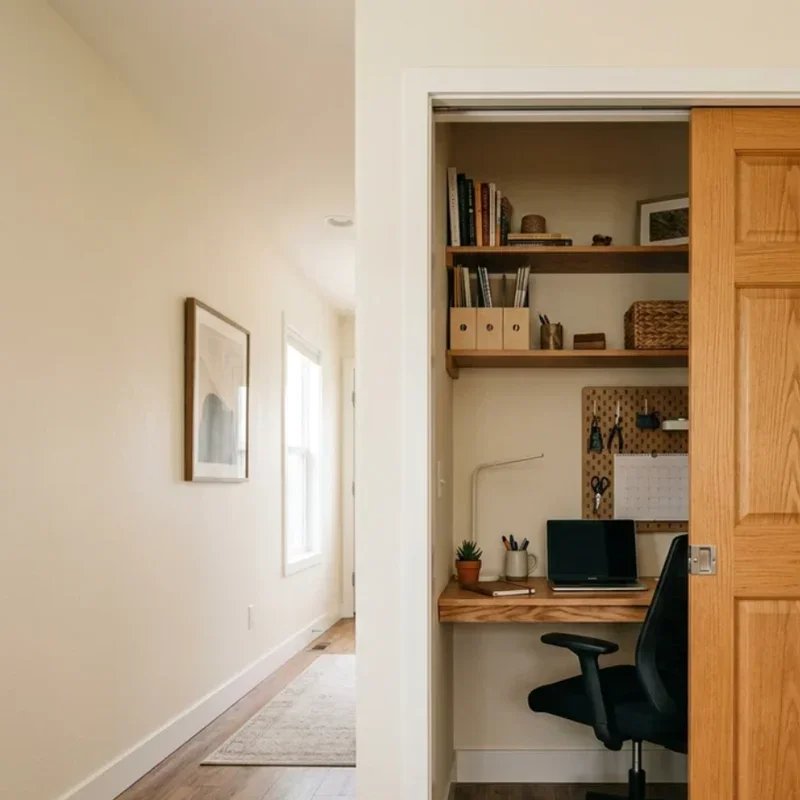
10. Pocket Door Hidden Office
A pocket door hidden office conceals your entire hallway workspace behind a sliding door that tucks into the wall, revealing the office when needed and hiding it completely when guests visit. Install a pocket door across a hallway alcove or recessed nook, since the sliding mechanism requires zero swing clearance that hinged doors would steal from the narrow corridor. Build a complete office inside the nook with desk, shelving, and task lighting, because the hidden interior needs full functionality whenever the door slides open for work sessions. Close the door between sessions. Choose a door face matching hallway walls. Think of pocket door offices like secret workspaces concealed behind ordinary walls. Your hallway maintains clean appearance while hiding a complete office.
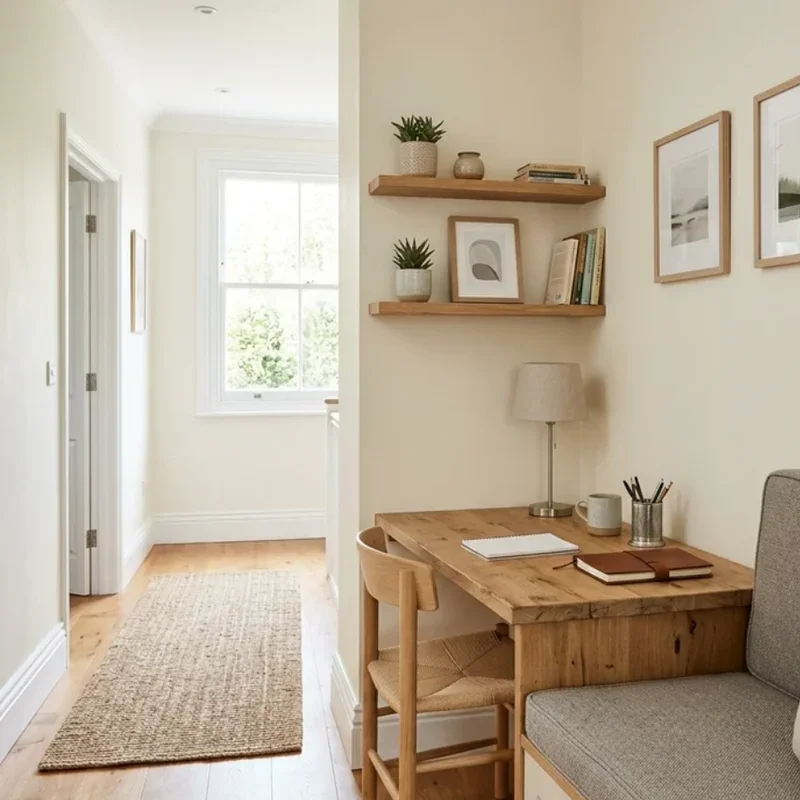
11. Bench Seat Desk Combo
A bench seat desk combo pairs a cushioned hallway bench with a narrow desk surface, creating a workspace that doubles as an entryway seating area when closed and a comfortable office when occupied. Build a long bench with a flip-top or slide-out desk extension, since the mechanical versatility lets one piece serve both functions without permanent commitment to either role. Add under-bench storage for shoes, bags, and office supplies, because dual-use compartments serve entryway needs and work supply organization simultaneously. Upholster the bench cushion in durable fabric. Position the combo along the widest hallway section. Think of bench desks like chameleon furniture adapting between welcome seat and workspace effortlessly. Your hallway gains genuine dual-purpose function.
12. Ladder Shelf Workstation
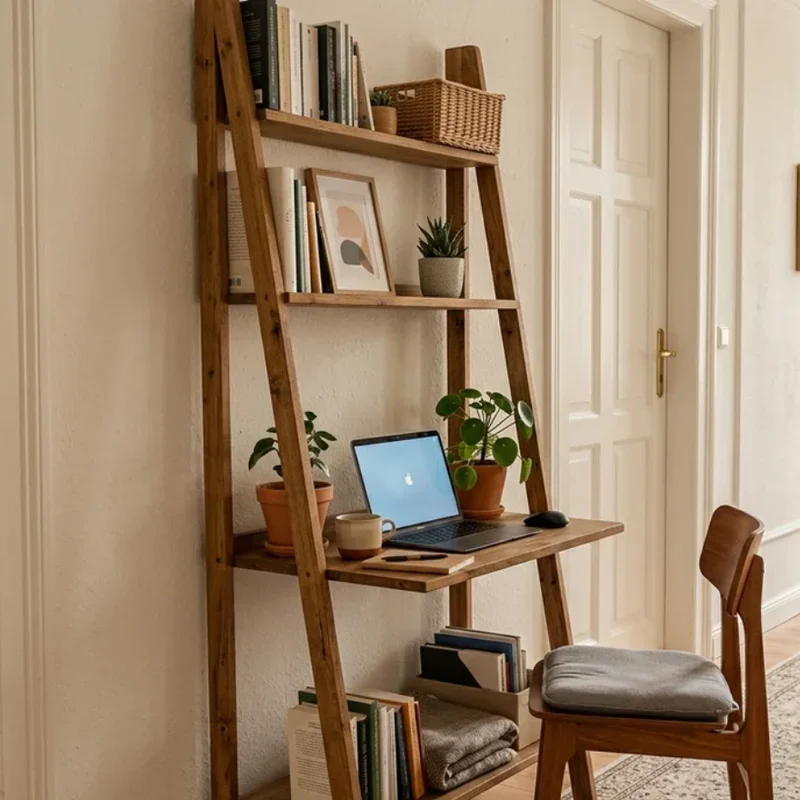
A ladder shelf workstation leans against the hallway wall, combining graduated shelving with a built-in desk surface at the widest rung level for a complete, freestanding office requiring zero wall mounting. Choose a ladder desk with an integrated writing surface at seated height, since the combined design eliminates the need for separate desk and storage pieces consuming double the hallway width. Use upper shelves for books, supplies, and decorative objects, because the tapered profile fits more items lower while the slim top tiers accommodate smaller accessories. Position the ladder against the widest wall section. Reposition anytime without wall damage. Think of ladder workstations like portable offices leaning casually against your hallway. Your passageway gains instant, commitment-free workspace.
13. Hallway Closet Conversion
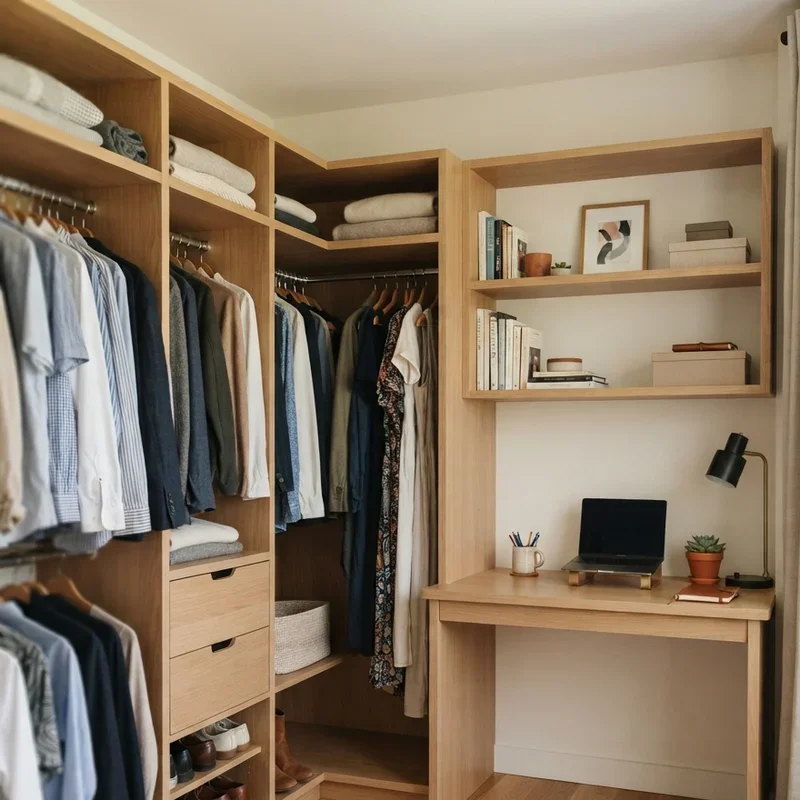
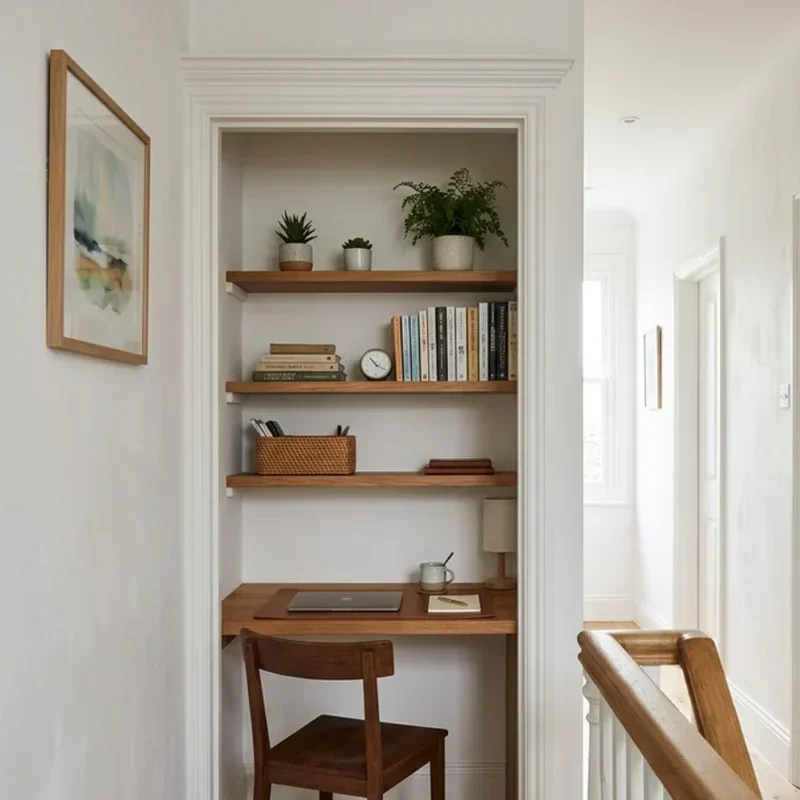
A hallway closet conversion transforms a linen or coat closet into a complete concealed office, building desk, shelving, and lighting behind doors that hide the entire workspace when you close up for the day. Remove the closet rod and existing shelving, then install a desktop at seated height, since the closet depth typically matches comfortable desk dimensions perfectly. Add shelves above for organized file and supply storage, because the vertical closet space accommodates multiple storage tiers within its tall, narrow proportions. Install a dedicated outlet and task lighting inside, since closet interiors sit in complete darkness without independent illumination. Close the doors between sessions. Think of closet offices like Narnia portals leading to hidden productivity. Your hallway gains invisible workspace.
14. Floating Shelves with Ledge Desk
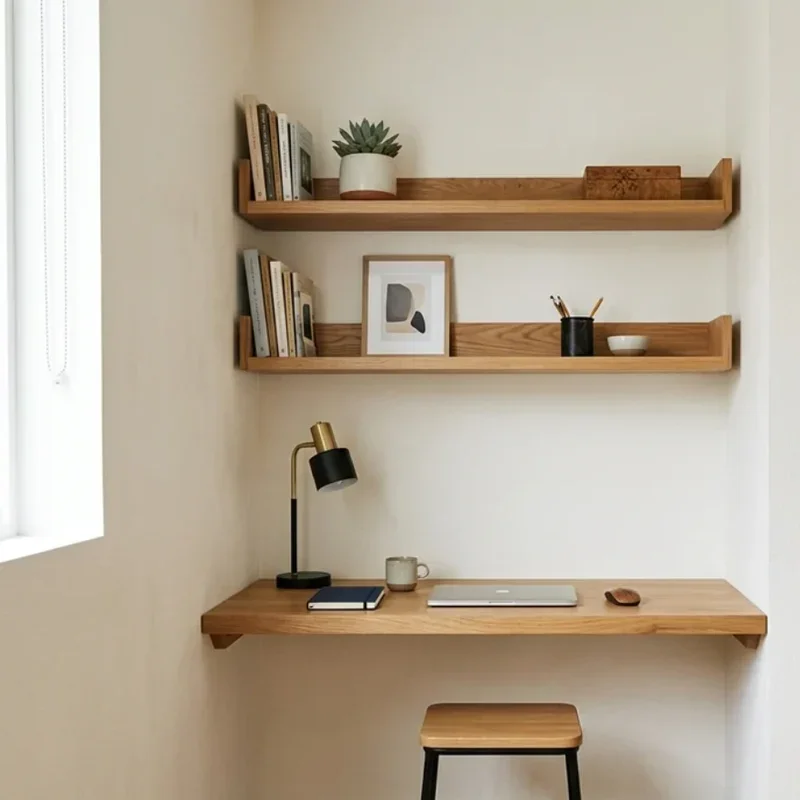
Floating shelves combined with a wider bottom ledge create a complete hallway workstation where the lowest shelf doubles as a narrow desk surface while upper shelves provide organized storage rising vertically above. Install the bottom shelf at desk height in a wider depth than the shelves above, since the graduated profile provides workspace below while keeping upper storage slim against the wall. Add two to three narrower shelves above for books, files, and small organizers, because the tiered arrangement creates a complete office climbing the wall within minimal hallway depth. Mount everything with concealed brackets. Add a wall-mounted task light. Think of shelf-desk combos like vertical offices growing upward from your work surface. Your hallway gains integrated, space-efficient productivity.
15. Dual-Purpose Entryway Office
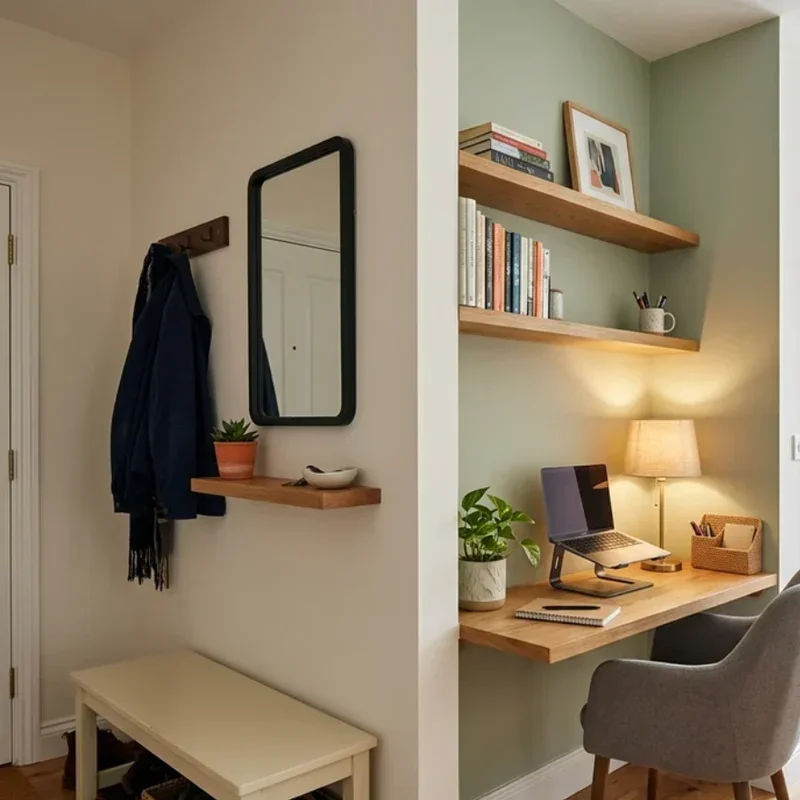
A dual-purpose entryway office positions your workspace at the hallway's entrance zone, combining mail sorting, key storage, and daily organization with genuine work functionality in one multi-tasking station. Choose a narrow desk or console that accommodates both a laptop and an entryway tray for keys, mail, and sunglasses, since the shared surface serves arriving-home needs and working-from-home needs throughout different parts of the day. Add wall hooks above for bags and coats, since entryway functionality layers naturally alongside office storage. Include a small bulletin board for both work reminders and household notes, because combined organizational tools serve dual purposes efficiently. Position beside the front door. Think of entryway offices like command centers greeting you at the door. Your hallway handles arrivals and productivity.
Conclusion
Hallway offices prove that productive, stylish workspaces hide inside the narrowest, most overlooked passageways of your home when creative design embraces linear footage rather than traditional room layouts. These fifteen ideas span floating desks to closet conversions, matching every hallway width, length, and architectural feature with genuine workspace functionality. Whether you fold down a Murphy desk or lean a ladder shelf against the wall, smart solutions turn walking corridors into working corridors without sacrificing traffic flow. The secret lies in choosing setups that respect your hallway's dimensions and daily movement. Start building your hallway workspace today.
Read next: 15 Modern Home Office Ideas for Small Spaces
Frequently Asked Questions
Q1: How wide should a hallway be to fit a desk?
A: At least forty-two inches total width provides enough room for a slim desk plus comfortable walking clearance.
Q2: What desk depth works best in a narrow hallway?
A: Twelve to eighteen inches provides functional laptop workspace without protruding dangerously into the walking path.
Q3: Can I build a hallway office in a rental apartment?
A: Yes, freestanding console tables, ladder shelves, and removable hooks create offices without any permanent wall damage.
Q4: How do I light a hallway office without overhead fixtures?
A: Wall-mounted sconces, clip-on desk lamps, and plug-in task lights illuminate workspaces without ceiling wiring changes.
Q5: How do I reduce noise in a hallway workspace?
A: Add a runner rug, acoustic panels, and noise-canceling headphones to minimize household traffic sound while working.
Stay up to date with our latest ideas!